Review · MAUI
Discover Scuba Diving Class from Lahaina
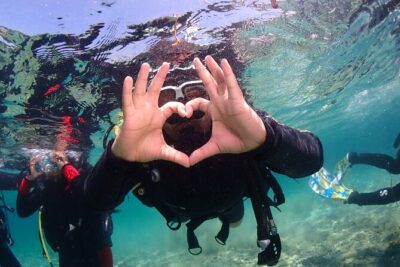
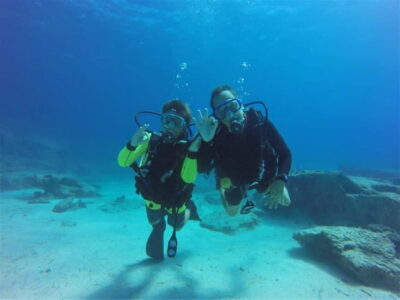
Maui’s underwater world is the real draw here. After completing PADI eLearning, you practice essential skills with an instructor and then head over coral reef where turtles, colorful fish, and the occasional shark may appear. I like the four-person maximum, which gives your instructor room to watch your breathing, mask, and comfort. I also like that all gear is supplied and the experience lasts about three hours. The catch is simple: this is not a gentle pool lesson. You must swim well, feel comfortable in the ocean, carry your own equipment, and manage a rocky shore entry.
The strongest part of this experience is the patient instruction reported from guides including Matt, Joe, Scott, Abby, Sean, Gretchen, and Annika. The biggest weakness is uneven preparation for nervous beginners. Most people have an exciting first underwater experience, but you should arrive ready to speak up if you need more time with the equipment or water entry.
Key points to know before booking
- PADI preparation comes before the beach: Complete the assigned online reading and videos before arriving, or you may not be allowed to participate.
- Four people is the limit: The small group allows close supervision and more personal coaching than a large resort class.
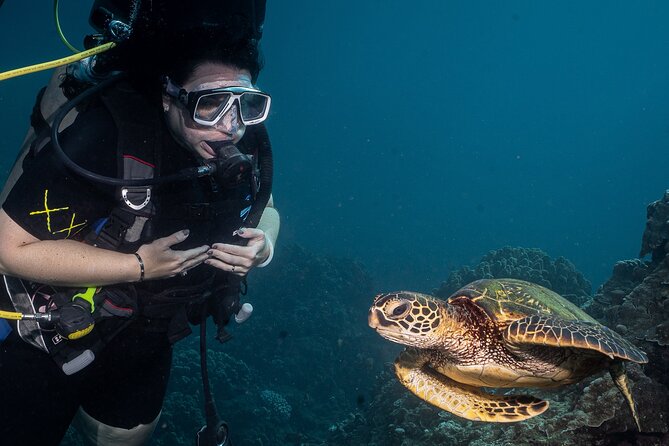
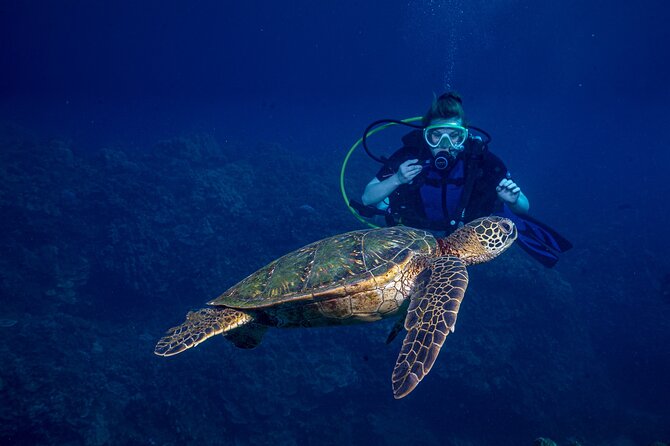
- The reef can be wildlife-rich: Turtles, tropical fish, eels, puffer fish, nurse sharks, and white-tip sharks have all been seen, though no animal sighting is guaranteed.
- You need real water comfort: Swimming, floating, breathing through a regulator, and handling ocean conditions are part of the experience.
- Medical approval can affect your booking: Any yes answer on the PADI health form requires a doctor’s clearance, with no refund promised if you cannot participate.
- Plan around air travel: You cannot fly or go to elevation within 18 hours after the activity.
What this Lahaina scuba lesson actually offers
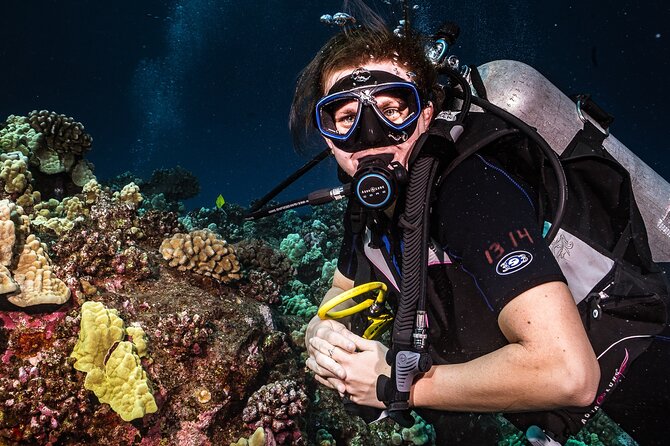
This is an introductory underwater experience, not a certification course. You learn the basic rules and skills needed for a supervised ocean session, but you do not leave with a PADI certification.
The format works best for someone who has always wanted to try scuba but does not want to commit to a full course. You receive access to PADI eLearning before the appointed time. That material covers the basic concepts, equipment, and safety points. At the meeting point on Front Street in Lahaina, your instructor reviews the material, explains the plan, and introduces you to the equipment.
After that, you head to the shore entry. The instructor helps you prepare and practice the required skills in the water. Once you feel ready, the session continues over Maui’s coral reef.
The distinction matters. You are not spending the full three hours in a classroom. You are expected to arrive having completed the online work, so the in-person portion can focus on equipment, skills, and actual underwater time.
More Discover Scuba Diving in the USA
- DISCOVER Scuba Diving Experience in Honolulu
★ 5.0 · 202 reviews - Kauai’s Ultimate Discover Scuba Dive – OCEAN EXPERIENCE (1 Tank Dive)
★ 5.0 · 186 reviews - Maui Scuba Diving Introductory Lesson from Lahaina
★ 5.0 · 179 reviews
Completing the PADI eLearning before Lahaina
The online work is not optional homework to skim on the airplane. It is part of the required preparation. You receive a login with reading and videos, and you must finish the material before arriving.
I recommend completing it soon after booking, not the night before. That gives you time to think about the medical questions, look up anything unclear, and contact the operator if you have concerns. It also prevents a bad surprise at the beach.
The medical form deserves special attention. Every participant must complete the PADI medical questionnaire. If you answer yes to any item, you need approval from a doctor before scuba participation. The operator states that refunds are not authorized if a medical issue prevents you from taking part, so do not treat the form as a last-minute formality.
This requirement has caused frustration for some people who discovered medical issues shortly before the activity. The practical lesson is clear: read the health form early, and call ahead if you are unsure how a condition, medication, recent procedure, or past medical history applies.
The three-hour schedule, from briefing to reef
The exact minute-by-minute plan is not provided, but the structure is clear.
First comes the review of your online training. Your instructor explains how the breathing system works, how to use the mask and other equipment, and what you will do in the water. This is your chance to ask direct questions. If you feel nervous, say so before entering the ocean.
Next comes skills practice. You learn procedures used during every scuba session, including basic equipment handling and underwater techniques. The instructor remains in direct supervision, and the small group helps keep the teaching personal.
Then comes the reef exploration. The purpose is not simply to perform drills and return to shore. Once your instructor is satisfied that you are comfortable and capable, you continue along the reef to look for marine life.
That sequence makes the outing appealing, but it also explains why your own readiness matters. The operator expects you to swim, float independently, feel comfortable in the ocean, and carry your own equipment into and out of the water. This is supervised beginner scuba, not a passive sightseeing ride.
Shore entry, heavy equipment, and physical demands
The most important practical warning is the shore entry. You are not stepping directly from a boat into calm, deep water. You must carry your own scuba gear to the entry area, and the approach may involve a significant walk and uneven rocks.
A full scuba setup is heavy on land. It feels less burdensome once you are in the water, but getting there takes effort. You should have a moderate fitness level and be comfortable moving carefully while wearing the equipment.
The shore itself can also be a source of nerves. One participant described feeling rushed over sharp, uneven rocks, while the operator explained that efficient timing helps reduce risk in surge and unstable conditions. Both points are useful. An ocean entry may need to happen promptly, but a first-time participant still needs clear instructions and enough time to move safely.
If you have back, knee, balance, or mobility concerns, contact Dive Maui before booking. Service animals are allowed, and the meeting point is near public transportation, but the actual water activity still requires you to carry your gear and manage the shore entry yourself.
Same water, a different dive:
- First-Time Scuba Diving in Honolulu + Free Videos
★ 5.0 · 3,123 reviews - Oahu Shark Dive
★ 5.0 · 2,903 reviews - Oahu: Shark Cage Dive on the North Shore
★ 4.8 · 1,485 reviews - Shark Cage Diving on Oahu’s North Shore
★ 5.0 · 1,391 reviews
Why the four-person limit matters underwater
A maximum of four people is one of the best features of this activity. In a small group, an instructor can keep an eye on each person’s mask, breathing, body position, and confidence.
That personal attention matters most during the first minutes in the water. Many first-time scuba participants find breathing through a regulator strange at first. A mask that leaks, difficulty clearing water, or simple nerves can make the beginning feel harder than expected.
Several guides receive praise for handling these moments well. Abby is specifically credited with staying calm when a participant struggled with a mask and adjusting to breathing. Gretchen is praised for helping a nervous beginner settle in. Matt is repeatedly described as patient and attentive, while Joe is noted for checking that people were comfortable and safe. Scott is praised for clear explanations and a reassuring manner. Sean is singled out for building confidence and a solid foundation for future scuba training.
That does not guarantee every session will feel identical. Instructors have different teaching styles, and comfort in the ocean varies from person to person. Still, the limited group size gives this experience a better chance of feeling personal than a large class.
What you may see on Maui’s reef
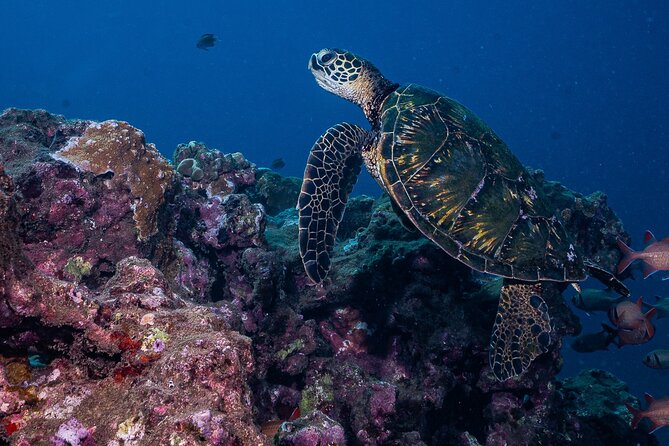
The reef is the reward for working through the equipment and skills. The marine life described from this outing includes green sea turtles, schools of tropical fish, eels, puffer fish, coral, and sharks.
Turtle sightings appear especially common in the accounts of this experience. One family group reported seeing many turtles, including some close to the group. Other accounts describe a few turtles along with colorful fish. Sharks have also been seen, including nurse sharks and white-tip sharks. One session included a reported encounter with two larger white-tip sharks.
Treat those animals as possible sightings, not promises. Ocean wildlife moves on its own schedule, and visibility, weather, water conditions, and the route taken all affect what you see. The point is not to collect a guaranteed checklist. You are learning to move quietly through a living reef while staying close to your instructor.
The reef can also make this feel more special than a basic introductory lesson. You are not practicing skills in an empty training area and then stopping. After the required exercises, you get the chance to use those new skills while looking at coral and marine life.
The first underwater minutes can be the hardest
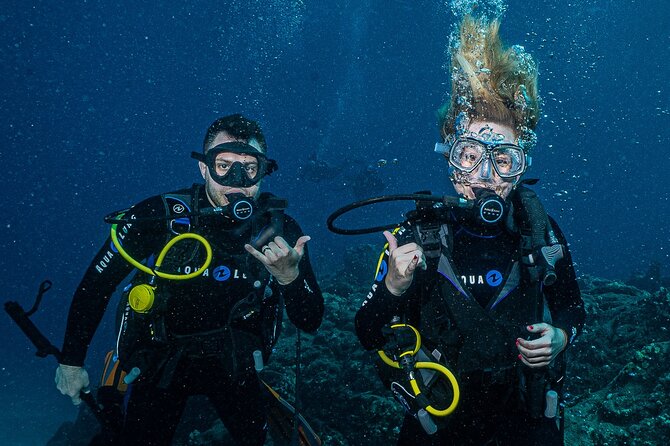
The first breath underwater is often the moment when the experience either clicks or falls apart. The equipment is unfamiliar, the regulator feels different from normal breathing, and the ocean adds movement and sound.
That reaction is normal, but you still need to be comfortable enough to continue. One account describes the first minute as frightening, followed by a much more enjoyable session after relaxing. Another describes a participant who could barely swim in a pool without help but still completed the experience with close instruction.
The best way to improve your odds is to be honest. Tell the instructor if you need another explanation, a slower start, or a moment to adjust your mask. Do not let a companion’s confidence pressure you into continuing. Your instructor can support you, but cannot remove the need for basic swimming ability and ocean comfort.
The experience is supervised by a PADI Professional, yet supervision is not the same as constant physical assistance. You need to follow instructions, control your breathing, and manage the gear as directed.
What the $158.43 price gets you
At $158.43 per person, the price includes the online PADI preparation, professional instruction, scuba equipment, skills practice, and reef exploration. For someone who wants to try scuba without paying for a full certification course, that is a reasonable package.
The value is strongest when you want more than a quick resort demonstration. You receive structured preparation, a small group, and a chance to explore a real Maui reef. The small group is particularly important because personal instruction is what helps turn a nervous first attempt into a useful introduction.
The price does not appear to include photos or videos. One participant specifically wished these were offered, so bring your own expectations about souvenirs. You should also remember that wildlife sightings are not guaranteed, and the activity may be canceled for poor weather.
The experience is typically booked about 22 days ahead, which suggests you should not leave it until the last day of your Maui visit. A weather cancellation can require a new date, and you need room in your schedule for the 18-hour no-fly rule afterward.
Who should book this Maui experience
I would recommend it to an adult or child aged 10 and older who can swim, is comfortable in the ocean, and wants a first taste of scuba with a real instructor. It suits couples, families, and small groups who value personal attention.
It can work especially well for someone who has tried snorkeling and wants to spend more time below the surface. It also suits people who may later pursue certification and want to see how scuba feels before committing to a longer course.
I would be cautious if you dislike open water, have trouble carrying equipment, or expect a pool-based lesson. The ocean entry is part of the challenge. You should also reconsider if you have a medical concern that might require clearance and have not left enough time to obtain it.
Children can participate from age 10, but age alone does not determine readiness. A young participant must still meet the swimming, fitness, and ocean-comfort requirements.
Timing, cancellation, and air travel
The meeting point is 1223 Front Street in Lahaina, and the activity returns there. Confirmation arrives when you book, and the experience is offered in English with a mobile ticket.
Free cancellation is available up to 24 hours before the start time. Changes or cancellations inside that window are not accepted for a refund. If poor weather cancels the activity, you are offered another date or a full refund.
The 18-hour post-scuba rule is easy to overlook. Do not schedule this on the final morning before a flight, and do not plan to go to elevation during that period. Give yourself a full buffer after the session.
Should you book it?
Book this if you want a serious but accessible first scuba experience, and you meet the physical and medical requirements. The four-person limit, professional instruction, included equipment, and frequent reports of turtles and reef fish make the $158.43 cost fair for an introductory Maui activity.
Skip it if you want a completely effortless water excursion, cannot carry scuba equipment, or feel uneasy in the ocean. Before paying, complete the medical questionnaire, finish the PADI eLearning, and understand that the entry may involve a walk over uneven rocks. Go in prepared, speak up early, and this can become one of the most memorable underwater experiences of your Maui visit.
FAQ
Do I need prior scuba experience?
No. The program is designed for people without previous scuba experience. You must still be able to swim, feel comfortable in the ocean, and follow the instructor’s directions.
What is the minimum age?
The minimum age is 10 years old.
How long does the activity last?
The experience lasts approximately three hours.
Is scuba equipment provided?
Yes. All necessary scuba equipment is provided.
How many people can join one session?
The maximum group size is four participants.
Do I need to complete anything before arriving?
Yes. You must complete the assigned PADI eLearning, including the required reading and videos, before arriving at the meeting point.
What happens if I answer yes on the medical questionnaire?
A yes answer requires approval from a doctor before you can participate. Refunds are not authorized if your health prevents you from taking part, so contact Dive Maui with questions before booking.
Can I fly after the activity?
No. You must not fly or go to elevation within 18 hours after the activity.
What happens if bad weather cancels the session?
You can choose another date or receive a full refund.
Newly logged dives around the USA
- Panama City Beach: Beginners Scuba Diving Tour★ 4.6 · 23 reviews
- Oahu: Shark Cage Diving Experience★ 4.6 · 46 reviews
- Oahu: Wreck & Reef Scuba Dive for Certified Divers★ 4.8 · 17 reviews
- Oahu: Cageless Shark Dive Adventure★ 4.9 · 60 reviews
- Oahu: Shallow Reef Scuba Dive for Certified Divers★ 5.0 · 11 reviews
- Oahu Night Dive: Adventure for Certified Divers★ 3.6 · 6 reviews
- Oahu: Beginner SCUBA Dive at Electric Beach★ 4.8 · 10 reviews
- Kauai: Morning 2 Tank Boat Dive for Experienced Divers★ 5.0 · 5 reviews
Discover Scuba Diving, side by side.
Cyprus: Introductory Scuba Lesson and Dive with Transfer
Read our review →