
Review · USA
Panama City Scuba Diving Activity for Beginners
The best thing about this Panama City Beach scuba experience is its gentle start. You meet instructor Malin at the St. Andrews State Park jetties, learn the basics on shore, and practice breathing underwater in about 3 feet of water before moving farther out. For a first attempt, that gradual pace matters.
I like two things right away: no certification is needed, and all scuba gear is included. I also like the small group limit of eight people, plus the free underwater photos and videos. The main drawback is that the water can be silty, and the park gets crowded around midday, so you need extra time to arrive and should not expect Caribbean-style clarity.
Key points to know before booking
- Practice comes before the open-water swim: You learn basic skills in shallow water and repeat them until you feel ready.
- Instructor Malin leads the session: He explains equipment, breathing, hand signals, and safety steps, then checks on you throughout.
- No swimming skills or certificate are required: You must be at least 10 and in reasonable physical and mental health.
- Expect a shallow underwater route: The swim reaches about 7 to 8 feet according to the activity details, with small sea life often visible.
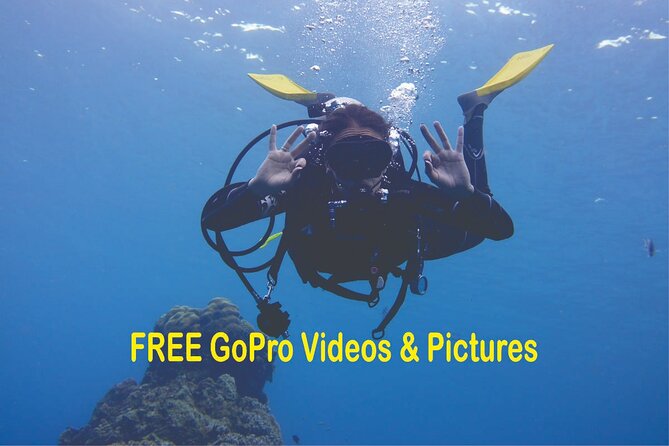
- Free photos and videos are included: Bring a smartphone with the Quik app to download the files.
- Arrive early at St. Andrews State Park: Check-in is 15 minutes before your scheduled time, and parking costs $8.
A first underwater lesson at St. Andrews State Park
This is not a certification course. Think of it as a carefully supervised introduction to scuba, designed to help you find out how your body and mind respond to breathing underwater.
You meet at the public pavilions near the end of the parking lot at St. Andrews State Park. The exact meeting area matters, since the park is large enough to cause confusion, and construction or heavy traffic can slow you down. I would arrive well before the required 15-minute check-in time, especially for a noon appointment.
Malin begins with a safety talk and an explanation of the equipment. You learn how to breathe through the regulator, how to communicate underwater, and how to handle basic safety skills. The lesson is practical rather than rushed. If you need a skill explained again, the activity is built around repeating it until you are comfortable.
The first water session takes place in roughly 3 feet of water. That is a useful detail for nervous beginners. You are not asked to walk straight into deep water with unfamiliar equipment. Instead, you can get used to the mask, regulator, and weight of the gear while remaining close to the surface.
Several people find the equipment heavier than expected on land. That is normal for this kind of activity, and it is one reason the shallow practice matters. Once you are breathing steadily and handling the basic skills, Malin decides when the group is ready to continue.
More Scuba Diving for Beginners in the USA
- First-Time Scuba Diving in Honolulu + Free Videos
★ 5.0 · 3,123 reviews - Beginner Scuba Diving Experience with Video Package in Honolulu
★ 5.0 · 877 reviews - Beginner Scuba Dive in Lahaina: Swimming Required
★ 5.0 · 219 reviews
From knee-deep practice to about 8 feet
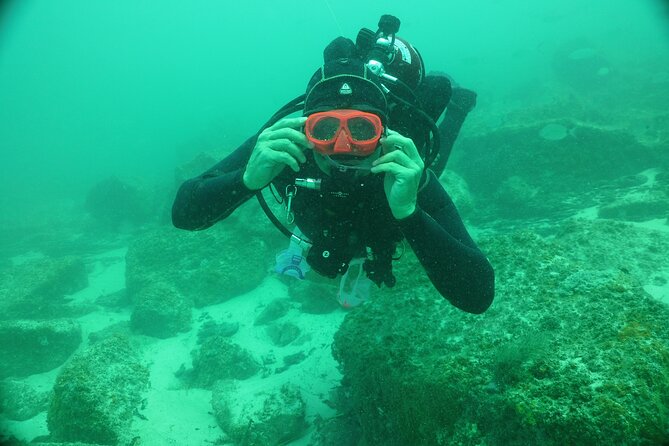
The underwater portion remains modest in depth, but it still feels like a real introduction to scuba. The activity description places the practice at about 3 feet and the later swim at roughly 7 to 8 feet. For a first attempt, that is enough depth to experience controlled underwater movement without committing to a deep descent.
You move slowly and stay with the group. Malin checks that everyone is comfortable before continuing and keeps checking during the swim. That is especially useful when one person in a family group feels confident while another needs more time.
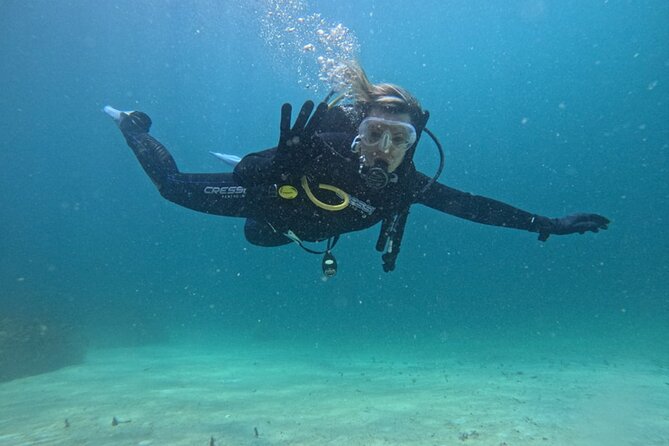
The shallow route can reveal small marine life. You might see crabs, clams, blowfish, fish, or even seahorses. The exact sightings depend on conditions, but the setting gives you more to look for than a simple pool lesson.
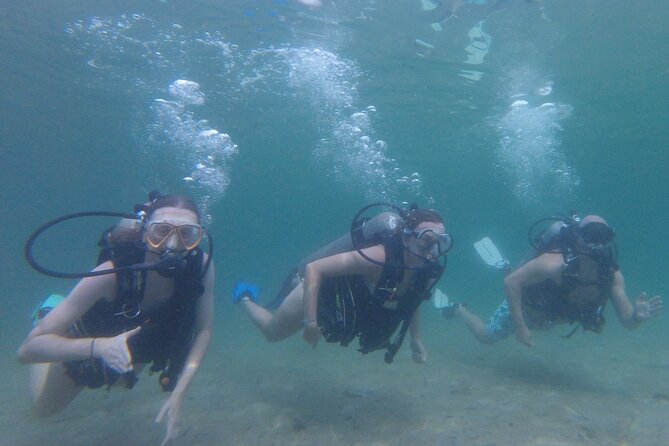
The tradeoff is visibility. The water can be silty, so you may feel disoriented if you lose sight of the group. Stay calm, keep breathing, and follow the instructor’s directions. The shallow depth gives you an important safety cushion, but you should still treat the instruction seriously.
The activity duration is about two hours, though the actual underwater time varies. Group size, comfort in the water, performance, and air use all affect how long you remain below the surface. This is not a timed race, and that is a good thing. A nervous beginner may need more preparation, while an easygoing participant may progress sooner.
Why the instruction matters for nervous beginners
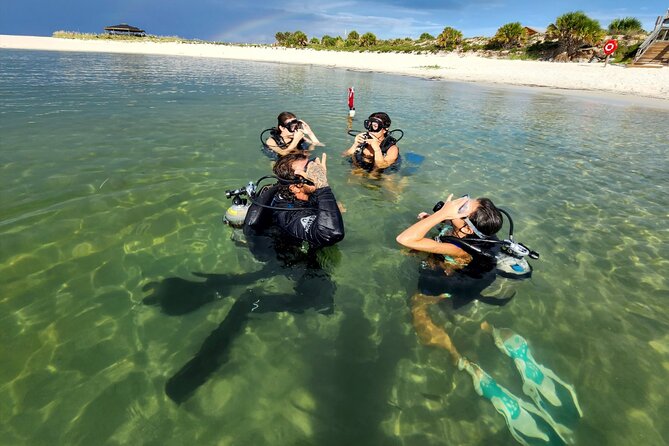
The most praised part of this experience is the teaching. Malin is repeatedly described as patient, clear, and attentive, particularly with children, first-time participants, and people who panic at first.
That patience is not a minor extra. Breathing through a regulator can feel strange, and the mask can make the water seem more enclosed than expected. A calm instructor who checks your comfort before moving on can make the difference between enjoying the session and deciding you are not ready.
The activity is also suitable for family groups with mixed confidence levels. One person may complete the underwater portion easily while another may need more attempts or decide not to continue. The instruction allows for that possibility. You are not required to force yourself through the experience simply because someone else in your group is ready.
I would still be honest with yourself before booking. No swimming skills are required, but you must be in reasonable physical and mental health. Scuba equipment requires you to stay calm, listen carefully, and communicate with the instructor. The health questionnaire is completed one day before the session, and conditions such as asthma or previous heart or back surgery may prevent participation.
A small group, but not a private lesson
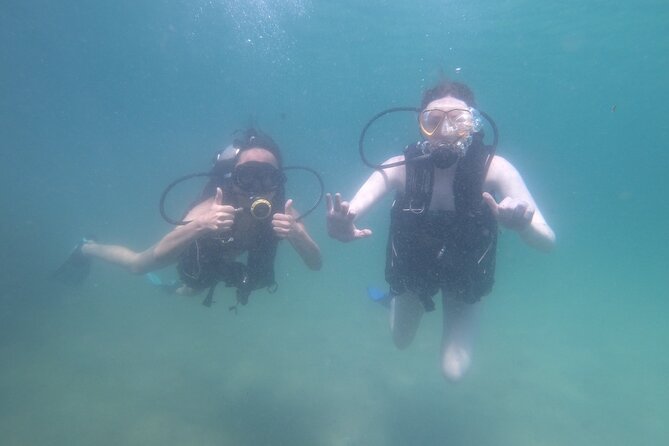
The maximum group size is eight people. That is small enough for the instructor to monitor the group, yet you should not assume you will receive a private lesson.
A larger group can mean more time spent waiting while everyone practices. On the other hand, it may help to see other beginners working through the same nerves. If you are booking as a family or with friends, the group format makes it easy to share the experience while still receiving individual checks from Malin.
The most useful advice is to take your time with the first breathing exercises. Do not pretend you are ready because the rest of your group is ready. Tell the instructor if the mouthpiece feels uncomfortable, if you are struggling to breathe calmly, or if you need a skill repeated.
One participant had trouble with a mouthpiece that would not stay in, while another experienced a leg cramp. These are reminders that small problems can happen even during a well-run session. Tell Malin immediately so he can help rather than trying to push through discomfort.
Same water, a different dive:
- Oahu Shark Dive
★ 5.0 · 2,903 reviews - Oahu: Shark Cage Dive on the North Shore
★ 4.8 · 1,485 reviews - Shark Cage Diving on Oahu’s North Shore
★ 5.0 · 1,391 reviews - Safe and Educational Shark Dive from Haleiwa: Sharks Guaranteed
★ 5.0 · 553 reviews
The best time to schedule your session
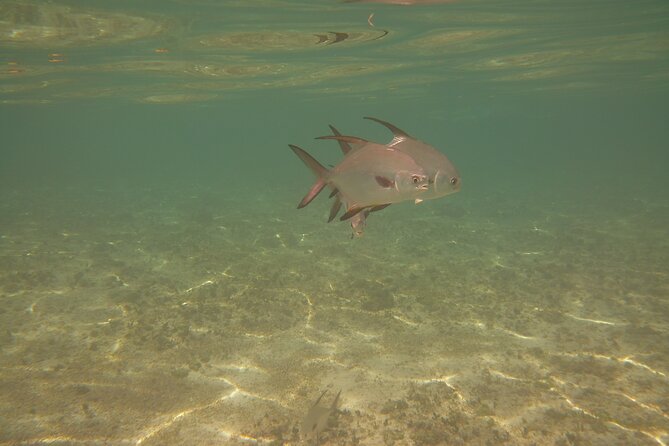
Morning appointments appear to offer the best chance of clearer water and a quieter park. Early hours can also help you avoid the heavier activity around noon.
This matters for two reasons. First, St. Andrews State Park can be busy, and parking or finding the meeting area may take longer than expected. Second, the water may be clearest earlier in the day, which improves your chance of spotting small sea life and makes it easier to stay oriented.
Do not arrive at the last minute. Check-in is required 15 minutes before your scheduled time, and the meeting point is at the dive-site pavilions, not a separate shop. One late arrival caused a serious disagreement with the instructor, so punctuality is not just a polite suggestion. The group schedule depends on everyone being ready.
Parking is not included. Set aside $8 for the park fee, and allow time to walk from the parking area to the pavilions. Bring a towel, and remove foundation, makeup, and sunscreen from your face before arrival. That last instruction is easy to overlook, but it helps keep the mask seal clean.
What the $99 price includes
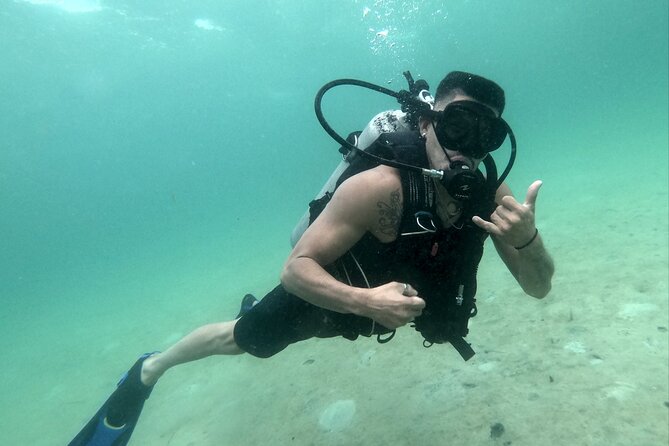
At $99 per person, the price is reasonable for someone who wants a first scuba experience without buying or renting separate equipment. The fee includes the full set of necessary scuba gear, instruction, and free videos.
The value is strongest if you are curious about scuba but are not ready to commit to certification lessons. A formal certification course costs more, takes longer, and involves classroom work and additional training. This session lets you test the basics in a controlled setting.
The free video package adds value, particularly for families and couples. Malin uses a GoPro to capture photos and video underwater, including creative angles. You need a smartphone with the Quik app to download the files, so install or prepare the app before you arrive if possible.
The extra costs are limited but worth noting. Parking costs $8, and you may want cash for an instructor tip. The activity does not list transportation, meals, or personal items as included, so plan to reach St. Andrews State Park on your own.
What to bring and what to leave behind
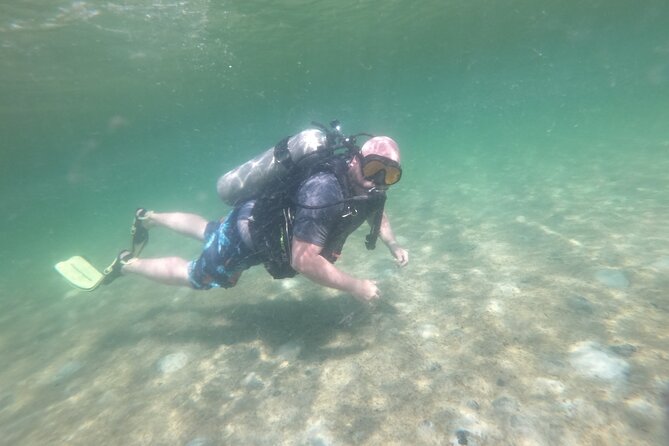
Bring a towel and a smartphone prepared for the Quik app. You should also carry cash if you plan to tip Malin.
Remove facial makeup and sunscreen before check-in. Sunscreen on the face can interfere with the mask seal, and foundation is specifically discouraged. You do not need to bring scuba equipment, since the necessary gear is supplied.
Wear whatever you can comfortably manage around a shore-based water activity, but the supplied information does not specify a required swimsuit or footwear. Keep your packing simple and focus on the items clearly requested.
After the session, remember the flying restriction. Flying is not recommended for up to 12 hours after scuba activity. If you are planning to fly home the same day, check your schedule carefully before booking.
Weather, cancellations, and age rules
The minimum age is 10. Most people can participate, but you must complete a health questionnaire one day before the activity.
Weather can affect the schedule. If poor conditions cancel the session, you will be offered another date or a full refund. You can also cancel for a full refund if you do so at least 24 hours before the start time.
Cancellations within 24 hours are not refunded, and changes made inside that window are not accepted. This strict cutoff makes sense for a small scheduled group, but it means you should wait to book if your plans are uncertain.
Who will enjoy this most
I would recommend this experience to first-time scuba participants, families with older children, couples, and friends who want a short introduction rather than a full certification course.
It works particularly well if you are curious but nervous. The shallow practice, limited depth, and frequent instructor checks give you room to settle in. It also suits parents and grandparents who want to try the activity with younger family members, as long as everyone meets the health and age requirements.
You may want to choose another plan if you are looking for deep water, clear tropical visibility, a long underwater route, or formal certification. This is a beginner session in a natural shore setting, not an advanced reef excursion.
It may also be a poor choice if you cannot arrive early or dislike group schedules. The park can be busy, and the instructor cannot simply restart the whole session for someone who arrives at the scheduled start time.
Should you book this Panama City Beach scuba experience?
Book it if you want a low-commitment way to try scuba with equipment, instruction, and underwater video included for $99. The shallow practice is the main selling point, and Malin’s patient approach appears especially useful for people who need time to control their breathing.
Choose an early appointment, allow plenty of time for the $8 parking process, and arrive at the pavilions at least 15 minutes ahead. If you stay calm, listen carefully, and tell the instructor when you need help, this can be a memorable first step into underwater activity.
FAQ
Do I need scuba certification?
No. You do not need a scuba certificate or previous scuba experience.
Do I need to know how to swim?
No swimming skills are required for this activity. You must still be in reasonable physical and mental health.
How old must I be?
Participants must be at least 10 years old.
Where does the activity meet?
Meet at the public area pavilions at the St. Andrews State Park jetties, near the end of the parking lot. The listed meeting address is Saint Andrews Park Road, Lower Grand Lagoon, Florida 32408.
How deep does the activity go?
Practice begins in about 3 feet of water. The later underwater swim reaches roughly 7 to 8 feet, according to the activity details.
Is scuba equipment included?
Yes. Necessary scuba equipment is included in the $99 price.
Are photos and videos included?
Yes. Free photos and videos are provided. Bring a smartphone with the Quik app so you can download them.
Is parking included?
No. Parking costs $8 and is not included in the activity price.
Can I fly after the activity?
Flying is not recommended for up to 12 hours after scuba activity.
Newly logged dives around the USA
- Panama City Beach: Beginners Scuba Diving Tour★ 4.6 · 23 reviews
- Oahu: Shark Cage Diving Experience★ 4.6 · 46 reviews
- Oahu: Wreck & Reef Scuba Dive for Certified Divers★ 4.8 · 17 reviews
- Oahu: Shallow Reef Scuba Dive for Certified Divers★ 5.0 · 11 reviews
- Oahu Night Dive: Adventure for Certified Divers★ 3.6 · 6 reviews
- Oahu: Cageless Shark Dive Adventure★ 4.9 · 60 reviews
- Oahu: Beginner SCUBA Dive at Electric Beach★ 4.8 · 10 reviews
- Kauai: Morning 2 Tank Boat Dive for Experienced Divers★ 5.0 · 5 reviews
Scuba Diving for Beginners, side by side.
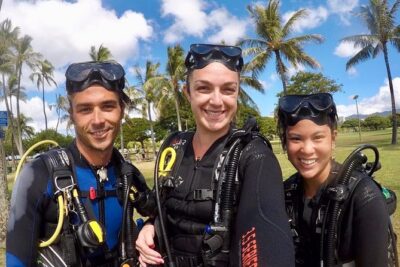
First-Time Scuba Diving in Honolulu + Free Videos
Read our review →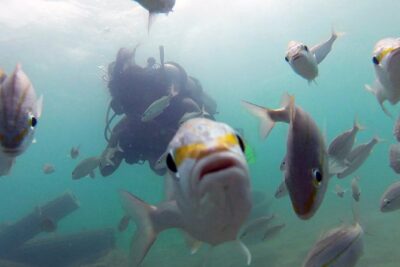
Beginner Scuba Diving with Turtles and Videos, San Juan
Read our review →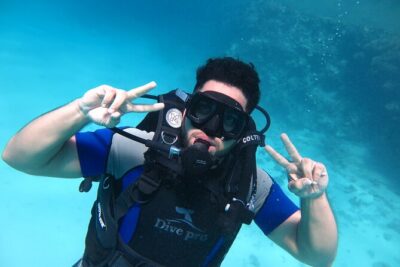
Intro Diving 2 Stops For Beginners with Pick-up and Lunch – Hurghada
Read our review →
Intro Diving Beginner and Discover Red Sea Underwater
Read our review →
Beginner Scuba Diving Experience with Video Package in Honolulu
Read our review →
Tenerife: Beginner’s Dive at a Spot with Turtle Sightings
Read our review →Lists this dive is on