Review · KOH CHANG
Padi open water diver course, become a diver in 3 days
Koh Chang’s three-day PADI course takes you from first lessons to an internationally recognized scuba license, with classroom work, confined-water practice, and four open-water descents. You finish qualified to go down to 18 meters, a useful credential if you plan to continue scuba trips elsewhere.
I like the maximum group size of three, which should give you more time with your instructor, and I like that the price includes equipment, meals, hotel transfers, insurance, the online manual, and the certificate. The main catch is that pickup is limited to hotels on Koh Chang’s west coast, and the Koh Rang National Park entrance fee costs extra.
Key points before you book
- Three days from beginner to certified: Theory and pool or shallow-bay practice come first, followed by four open-water descents.
- Small group size: The activity accepts a maximum of three participants, useful when you are learning equipment skills for the first time.
- Two reef days: The boat heads to sites around Koh Chang and Koh Rang National Park for the practical part of the course.
- 18-meter certification: After passing the course, you can scuba independently to a maximum depth of 18 meters.
- Practical extras included: Expect equipment, buffet lunch, drinks, light refreshments, insurance, hotel transfers, the PADI online manual, and the certificate.
- Plan around flight and weather rules: You should not scuba within 18 hours of flying, and poor weather can lead to a new date or a full refund.
From first lesson to PADI certification in three days
This is a proper entry-level qualification, not a quick introductory outing. Over three days, you learn the basic rules of scuba, practice the required skills, and complete four open-water descents under professional supervision.
That structure matters. You are not simply handed equipment and sent into the sea. The first day gives you time to understand how the gear works and how to respond calmly underwater. The following two days let you use those skills in real sea conditions, with coral reefs and marine life around Koh Chang and Koh Rang National Park.
I like this progression because new scuba participants often need time to get comfortable with breathing through a regulator, clearing a mask, controlling buoyancy, and handling basic underwater procedures. The course gives you a full day before the boat work begins.
The qualification allows you to go down to 18 meters after completion. That is the standard limit associated with the PADI Open Water level and gives you access to many guided scuba trips around the world. It does not make you an advanced diver, though. You still need to respect your training limits and continue building experience gradually.
More PADI Courses in Thailand
- Full-Day Beginner Scuba Course with Private Tuition, Racha Yai
★ 5.0 · 368 reviews - La Bombona Diving Koh Tao Open Water Course
★ 5.0 · 172 reviews - Become certified diver in 3 days – PADI Open Water Diver course on Koh Tao
★ 5.0 · 104 reviews
Day one: theory, equipment, and shallow-water practice
The opening day starts with a relaxed theory session. You learn the foundations of scuba before entering the water, including the basic principles and procedures needed to use your equipment safely.
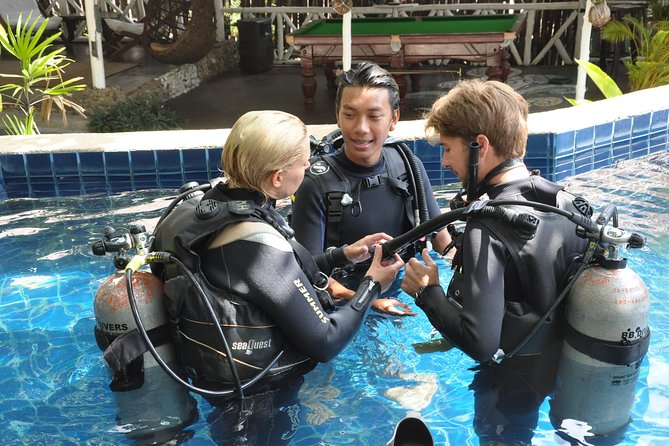
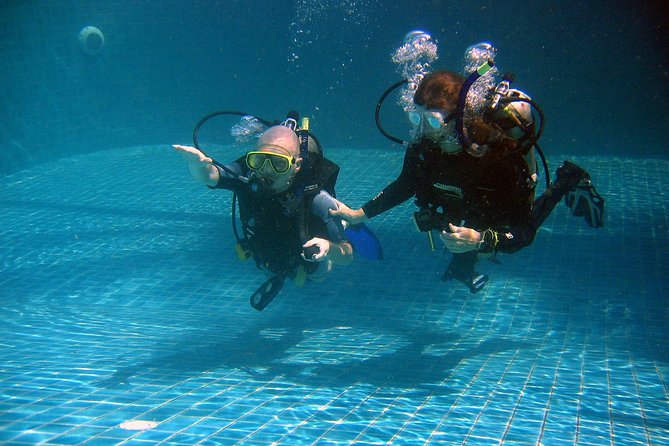
The training then moves into a swimming pool or shallow bay. This is where abstract instructions become practical. You get used to your mask, regulator, buoyancy equipment, and other scuba gear while remaining in a controlled setting.
The supplied details do not specify whether every course uses the pool or the shallow bay, so the exact setting may depend on conditions and the group. Either option serves the same purpose: giving you a low-pressure place to practice before the boat trips.
A particularly useful feature is the small group size. With no more than three participants, the instructor can watch how each person manages the skills. That is important for beginners, since one person may need extra time with mask exercises while another may need help controlling movement in the water.
The first day is also held in a relaxed setting associated with Cliff Cottage restaurant, according to the operator’s response to a highly positive course review. That review specifically praised the classroom and pool-training setting, along with the later scuba sessions. You should expect the day to combine instruction with practical work rather than spend all day in a formal classroom.
Days two and three: four open-water descents
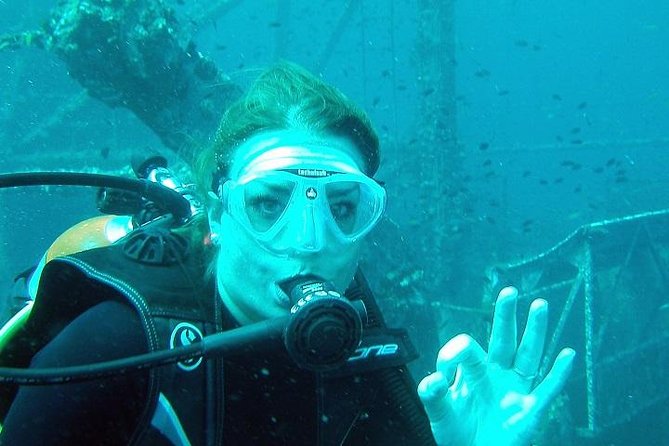
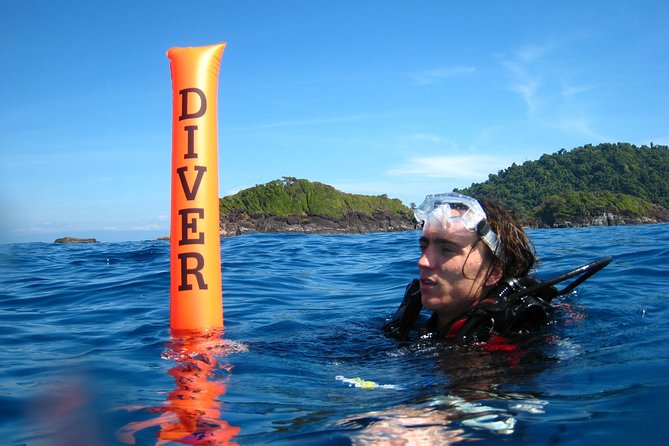
The second and third days are the main sea portion of the course. You board the dive boat and complete four open-water descents at reef sites around Koh Chang and Koh Rang National Park.
This is where you put the first day’s skills to work. You will practice the required procedures in a genuine sea setting, gain confidence underwater, and observe marine life around the reefs. The course description does not promise particular animals or exact reef sites, so it is best to treat the wildlife as a welcome bonus rather than a guaranteed checklist.
Spreading the four descents over two days is helpful. You have time between sessions to rest, eat, review skills, and think through anything that felt awkward. Beginners often benefit more from a measured pace than from packing every requirement into one long day.
The boat days also show why weather matters. Sea conditions can affect the schedule, and the operator can cancel for poor weather. If that happens, you are offered another date or a full refund. That policy protects your money, but it may not protect your holiday timetable, so leave some flexibility around the three-day course.
Koh Rang National Park adds one extra cost to your planning. Its entrance fee is not included in the course price. You should ask for the current fee before the first boat day so you arrive with enough cash or the accepted payment method.
What the small group size means underwater
The maximum of three participants is one of the strongest features here. Scuba training involves more than listening to an instructor. You need to adjust equipment, remember hand signals, monitor your air supply, control your position, and stay aware of the people around you.
A small group gives you a better chance of receiving direct corrections. It can also make the course feel less hurried, especially during the first day when the basic skills are new. The supplied information does not name the instructor for every departure, but Pierre is mentioned in the operator’s personal reply to a highly praised course review. Kristel, who signed that reply for BB Divers, also appears to be part of the local team.
You should not read the small group limit as a guarantee of private instruction. It is a maximum of three participants, not a promise that you will have the instructor alone. Still, that is a far more personal format than a large beginner class.
For someone who feels nervous about breathing underwater, this detail may be worth more than a minor price difference. You have fewer people to track, and the instructor has fewer students competing for attention.
Same water, a different dive:
- Ko Tao: Try Scuba Diving 1-Day Experience
★ 4.8 · 452 reviews - Phuket: Scuba Diving Maithon Or Racha Islands For All Levels
★ 4.8 · 245 reviews - Scuba Dive in Koh Lanta, Thailand
★ 5.0 · 212 reviews - Phuket: Discover Scuba Diving to Racha Yai Island
★ 4.9 · 173 reviews
Equipment, meals, and the daily rhythm
The course includes use of scuba equipment, so you do not need to bring your own tank, regulator, mask, or buoyancy gear. The equipment is described as well maintained, though the supplied information does not identify specific brands or models.
Lunch is provided as a buffet on the boat days, along with beverages and light refreshments. That is practical rather than glamorous, but it keeps the schedule simple. You do not need to arrange a separate lunch while spending the day at sea.
Hotel pickup and drop-off are included for hotels on Koh Chang’s west coast. The advertised start time is 8:00 a.m., with Bang Bao Pier listed as the meeting point, and the activity ends back at that meeting point. Confirm the exact pickup time and location with the operator if you are staying away from the west coast.
This transfer arrangement is especially useful if you do not have a scooter or rental car. It also means you should not assume that every Koh Chang hotel is covered. If your accommodation is on another part of the island, you may need to reach Bang Bao Pier yourself.
Insurance is included, as are the PADI online manual and certificate. Those extras make the price easier to assess because you are not paying only for boat time and instruction. You are also receiving the study material and the document that records your new qualification.
Is $586.74 a fair price?
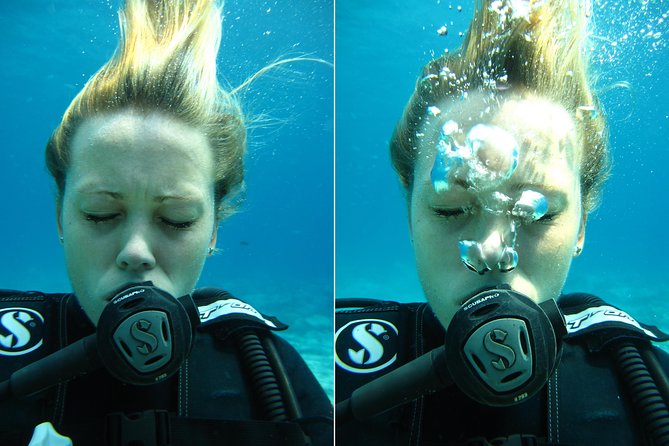
At $586.74 per person, this is not a budget activity. But it is also not just a sightseeing trip. The fee covers a complete beginner certification course over three days, including instruction, equipment, meals, refreshments, transfers, insurance, course materials, and the certificate.
That package can represent good value if you already want a recognized scuba qualification. Booking separate introductory sessions, equipment rental, boat trips, meals, and certification paperwork could make the total less clear and possibly more expensive.
The value is strongest for you if Koh Chang is already part of a longer Thailand trip. You can spend three days earning a credential rather than fitting in a single short underwater experience. After certification, you can use the 18-meter limit for future scuba outings in other parts of the world.
The price is less attractive if you only want to see what scuba feels like once. In that case, a shorter introductory session might suit you better, though this course gives you a qualification at the end.
Remember to add the Koh Rang National Park entrance fee. That cost is specifically excluded, and the course price should not be treated as the full final total until you know the current park charge.
Health, flights, and the rules that matter
You must complete a health questionnaire before entering the water. Certain existing medical conditions, including asthma and heart problems, may prevent you from scuba training. If you have a relevant condition or any doubt about your fitness, speak with a doctor before booking.
The 18-hour flight rule is important. Scuba within 18 hours of flying is not recommended, so do not schedule your return flight immediately after the course. You should also avoid starting the course if your arrival schedule leaves no room for delays.
The weather policy is sensible, but it requires planning. If conditions are poor, the operator offers an alternative date or a full refund. You should still consider the inconvenience of losing a planned course day during a short holiday.
Most people can participate, and service animals are allowed. The activity is near public transportation, though the included hotel transfer applies only to west-coast hotels. Confirmation is received when you book, and free cancellation is available up to 24 hours before the start time. Changes or cancellations inside that window are not accepted for a refund.
Who will get the most from this course?
This is a good fit if you want a serious first step into scuba rather than a one-hour introduction. It suits someone who can spare three days, is comfortable with an early start, and wants to leave Koh Chang with an internationally recognized entry-level license.
The course is also a sensible choice for couples or friends who prefer a small training group. A maximum of three participants can make the learning process more personal, and the two boat days give you time to become comfortable at sea.
You should think twice if your trip schedule is tight. Weather can interrupt the course, flights need an 18-hour buffer, and the west-coast transfer limit may make the logistics harder if you are staying elsewhere.
It may not suit you if you have a medical condition that affects scuba participation, or if you are looking only for a casual underwater activity with no certification work. The theory and skills practice are necessary parts of the qualification, not optional extras.
Practical ways to prepare
Read the PADI online manual before the first morning if you can. You will get more from the instructor’s explanation when the key ideas are already familiar, and you can use the session to ask sharper questions.
Wear comfortable clothing for transport and bring anything you normally need for a full day outdoors. The course includes meals, drinks, and refreshments, but the supplied details do not specify every personal item you should bring, so ask BB Divers about towels, sun protection, and any required documents before departure.
Arrive ready for an 8:00 a.m. start. If you use hotel pickup, confirm the collection point rather than assuming the vehicle will come to the lobby at a standard time.
Give yourself breathing room after the final underwater session before flying. The operator specifically advises against scuba within 18 hours of a flight, so this is one activity where a little spare time is useful.
Should you book the Koh Chang PADI course?
Book it if you want a real scuba qualification, value close instruction, and can commit three days to learning rather than simply sightseeing. The combination of a maximum three-person group, four open-water descents, included equipment and meals, and certification up to 18 meters makes the package easy to understand.
I would be more cautious if you have a packed itinerary, stay outside the west-coast pickup area, or plan to fly soon after finishing. Add the Koh Rang National Park fee to your budget, confirm the transfer details, and check the health requirements before paying.
For a first qualification on Koh Chang, this is a practical choice with a clear training path. It asks for more time and money than a casual introductory session, but you finish with a skill and certification you can use well beyond the island.
FAQ
How long is the PADI Open Water course?
The course takes approximately three days. The first day covers theory and pool or shallow-bay practice, while the second and third days include four open-water descents.
How deep can I go after certification?
After completing the course, you are certified to scuba independently to a maximum depth of 18 meters.
Where does the activity start?
The listed meeting point is Bang Bao Pier on Koh Chang. The activity ends back at the meeting point.
What time does the course start?
The listed start time is 8:00 a.m.
Is hotel pickup included?
Yes, hotel pickup and drop-off are included for hotels on the west coast of Koh Chang. The included transfer does not cover every area of the island.
Are scuba equipment and course materials included?
Yes. The course includes scuba equipment, the PADI online manual, and the certificate.
Are meals and drinks included?
Yes. The package includes a buffet lunch, beverages, and light refreshments.
Is the Koh Rang National Park entrance fee included?
No. The entrance fee for Koh Rang National Park is not included in the price.
Can I fly soon after the course?
Scuba within 18 hours of flying is not recommended. Plan your flights with that restriction in mind.
More three-day trips around Thailand
- 3-Day PADI Open Water Diver Course, Koh Samui
★ 5.0 · 48 reviews - From Phuket: 3-Day SSI/PADI Open Water Diver Certification
★ 5.0 · 24 reviews - Koh Chang: 3-Day PADI Open Water Scuba Dive Course
★ 5.0 · 15 reviews - Koh Samui: 3-Day PADI Open Water Diver Course
★ 5.0 · 2 reviews
Newly logged dives around Thailand
- Phuket: Coral Reef Scuba Diving Experience at G Beach Club★ 4.9 · 32 reviews
- Phuket: Try SCUBA DIVING Full Day Experience 2 Dives★ 5.0 · 9 reviews
- Phuket: Try SCUBA DIVING Full Day Experience 3 Dives★ 5.0 · 5 reviews
- Phuket: Racha Island and Coral Islands + Scuba Beach Dive★ 4.3 · 55 reviews
- Phuket: SCUBA Diving Day Trip King Cruiser, Shark Point, KDM★ 5.0 · 2 reviews
- Phuket Scuba Diving Racha Islands 1-3 Dives For All Levels★ 4.6 · 3 reviews
- Phuket: 3 Dive Koh Phi Phi/Shark Point Scuba Diving Day Trip★ 5.0 · 4 reviews
- Phuket: Khai Islands Tour Or Scuba Diving Options★ 4.7 · 17 reviews
PADI Courses & Certification, side by side.
Tossa de Mar: PADI Discovery Scuba Diving in Costa Brava
Read our review →
Full-Day Beginner Scuba Course with Private Tuition, Racha Yai
Read our review →
Heraklion: Beginner Scuba Diving Lesson with PADI Instructor
Read our review →
Discover Scuba Diving with No Certification in St Thomas
Read our review →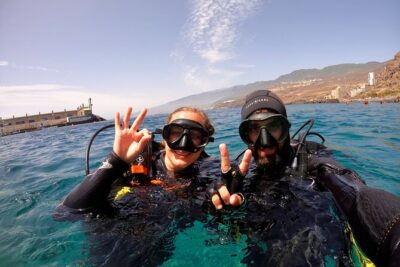
Try Dive – PADI Discover Scuba Diving in Tenerife
Read our review →