Review · KOH TAO
Become certified diver in 3 days – PADI Open Water Diver course on Koh Tao
Koh Tao gives you a full PADI Open Water course in three compact days, combining study, shallow-water practice, and four open-water sessions around Nang Yuan Island. You finish with a certification accepted for scuba trips around the world, not just a pleasant morning at sea. I like the practical format and the easy-to-reach Mae Haad location. I also like that equipment and a log book are included, so you do not need to build your own kit before starting.
The main consideration is the pace. You must complete five manual chapters, five knowledge reviews, quizzes, practical skills, and a final written exam while also making four sea sessions. Three days is efficient, but it leaves little room for distraction, missed work, or poor weather.
Key points to know before booking
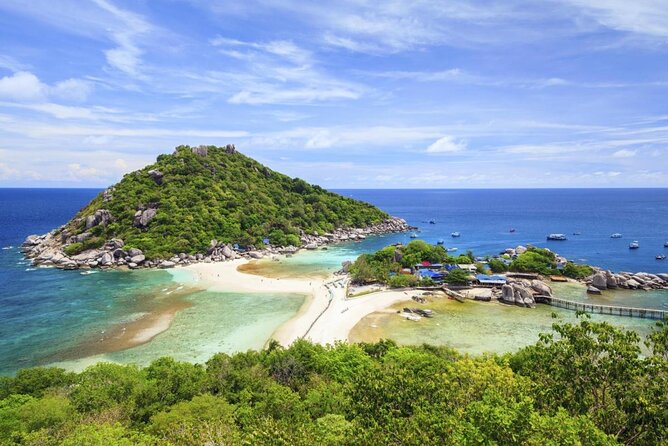
- Four sea sessions are included: Two reach a maximum of 12 meters on day two, followed by two reaching 18 meters on day three.
- The course begins with study: You work through five chapters of the PADI Open Water Diver manual and related training videos.
- Nang Yuan Island is your practical classroom: Shallow-water training comes first, followed by open-water skill practice.
- The price includes useful basics: Scuba equipment, the PADI certificate, and a log book are part of the experience.
- The group is capped at 10 people: That gives the course a more contained feel than a very large class.
- Mae Haad keeps the logistics simple: The center is within easy walking distance of the pier, and the activity returns there.
What you are really signing up for in three days
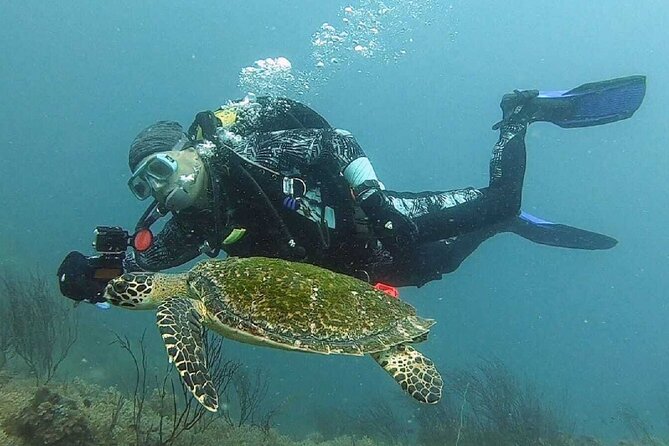
This is not a sightseeing cruise with a short underwater demonstration. It is a proper entry-level PADI course, and the schedule reflects that. You spend time studying, answering questions, learning equipment procedures, and showing that you can handle basic scuba skills before receiving your certificate.
The course suits you if you want a qualification you can use on future scuba trips. It also suits a first-timer who prefers a structured path rather than trying to learn informally on a single boat outing. You do not need to arrange separate equipment rental for the sessions, which keeps the price easier to understand.
The group limit of 10 matters. It does not guarantee one-to-one instruction, but it keeps the class from becoming unwieldy. A named instructor associated with the experience is Dominik Maier, described as calm and humorous while still firm when safety required it. That combination is useful for a beginner, especially when the first underwater exercises feel unfamiliar.
You should still treat the course as a commitment. The advertised start time is 9 a.m., but the three days include early starts later in the program. Day three begins at 8 a.m. for theory and the final written exam, then moves into sea work from 9 a.m. to 2 p.m. Plan your Koh Tao stay around the course instead of squeezing it between ferries or late-night plans.
More Dives for Certified Divers in Thailand
- Fun Diving Packages (Certified Divers)
★ 5.0 · 93 reviews - Koh Samui 2-Dive Trip to Sail Rock for certified divers
★ 5.0 · 89 reviews - Koh Tao 2-Dive Day Trip from Koh Samui for certified divers
★ 5.0 · 86 reviews
Day one: study first, then your first underwater skills
The first morning starts at the Scuba Birds PADI center in Mae Haad. You work through five chapters of the PADI Open Water Diver manual, with five related knowledge reviews. The training videos can supplement the reading, which gives you another way to absorb the basic ideas if a manual alone feels dry.
This classroom work is not filler. You learn the rules and routines that make the practical sessions safer and less confusing. You will need to understand equipment, basic procedures, and how to respond alongside a buddy before you move into deeper water.
After the theory, you go to Nang Yuan Island for the first practical session. The initial work takes place in shallow water in a bay, a sensible setting for getting used to breathing through a regulator and moving with scuba equipment. You learn to assemble your equipment, follow buddy procedures, and perform basic scuba skills.
This part can be the most mentally demanding for a beginner. The sea may look inviting, but your attention is on breathing, buoyancy, signals, and equipment. The shallow setting gives you room to build confidence before the course asks for longer sessions in open water.
The day is listed as roughly five hours at Nang Yuan Island, plus about two hours at the center. That makes day one a full day, even though it begins with what may look like simple reading. Bring patience and focus. You are laying down the habits used during the rest of the course.
Day two: two open-water sessions to 12 meters
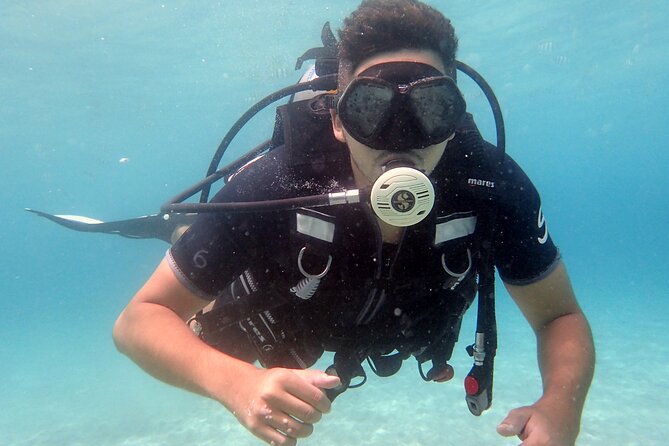
Day two begins with another theory block at the Mae Haad center. You continue through the knowledge reviews and quizzes, then head to Nang Yuan Island for two open-water sessions between 10 a.m. and 3 p.m.
The maximum depth is 12 meters. At this stage, the point is not to chase the deepest possible water. You repeat the skills learned in the shallow session and show that you can use them in a proper sea setting, with more space and different conditions.
This is where the course shifts from learning individual actions to putting them together. You are no longer only assembling equipment or practicing a procedure in isolation. You are managing your breathing, position, buddy awareness, and instructor directions at the same time.
The two-session format gives you meaningful time underwater, but it also makes the day physically and mentally busy. You should not expect a relaxed island afternoon with a little instruction attached. The hours from 10 a.m. to 3 p.m. include the practical work and the natural pauses needed around it.
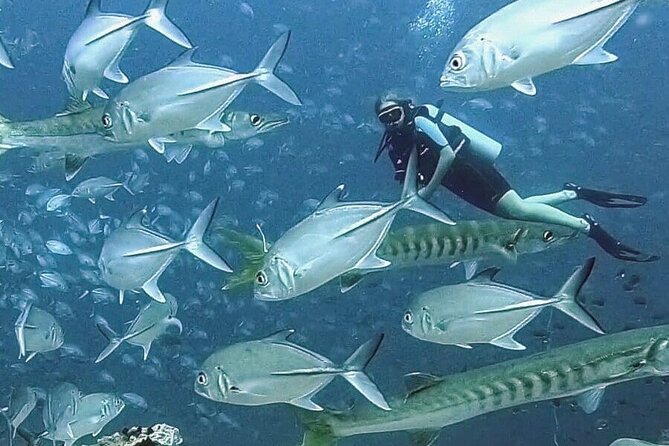
Nang Yuan Island adds an appealing setting to a serious training day. The course description points to coral and marine life in the Gulf of Thailand, so you get your first chance to connect the classroom material with the underwater environment. The scenery is part of the pleasure, but the main goal remains skill completion.
Day three: the exam, two final sessions, and certification
Day three starts earliest, at 8 a.m., with more theory and the final written exam. The exam gives the course a clear finish line. You are not simply told that you have completed a beginner session. You must complete the academic side as well as the practical requirements.
After the exam, you return to Nang Yuan Island for two open-water sessions from 9 a.m. to 2 p.m. The maximum depth rises to 18 meters. That increase is important because it marks the final step in the course, allowing you to apply your skills at the depth connected with the PADI Open Water qualification.
The final sessions focus on mastering the skills you have been repeating since day one. You have already worked in shallow water and at 12 meters, so the last stage is about consistency and control rather than learning everything from scratch again.
Certification procedures are completed after the final sessions. If you meet the course requirements, the PADI certificate is included. You also receive a log book, a small but useful item for recording this course and future scuba sessions.
The schedule is tight, but it is logically arranged. Day one builds familiarity, day two puts the skills into open water, and day three checks your knowledge and completes the practical work at a greater depth. That progression is one of the strongest reasons to choose this format over a short introductory outing.
More PADI Courses in Thailand
- Full-Day Beginner Scuba Course with Private Tuition, Racha Yai
★ 5.0 · 368 reviews - La Bombona Diving Koh Tao Open Water Course
★ 5.0 · 172 reviews - Padi open water diver course, become a diver in 3 days
★ 5.0 · 113 reviews - PADI Discover Scuba Diving for Beginners (Non Certified Divers)
★ 5.0 · 78 reviews
Why the PADI certificate changes the value
At $375.70 per person, this costs more than a casual half-day sea activity. The comparison is not quite fair, though. You are paying for an entry-level qualification, classroom teaching, practical instruction, equipment use, four open-water sessions, the certificate, and the log book.
The certificate is the key value. A one-time introductory experience may let you try scuba, but it does not give you the same qualification for future trips. With the PADI Open Water certificate, you have a credential you can use for scuba around the world, subject to the rules and conditions of future operators.
The included equipment also helps. You do not have to buy or arrange a full set of scuba gear for a three-day course. For a first-time student, that reduces both cost and hassle.
The price makes the most sense if you already know you want to continue. If you are only curious and unsure about being underwater, a shorter introductory activity may be a better first step, though this course does begin with shallow-water practice. You need to decide if you want a qualification or simply a single unusual morning.
Mae Haad and Nang Yuan Island: simple logistics, scenic practice
The center is at 24 Mae Haad, within easy walking distance of the pier. That is useful on Koh Tao, where arrival and departure plans can otherwise complicate a short stay. You do not need to build an elaborate transfer plan just to reach the course starting point.
The activity ends back at the meeting point. This makes the arrangement straightforward, especially if you are staying near Mae Haad. The location is also near public transportation, according to the supplied details, although the most important practical benefit is its proximity to the pier.
Nang Yuan Island serves as the setting for the practical work on all three days. Its shallow bay is used for the first confined-water session, then the surrounding open water supports the later sessions. That gives you a clear sense of progression instead of shifting between unrelated training sites.
The Gulf of Thailand setting is part of the appeal. You can expect coral and marine life to be part of the underwater environment, but remember that nature is not a guaranteed performance. Weather, visibility, and sea conditions can affect what you see and how comfortable the sessions feel.
The group size and teaching style
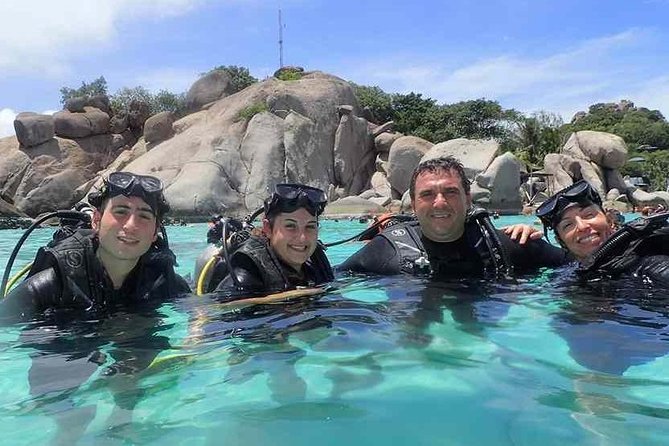
The maximum group size is 10 people. For a course involving equipment checks, buddy routines, and practical underwater skills, a smaller class is valuable because instructions are easier to follow and the group is less likely to feel chaotic.
Still, a group of 10 is not private teaching. If you want one instructor entirely focused on you, ask about that before booking. The available information identifies the provider as PADI 5 Star IDC Diving Center Scuba Birds and names Dominik Maier in a course account, but it does not promise that he will teach every scheduled class.
The teaching style associated with Dominik is worth noting for nervous beginners. He is described as funny when the moment allows it and firm when safety calls for it. That is a good balance in scuba training. You want reassurance, but you also need clear correction when a procedure matters.
If you feel anxious, tell the instructor early. The course is designed to introduce skills in stages, starting in shallow water, and a calm teaching relationship can make a real difference. Do not treat nerves as a reason to hide a problem. Ask questions and take the practical work at the pace allowed by the course.
Weather, cancellation, and the right amount of flexibility
The activity requires good weather. If poor conditions force a cancellation, you are offered another date or a full refund. That protection is useful, but it does not solve every scheduling problem.
You should leave some flexibility around the three days if your trip allows. If you book the course immediately before a flight or ferry departure, a weather change could create a scramble. The same applies if you have only three days on Koh Tao and no spare time.
Free cancellation is available up to 24 hours before the start time for a full refund. Changes or cancellations inside that 24-hour window are not accepted for a refund. The local time in Koh Tao controls the cut-off, so do not wait until you are already on the pier to make a decision.
The course is listed as suitable for most people, but it is still an active certification program. You should be ready for classroom study, equipment handling, repeated skill practice, and several hours at sea across the three days.
Who should book this course
I would choose this course if you want to leave Koh Tao with a real qualification rather than only a memory of trying scuba. It works particularly well for first-time participants who like clear instruction, a fixed schedule, and a gradual move from shallow water to greater depth.
It is also a good fit if you are staying close to Mae Haad and want to keep transport simple. The group cap of 10, included equipment, four open-water sessions, certificate, and log book give you a useful package for the price.
I would hesitate if your Koh Tao schedule is crowded. The course has theory on every day, a final exam, and long practical blocks. It is not something to squeeze around island sightseeing with no spare time.
I would also think twice if you are uncertain about scuba itself. The shallow session helps you get started, but this remains a certification course with academic and practical requirements. If you want only a brief taste of underwater activity, another format may suit you better.
Should you book the Koh Tao PADI course?
Book it if you want a legitimate entry-level PADI qualification and can give three full days to the process. The course offers a sensible progression, four open-water sessions, equipment, a log book, and a certificate that can support future scuba plans.
The main tradeoff is intensity. You pay for training, not just sightseeing, and the schedule leaves little room for missed sessions or poor planning. For a focused beginner who wants to learn properly in the Gulf of Thailand, this is a strong-value choice. For a casual sampler or a visitor with a packed itinerary, it may ask for more time and commitment than expected.
FAQ
How long is the PADI Open Water course?
The course lasts approximately three days. It includes classroom study, shallow-water practice, four open-water sessions, and a final written exam.
Where does the course begin?
You meet at the Scuba Birds PADI center at 24 Mae Haad, 21, Tambon Ko Tao, Amphoe Ko Pha-ngan, Surat Thani 84280, Thailand. The center is within easy walking distance of the pier.
How many open-water sessions are included?
Four open-water sessions are included. Two take place on day two, with a maximum depth of 12 meters, and two take place on day three, with a maximum depth of 18 meters.
Is scuba equipment provided?
Yes. The course includes the scuba equipment used for the open-water sessions.
What do I receive after completing the course?
You receive an included PADI diver certificate and a diving log book for recording your sessions.
What happens if bad weather cancels the activity?
If poor weather causes cancellation, you are offered a different date or a full refund. You can also cancel up to 24 hours before the start time for a full refund.
More three-day trips around Thailand
- 3-Day PADI Open Water Diver Course, Koh Samui
★ 5.0 · 48 reviews - From Phuket: 3-Day SSI/PADI Open Water Diver Certification
★ 5.0 · 24 reviews - Koh Chang: 3-Day PADI Open Water Scuba Dive Course
★ 5.0 · 15 reviews - Koh Samui: 3-Day PADI Open Water Diver Course
★ 5.0 · 2 reviews
Newly logged dives around Thailand
- Phuket: Coral Reef Scuba Diving Experience at G Beach Club★ 4.9 · 32 reviews
- Phuket: Try SCUBA DIVING Full Day Experience 2 Dives★ 5.0 · 9 reviews
- Phuket: Try SCUBA DIVING Full Day Experience 3 Dives★ 5.0 · 5 reviews
- Phuket: Racha Island and Coral Islands + Scuba Beach Dive★ 4.3 · 55 reviews
- Phuket: SCUBA Diving Day Trip King Cruiser, Shark Point, KDM★ 5.0 · 2 reviews
- Phuket Scuba Diving Racha Islands 1-3 Dives For All Levels★ 4.6 · 3 reviews
- Phuket: 3 Dive Koh Phi Phi/Shark Point Scuba Diving Day Trip★ 5.0 · 4 reviews
- Phuket: Khai Islands Tour Or Scuba Diving Options★ 4.7 · 17 reviews
PADI Courses & Certification, side by side.
Tossa de Mar: PADI Discovery Scuba Diving in Costa Brava
Read our review →
Full-Day Beginner Scuba Course with Private Tuition, Racha Yai
Read our review →
Heraklion: Beginner Scuba Diving Lesson with PADI Instructor
Read our review →
Discover Scuba Diving with No Certification in St Thomas
Read our review →
Try Dive – PADI Discover Scuba Diving in Tenerife
Read our review →