Review · MALLORCA
Mallorca: Discover Scuba Diving from the beach
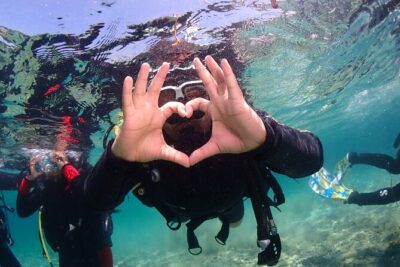
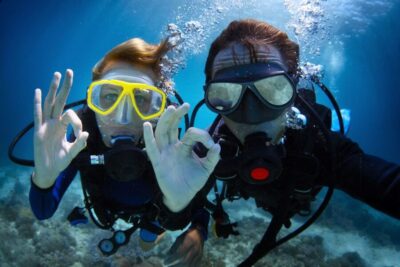
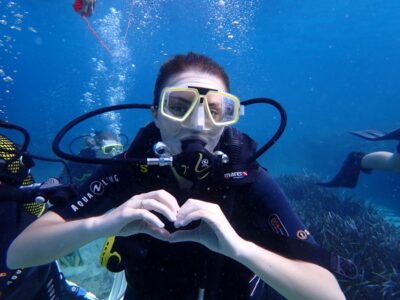
Mallorca’s easiest introduction to scuba starts right from the sand. At Big Blue Diving Mallorca, you learn the basics, practice in shallow water, then follow a certified instructor to 2 or 3 meters below the surface, where fish and octopus can appear close enough to study without a boat trip or a full certification course.
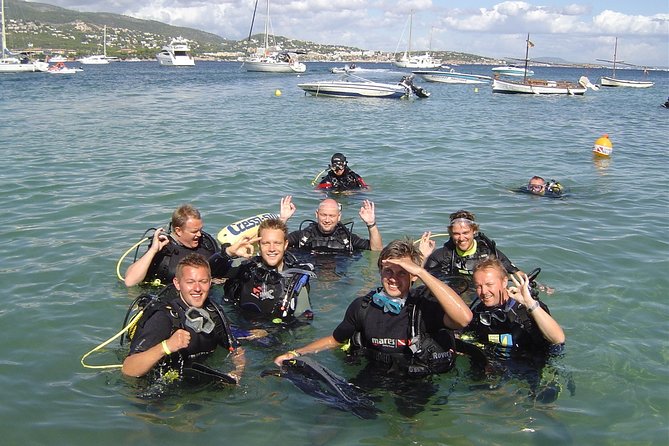
I like the beach entry, which keeps the first underwater outing calm and simple, and the one-on-one guidance available in a private group. Instructors speak English, German, Italian, French, and Spanish, and the experience has helped first-timers feel safe, including with instructor Tim and a French-speaking instructor praised for clear, kind instruction.
The main drawback is time. Two hours includes the briefing, gear fitting, shallow-water practice, and final underwater session, so the actual time below the surface is limited. You should also plan around the 24-hour no-fly rule afterward.
Key points to know before booking
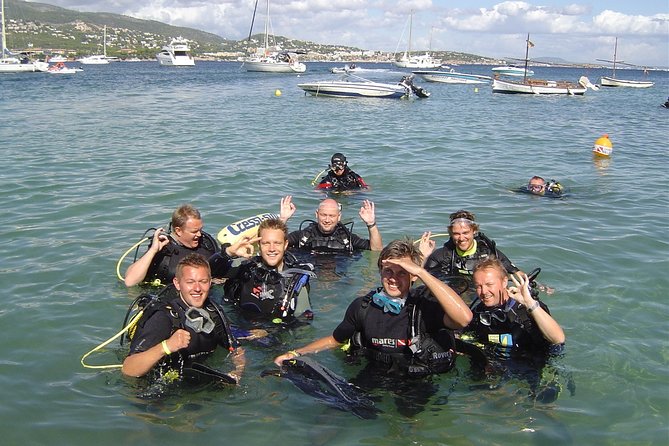
- You enter from the beach: There is no boat ride or complicated offshore launch. The center is by the boat pier, reached by stairs down to the beach.
- The underwater session reaches 2 to 3 meters: This is a gentle first taste, not a full open-water qualification.
- Your instructor stays close: The private-group format allows the guide to explain each step and watch your comfort level.
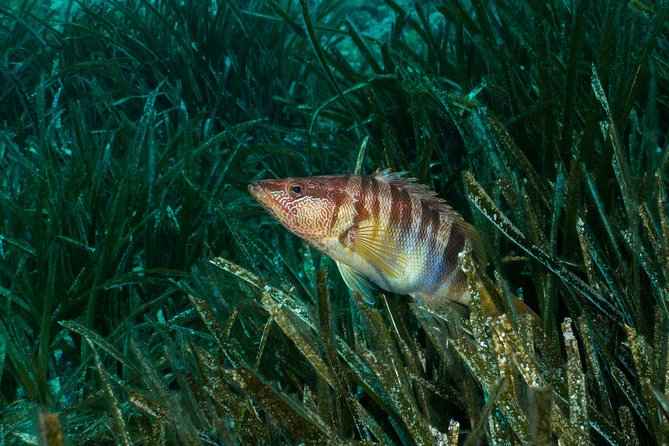
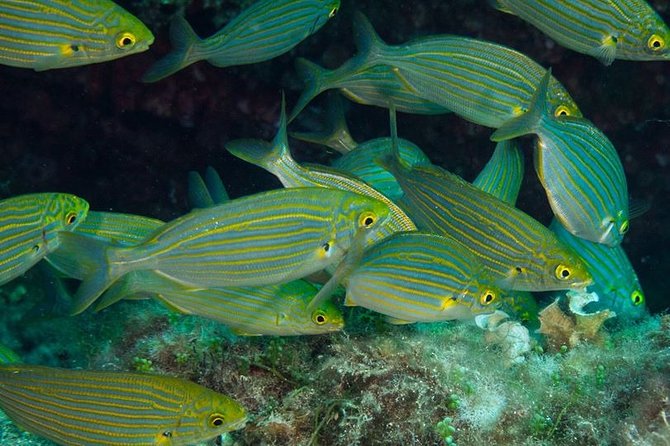
- Fish and octopus may be part of the view: The shallow water still offers a close look at marine life.
- All core equipment is included: Rental gear, instruction, practical training, and activity insurance are covered.
- You need basic swimming ability and good health: The activity is not suitable for non-swimmers, pregnant women, people with several listed medical conditions, or children under 10.
A calm first step into scuba
I like this Mallorca experience because it removes two common worries at once: you do not need prior scuba experience, and you do not need to board a boat before you know how you feel underwater. The beach start gives you a clear sense of place and lets you take the first steps at a manageable pace.
The program is designed as an introduction, not as a qualification. You will not leave with a scuba certificate, but you will learn how the equipment works, practice basic skills, and find out if underwater exploration suits you before paying for a longer course.
At $130 per person, the price makes the most sense if you value personal instruction and a complete first experience rather than a long underwater outing. Your fee includes the lesson, shallow-water practice, the final beach session, equipment rental, and activity insurance. Meals, accommodation, and underwater cameras are not included.
More Discover Scuba Diving in Spain
- Barcelona: PADI Discover Scuba Diving
★ 4.7 · 1,016 reviews - Mallorca: Discover Scuba Diving for Beginners
★ 4.7 · 805 reviews - Lanzarote Introductory Scuba Diving Experience
★ 5.0 · 766 reviews
Finding the center by the boat pier
The meeting point is straightforward once you are at the beach. Walk down the stairs, then look for the dive center directly at the boat pier. The stairs matter if you have mobility concerns, since wheelchair users are not suitable for this activity.
You should arrive ready for the beach rather than dressed for a formal classroom. Bring beachwear, a towel, and sunscreen. A light meal beforehand is recommended, but avoid arriving overly full. Sun protection is especially useful because parts of the two-hour session take place above water.
The provider does not list hotel pickup, so plan to make your own way to the beach meeting point. Check the exact starting time when booking, since several start times may be available depending on the day.
The short theory lesson comes first
Your instructor begins with a simple explanation of scuba equipment and the basics you need for a safe first session. This is not an advanced classroom lecture. The aim is to give you enough information to understand your air supply, get comfortable with the mask and breathing system, and know how to respond to the instructor underwater.
That short lesson is valuable for beginners who may feel nervous about breathing below the surface. You can ask questions before entering the water, rather than trying to learn everything while wearing the equipment.
The instructors work in English, German, Italian, French, and Spanish. That range can make a real difference when safety instructions are involved. If you prefer French, a French-speaking instructor has been specifically praised for being kind, attentive, and easy to understand.
Shallow-water practice builds confidence
After the briefing, you move into shallow water for practical training. This is the part I would pay close attention to, even if you are already a confident swimmer. Swimming and scuba use different habits, and the equipment can feel unfamiliar at first.
The shallow-water exercises give you a chance to adjust before heading farther from shore. You can get used to breathing through the regulator, wearing the mask, and following hand signals. The instructor can also see how comfortable you are and slow things down if needed.
That close supervision is one of the strongest reasons to choose this activity for a first attempt. Several participants have described the instructors as friendly, patient, and careful about checking that everything feels all right. Tim has received special praise for making a first session feel safe and relaxed.
You should not expect a long skills course. This is practical preparation for one short introductory session, not training that covers every skill required for certification.
Same water, a different dive:
- Southern Tenerife: 50-Minute Submarine Dive
★ 4.8 · 2,216 reviews - Tenerife: Your First Scuba Diving Experience in Turtle Area
★ 4.7 · 1,679 reviews - Lanzarote: Real Submarine Dive
★ 4.5 · 1,039 reviews - Tenerife: Beginner’s Dive at a Spot with Turtle Sightings
★ 4.7 · 627 reviews
The beach session reaches only 2 to 3 meters
Once you are ready, the instructor leads the final underwater portion directly from the beach. The maximum stated depth is 2 to 3 meters, which is shallow enough to keep the first experience approachable while still giving you a real sense of being below the surface.
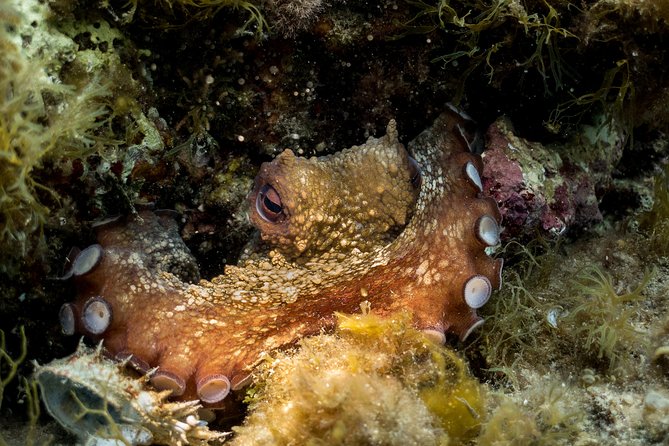
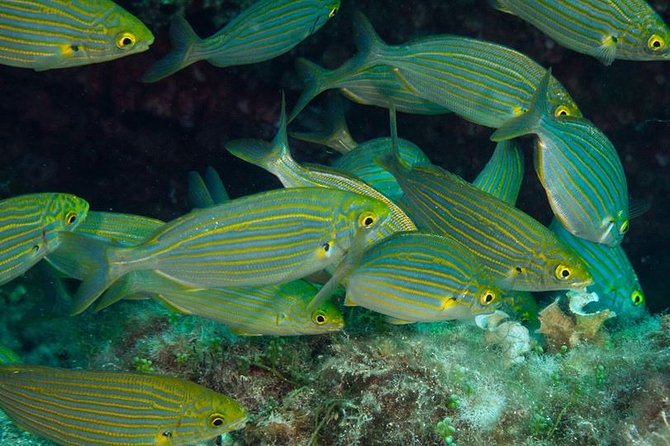
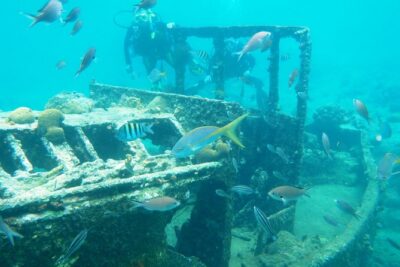
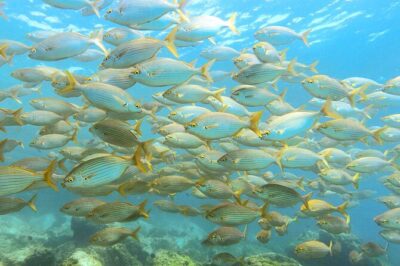
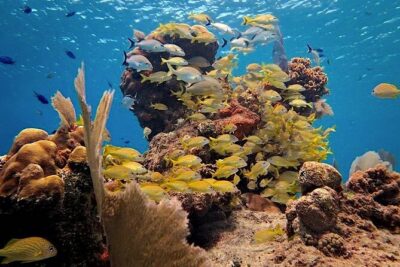
At that depth, the appeal is not dramatic distance or advanced technique. It is the simple change in viewpoint. Fish pass at eye level, and you may see an octopus among the underwater surroundings. One first-time participant described seeing fish and octopus at about 2 meters as an unforgettable part of the experience.
You should keep your expectations realistic. Mallorca’s marine life is not guaranteed at a particular moment, and this is not presented as a wildlife-focused expedition. Still, the chance to observe fish close by is a strong reward for such a short, accessible session.
The guide remains with you throughout the underwater activity. If you feel uneasy, signal your instructor rather than forcing yourself to continue. The whole point of an introductory session is to learn how your body and mind respond.
What the two-hour schedule really means
Two hours sounds generous until you divide it between the briefing, equipment, shallow-water practice, and the final beach session. The underwater portion is only one part of the appointment, so do not book this expecting two hours below the surface.
That shorter underwater time is a drawback for people who already have scuba experience. One participant enjoyed the session but wished it had been longer. If you are an experienced diver looking for a full morning on the water, this will feel too brief.
For a first attempt, however, the length is sensible. You get a clear introduction without committing most of your day or signing up for a certification course. It also leaves room to decide how you feel before taking a longer course elsewhere.
The private-group setup may help the pace feel more personal than a large group lesson. The exact group size is not stated, so you should not assume a completely individual instructor unless your booking confirms it. What is clear is that the activity is organized as a private group and includes direct instructor support.
Equipment and comfort in the water
Full scuba equipment is supplied, along with rental equipment and activity insurance. You do not need to bring your own mask, regulator, tank, or other core gear. You do need to arrive with suitable beach clothing and a towel.
A first-time session can feel busy because the equipment adds weight and changes how you move. That is another reason the shallow-water practice matters. Take your time with each instruction, and tell the guide if the mask, breathing system, or other equipment does not feel right.
You should also protect yourself from the sun. Sunscreen is recommended, and beachwear is more practical than ordinary sightseeing clothes. The provider recommends a light meal beforehand, which can help you avoid starting hungry without making you uncomfortable in the water.
Underwater cameras are not included. If photographs are important to you, bring that expectation down a notch. One participant specifically wished for more time to take photos in the scuba gear before the activity, since those first-time images can be special. Ask about photography before the session rather than assuming it is part of the package.
Who should book this Mallorca experience
This is a good match for you if you:
- Have never tried scuba and want a gentle introduction
- Can swim and feel comfortable in the sea
- Prefer a beach start to a boat-based outing
- Want an instructor close by during your first session
- Are curious about fish and small marine life
- Do not want to commit to a certification course yet
- Have a free day that allows for the 24-hour no-fly period afterward
It can also suit families with older children, since the minimum age is 10. Minors need authorization and a parent’s signature. The activity is not suitable for children under 10.
This is not the right choice if you cannot swim, have a cold, are pregnant, or have a listed medical concern such as heart problems or high blood pressure. People with vertigo, claustrophobia, or certain pre-existing medical conditions should not book without resolving the medical question first.
The age rules need careful reading. The activity is listed as unsuitable for people over 65, while anyone over 60 or with medical restrictions must present a valid scuba medical certificate. If you are in that age range, contact the provider before paying so you know exactly what documentation is required.
The stated weight limit is 331 pounds, or 150 kilograms. Wheelchair users are also listed as unsuitable, partly because the meeting point requires stairs down to the beach.
Health rules and the 24-hour flight limit
Good health is essential for this activity. You should not treat the medical guidance as a minor formality. Breathing compressed air and changing pressure require you to follow the provider’s safety rules.
You must not fly for at least 24 hours after the session. This matters if Mallorca is your final stop before an evening or next-day flight. Schedule the experience early enough in your trip, or leave a full day between the activity and air travel.
Bad weather can cause the session to be postponed. That is normal for a beach-based activity, since water conditions affect safety and comfort. Flexible planning helps, especially if this is one of the main activities in your Mallorca itinerary.
Cancellation is free up to 24 hours in advance for a full refund, and you can reserve now and pay later. Those options reduce some booking risk, but they do not remove the need to check your health, flight schedule, and weather flexibility first.
Is $130 a fair price?
The cost is not cheap for a two-hour activity, but the comparison should not be made against a simple beach swim. You are paying for a certified instructor, a theory lesson, shallow-water coaching, full equipment, activity insurance, and a guided underwater session.
The private-group format also adds value if you are nervous or want questions answered as you go. Beginners often benefit more from calm instruction than from a longer session with little personal attention.
On the other hand, $130 is harder to justify if you already hold a certification or want extensive underwater time. The 2 to 3 meter depth and short schedule are aimed at newcomers, not experienced scuba enthusiasts.
I would view the price as reasonable for a first test, especially if the alternative is signing up for a multi-day course before you know if you enjoy scuba. I would not book it mainly for photography or a long marine-life outing, since cameras are extra and the underwater portion is limited.
What the strongest feedback tells you
The clearest pattern is confidence. First-timers have felt safe, understood the instructions, and enjoyed the activity more than expected. That points to the instructors as the main strength, rather than the length or size of the underwater area.
Tim has been singled out for being friendly, kind, and attentive throughout the session. A French-speaking instructor has also been praised for speaking clearly and listening carefully. If language support matters to you, the available languages are a genuine practical benefit.
The other strong point is the marine life at shallow depth. Seeing fish and an octopus only a few meters below the surface can feel surprisingly special when it is your first time using scuba equipment.
The repeated weakness is also clear: some people want more time. You may wish the session continued after you finally relax and begin enjoying the underwater view. That is the tradeoff for a short introductory format.
Should you book it?
Book this if you want a supported first taste of scuba in Mallorca, especially if you like the idea of entering from the beach and keeping the depth shallow. The patient instructors, multilingual support, full equipment, and close guidance make it a practical choice for beginners.
Skip it if you want a certification, a long underwater session, underwater photography, or a full-day marine excursion. Also skip it if your flight leaves within 24 hours, you cannot swim, or you have a health condition that has not been cleared for scuba.
For the best experience, bring sunscreen, beachwear, and a towel, eat lightly beforehand, leave plenty of time before flying, and arrive ready to learn at an easy pace. At its best, this is not about going far below the surface. It is about finding out, safely and simply, if the underwater world is for you.
FAQ
How long does the Mallorca scuba experience last?
The activity lasts two hours, including the theory lesson, shallow-water practice, equipment use, and final beach session.
How deep will I go?
The final underwater session reaches a depth of about 2 to 3 meters.
Do I need previous scuba experience?
No. Previous experience is not required, but you must be in good health and have general swimming skills.
What is included in the price?
The price includes a short theory lesson, practical training in shallow water, the final beach session, activity insurance, and rental equipment.
What should I bring?
Bring a towel, sunscreen, and beachwear. A light meal beforehand is recommended.
Can I fly after the activity?
You must wait at least 24 hours after the session before flying. This should be considered when planning your Mallorca schedule.
Newly logged dives around Spain
- Fuerteventura: Introductory Dive in La Lajita with Pickup★ 4.9 · 68 reviews
- Scuba Diving – Dive for certified divers★ 4.3 · 4 reviews
- Scuba Diving Baptism in Caleta de Fuste★ 5.0 · 34 reviews
- Santa Pola: 3-Hour Scuba Diving near Tabarca★ 4.9 · 25 reviews
- Tenerife : Diving License international in one day★ 5.0 · 7 reviews
- Santa Cruz de Tenerife: PADI Introductory Dive★ 4.8 · 23 reviews
- Salou: Scuba Diving for beginners with hotel pickup★ 4.0 · 7 reviews
- S. Tenerife: 2 Dives for Beginners (Beach + Boat Experience)★ 4.1 · 6 reviews
Discover Scuba Diving, side by side.
Cyprus: Introductory Scuba Lesson and Dive with Transfer
Read our review →