
Review · KEY LARGO
Key Largo: Molasses Reef Novice to Intermediate Dive
Molasses Reef gives you the rare treat of a famous underwater site that is still friendly to newer scuba-certified participants. The reef begins close to the surface and slopes to about 55 feet, so you can enjoy its coral formations without needing advanced technical skills. Clear Gulf Stream water and a small group of up to eight make this a particularly appealing choice.
I like the chance to see large animals such as nurse sharks, eagle rays, southern stingrays, and barracudas in the same general area as colorful reef fish. I also like that the trip includes two tanks, air, and weights, which makes the $134 price easier to assess. The main consideration is that a guide costs extra for Level 1 and Junior Divers, and full equipment rental may need to be arranged.
Key points
- Molasses Reef reaches about 55 feet: Its gradual spur-and-groove formation works well for newer scuba participants and snorkelers.
- The Gulf Stream helps keep the water clear: Good visibility gives you a better chance to spot reef life and follow the coral structure.
- Two tanks are included: You get a proper half-day outing rather than a single short underwater session.
- Small groups cap at eight people: That can make check-in, boat movement, and underwater guidance feel more manageable.
- Robert can guide newer certified participants: Level 1 and Junior Divers must hire a guide, with an additional charge.
- Certification and recent experience matter: You need proof of certification and a last scuba session within the past two years.
Why Molasses Reef Works for Newer Scuba Participants
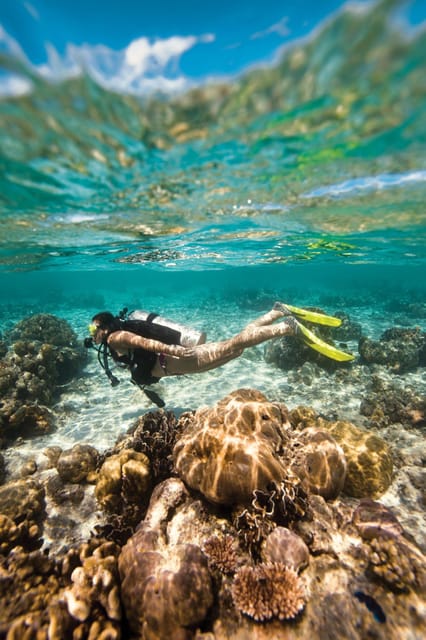
Many famous reef sites ask you to trade comfort for reputation. Molasses Reef is a more sensible compromise. Its classic spur-and-groove design features raised coral ridges separated by sandy channels, beginning near the surface and dropping gradually to about 55 feet.
That layout matters. You can spend time looking at the reef without immediately dealing with great depth, strong technical demands, or a dramatic wall. The site suits certified beginners who want to build confidence, while intermediate participants still have plenty to inspect among the coral ridges and channels.
I also like the flexibility this depth offers for a mixed party. A newer participant can focus on buoyancy, breathing, and staying aware of the guide. Someone with more experience can pay closer attention to fish behavior and the reef’s structure. The experience is not limited to one kind of scuba participant.
The word novice does not mean unprepared, though. You still need scuba certification, and your last session must have been within the past two years. If you are a Level 1 or Junior Diver, plan on hiring a guide. That extra cost is worth factoring into the total before you reserve.
More Reef Diving in the USA
- Certified Diver: 2-Tank Deep Wreck and Shallow Reef Dive Off Oahu
★ 5.0 · 331 reviews - Incredibly Fun Coral Reef Giant Sea Turtles 4hour Boat Scuba Tour
★ 4.5 · 300 reviews - Certified Diver: 2-Tank Shallow Reef Dives off Oahu
★ 5.0 · 278 reviews
What Your Four Hours Look Like
This is a four-hour, two-tank charter. The supplied details do not give exact departure times, so you will need to check availability for the day you want. The timing is long enough to make the trip feel like a proper reef outing, yet short enough to fit neatly into a Key Largo schedule.
The practical rhythm is straightforward. You check in, show proof of scuba certification for every participant, collect or confirm tanks and weights, and board the boat. The crew then takes you out for two underwater sessions at Molasses Reef, with time between them for the normal boat procedures and preparation.
Because the trip carries no more than eight participants, I would expect a less crowded setup than a large charter. That does not guarantee a private experience, but it can make a real difference when you are sorting equipment, listening to instructions, or staying with a guide underwater.
Air tanks and weights are included. Full equipment rental is available, including a BCD, regulator, wetsuit, mask, snorkel, and fins. The information does not state whether full gear carries a separate charge, so confirm that point when booking. If you own some equipment but not all of it, ask exactly what you need to add.
A guide is available on request for an additional cost. For Level 1 and Junior Divers, a guide is required. Even if you have a higher certification, you may prefer the extra support if you have not been in the water recently or want help locating marine life.
Reading the Reef at 55 Feet
Molasses Reef is not one single dramatic feature. Its appeal comes from the way the reef is arranged. Spur-and-groove formations create coral ridges and sandy lanes, giving you a natural route to follow rather than a featureless stretch of open water.
Nearer the surface, the reef can work well for a calm start. You have less depth to manage and can concentrate on trim, breathing, and keeping a comfortable distance from the coral. As the reef slopes down, you can look into deeper channels and examine different sections of the formation, with the site reaching about 55 feet.
That maximum depth is approachable for novice and intermediate scuba participants, but you should still pay attention to air use and depth. The trip is not a license to wander. Stay aware of your guide, buddy, and remaining air, especially if you are still learning to manage buoyancy.
Snorkelers can also use the shallower portions of the reef. That makes this location useful for a mixed group, though the experience described here is specifically a two-tank scuba charter. If someone in your party is not certified, this particular activity is not suitable for them.
What You Might See Underwater
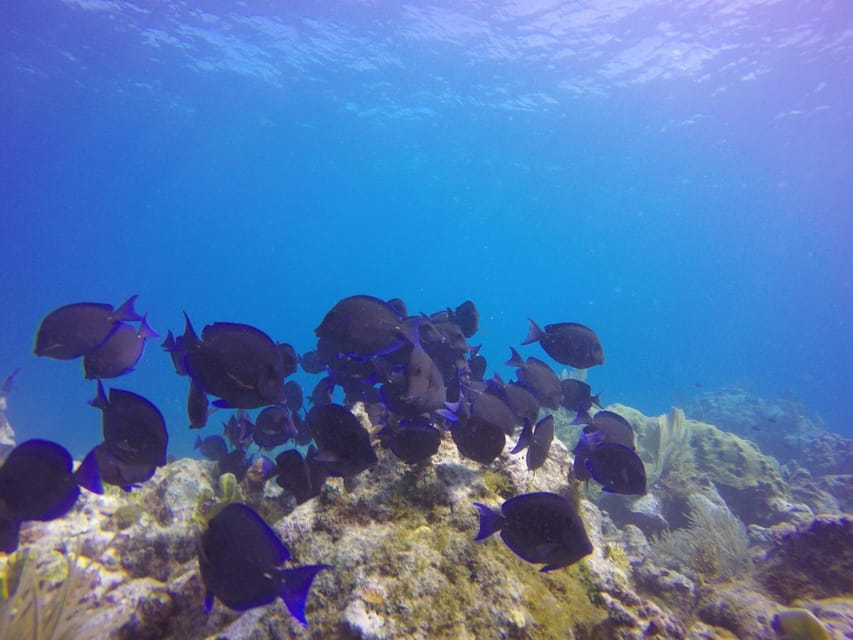
The marine life is one of the strongest reasons to choose this outing. The possible sightings include nurse sharks, eagle rays, southern stingrays, reef sharks, barracudas, and many colorful fish.
These animals give the site a good sense of scale. One moment you may be examining smaller fish around the coral, and the next you may notice a ray moving across the reef or a barracuda holding position nearby. Sightings are never guaranteed, but the changing population means the same site can feel different from one visit to the next.
Nurse sharks and southern stingrays are especially useful sightings for newer scuba participants because they can turn a familiar coral setting into something memorable without requiring a search for a rare species. Eagle rays and reef sharks add another level of excitement, while barracudas bring a different shape and presence to the scene.
The best approach is to stay patient. You may not see every animal named in the description, and you should not book the trip expecting a wildlife checklist. Clear water gives you a better chance of noticing movement at a distance, but nature decides what appears and when.
Same water, a different dive:
- First-Time Scuba Diving in Honolulu + Free Videos
★ 5.0 · 3,123 reviews - Oahu Shark Dive
★ 5.0 · 2,903 reviews - Oahu: Shark Cage Dive on the North Shore
★ 4.8 · 1,485 reviews - Shark Cage Diving on Oahu’s North Shore
★ 5.0 · 1,391 reviews
Why the Gulf Stream Matters
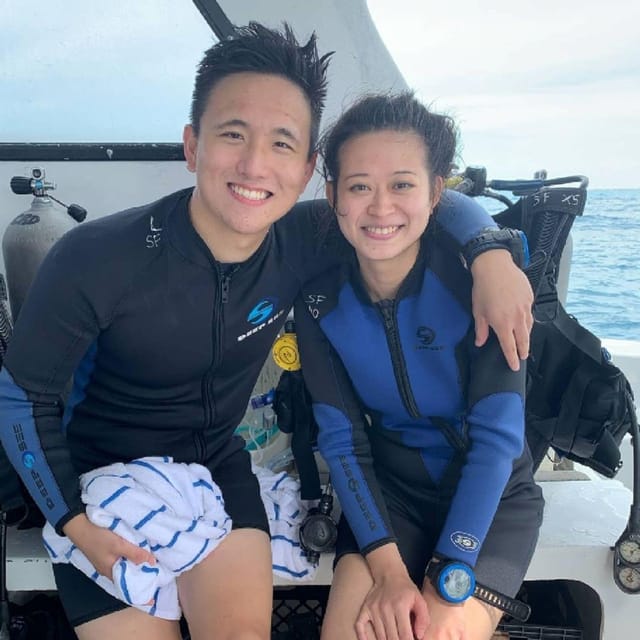
The nearby Gulf Stream helps keep the water clear and supports the site’s appeal. Visibility is more than a pretty bonus. It affects how easily you can follow the reef, keep track of your buddy, recognize marine life, and feel settled underwater.
For a newer scuba participant, clear conditions can reduce some of the mental work. You may have a better view of the coral ridges and sandy channels ahead, rather than constantly trying to work out where the reef continues. That does not remove the need for good habits, but it can make the environment easier to read.
Visibility also helps intermediate participants get more from the site. Instead of staying focused only on the nearest coral, you can scan the surrounding water for rays, sharks, or barracudas. Good visibility gives the reef a larger sense of space.
Conditions in the sea can change, and the supplied information does not promise a specific visibility range. Treat the Gulf Stream as a favorable feature, not a guarantee of perfect water on every departure.
Crew Support and the Small-Group Advantage
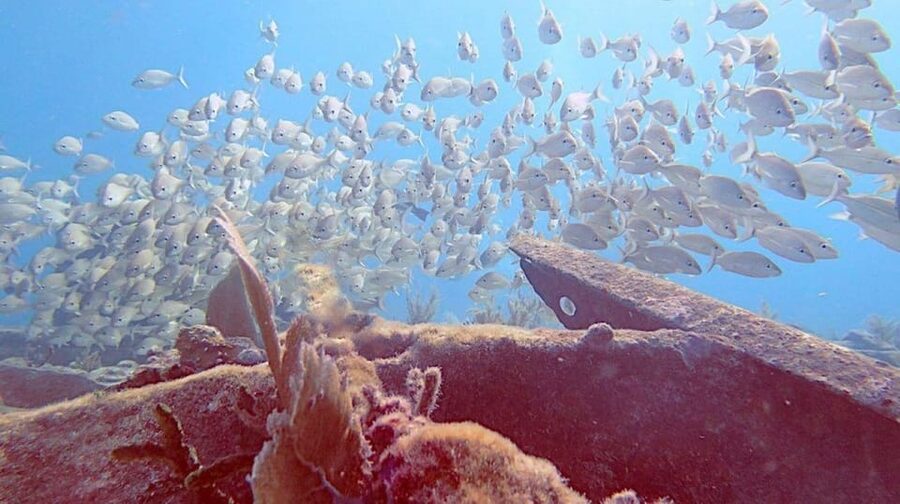
The crew is an important part of this experience, especially if you are not fully comfortable returning to scuba after time away. English is the operating language, and a guide can be requested for an extra charge.
Robert is specifically associated with the guided experience. His role is particularly relevant to Level 1 and Junior Divers, who must hire a guide. You can also consider the added support if you want help with navigation, marine-life spotting, or simply staying calm in an unfamiliar reef setting.
The small group size, limited to eight participants, is another practical advantage. A smaller party can mean less waiting while people prepare and a better chance of receiving direct attention when you have a question. It may also make it easier to stay oriented around the boat and guide.
Do not confuse a small group with a private charter. Other certified participants will still be on the boat, and the crew must work with the whole party. Still, eight is a manageable number for a scuba outing, particularly when compared with a crowded boat carrying a much larger group.
The crew has received strong praise for being friendly and helpful. Captain and crew service has also been singled out as part of the overall experience. That matters because a good reef site cannot make up for poor organization on the boat.
Is $134 a Fair Price?
At $134 per person, this is a reasonable price for a four-hour, two-tank charter if you already own most of your equipment. Air and weights are included, and the two-tank format gives you more underwater time than a single-session trip.
The value becomes less straightforward if you need full gear rental. A BCD, regulator, wetsuit, mask, snorkel, and fins are available, but the supplied details do not give a rental price. Ask for the complete total before you commit, especially if several people in your group need equipment.
You should also account for a guide if you are a Level 1 or Junior Diver. That charge is extra, and the guide is required for those certification levels. Tips for the boat crew and, if applicable, the guide are not included either.
The price makes the most sense for someone who wants a serious half-day reef trip rather than a quick introductory water activity. You get two tanks, a famous Key Largo site, a small group, and the chance to see both smaller reef fish and larger animals. If you only want a short look underwater, this may be more commitment than you need.
Certification, Age, and Timing Details
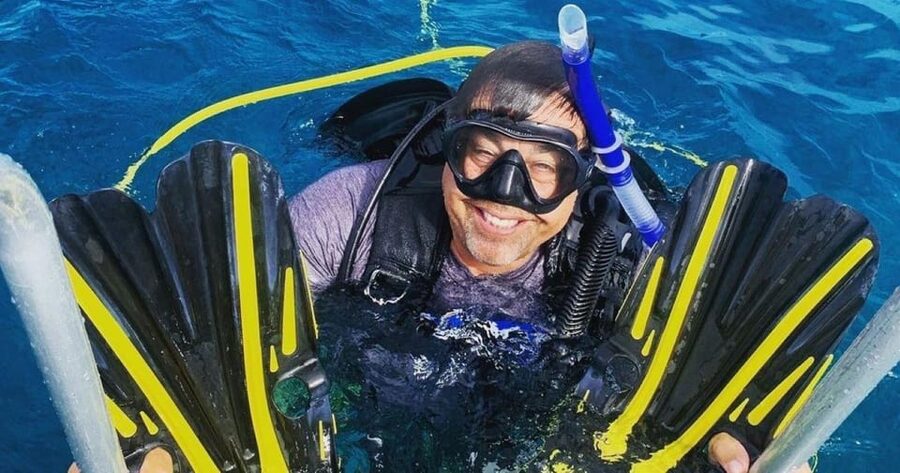
Every participant must show proof of scuba certification at check-in. The activity is not suitable for people without certification, so this is not a learn-to-scuba session or a casual substitute for a certification course.
Your last scuba session must have been within the past two years. That rule is easy to overlook if you hold an older certification card but have not been underwater recently. If you are outside that window, ask the operator about your options before booking rather than assuming the card alone is enough.
Minors under 18 must be accompanied by an adult. The adult can be a passenger on the boat, with a $30 fee. That arrangement may help families where only one person is participating underwater, but confirm the details when reserving.
The experience is hosted in English. If you need a guide or have safety questions, make sure you can understand the instructions clearly before entering the water.
You can cancel up to 24 hours before the start time for a full refund. The reserve-now, pay-later option also helps if your Florida plans are still shifting. Check the available start times because the schedule is not fixed in the information provided.
Who Should Book This Reef Trip?
I would choose this for a certified scuba participant who wants a famous site without advanced depth. It also suits an intermediate participant who values marine life and clear water more than a demanding technical challenge.
It is a good fit if you:
- Have scuba certification and a recent session within the past two years
- Want two tanks rather than a short single-session outing
- Like the idea of sharks, rays, barracudas, and reef fish
- Prefer a small group capped at eight
- Are willing to pay extra for a guide or equipment if needed
I would hesitate if you are not certified, have not been underwater in more than two years, or want a completely private boat. I would also check the final price carefully if you need every piece of equipment or a required guide.
The site’s broad appeal is its balance. It offers enough marine life to keep experienced participants interested, but its gradual profile and moderate maximum depth give newer certified participants a practical place to build confidence.
Should You Book Molasses Reef?
Book it if you want a well-priced, four-hour Key Largo scuba outing centered on a famous reef, clear water, and a strong mix of possible marine life. The two-tank format, small group, and gradual depth make it more useful than a rushed underwater look.
Before paying, confirm three things: the cost of full equipment rental, the added price of a guide if required, and the departure time that fits your plans. If your certification is current and your last session was within two years, Molasses Reef offers a sensible balance of comfort, wildlife, and underwater time.
FAQ
How long is the Molasses Reef scuba trip?
The experience lasts four hours and includes a two-tank charter.
What depth does Molasses Reef reach?
The reef begins near the surface and descends gradually to about 55 feet.
Do I need scuba certification?
Yes. Every participant must provide proof of scuba certification at check-in, and the activity is not suitable for people without certification.
How recent must my last scuba session be?
Your last scuba session must have taken place within the past two years.
Is a guide required?
Level 1 certified participants and Junior Divers must hire a guide. Other certified participants can request a guide for an additional cost.
What is included in the price?
The price includes air tanks, weights, and the two-tank charter. Full equipment rental is available, including a BCD, regulator, wetsuit, mask, snorkel, and fins. Tips and any guide fee are not included.
Newly logged dives around the USA
- Panama City Beach: Beginners Scuba Diving Tour★ 4.6 · 23 reviews
- Oahu: Shark Cage Diving Experience★ 4.6 · 46 reviews
- Oahu: Wreck & Reef Scuba Dive for Certified Divers★ 4.8 · 17 reviews
- Oahu: Cageless Shark Dive Adventure★ 4.9 · 60 reviews
- Oahu: Shallow Reef Scuba Dive for Certified Divers★ 5.0 · 11 reviews
- Oahu Night Dive: Adventure for Certified Divers★ 3.6 · 6 reviews
- Oahu: Beginner SCUBA Dive at Electric Beach★ 4.8 · 10 reviews
- Kauai: Morning 2 Tank Boat Dive for Experienced Divers★ 5.0 · 5 reviews
Reef Diving, side by side.
Great Barrier Reef Snorkeling and Diving Cruise from Cairns
Read our review →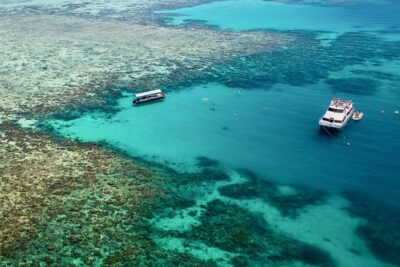
Ocean Freedom Great Barrier Reef Luxury Snorkel and Dive Cruise
Read our review →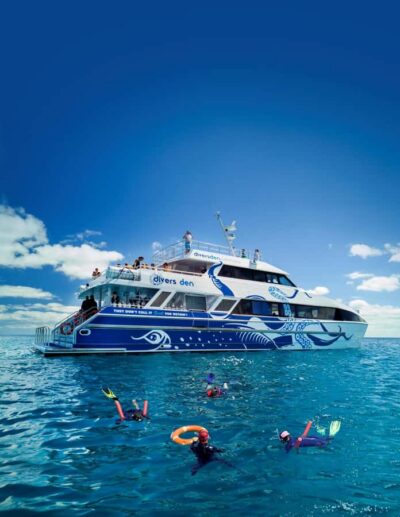
Cairns: Premium Snorkelling and Diving Reef Day Trip
Read our review →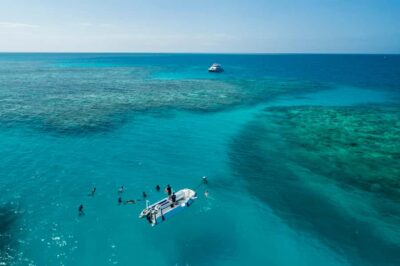
Cairns: Outer and Coral Cay Snorkel and Dive Cruise
Read our review →
Sea Trek Helmet Dive at Coral World Ocean Park
Read our review →
Swim with Whale Sharks in the Ningaloo Reef: 3 Island Shark Dive
Read our review →
Snorkel & Dive the Reef: Sustainable, Scientific & Cultural Tour
Read our review →
Cairns: Great Barrier Reef Premium Diving Full Day Tour
Read our review →Lists this dive is on