Review · BARCELONA
Barcelona: PADI Scuba Diver Course Certification Training
Barcelona’s quickest route into PADI scuba certification takes one full day: classroom instruction at 9:00am, followed by three supervised water sessions, with the day ending around 7:00pm. You learn equipment use, underwater signals, and safety before putting those skills into practice.
I like the small maximum of six participants, which gives instructors room to explain things calmly. I also like that equipment and certification are included, so the $312 price covers the main costs rather than leaving you to assemble a package of extras.
The main caution is the water itself. Visibility can be poor at the training site, and there may be little marine life to see. This is best viewed as a serious certification day, not a scenic underwater sightseeing trip.
Key points to know before booking
- Three supervised water sessions: You complete three practical sessions after the theory lesson, all with a PADI-certified instructor.
- Small group format: The group is limited to six people, useful when you need extra help with equipment or safety skills.
- Patient instruction: Instructor Pau has been praised for clear English explanations and a calm teaching style, while Alex has adjusted plans around weather and personal needs.
- A full-day commitment: The course begins at 9:00am and finishes at about 7:00pm, so allow the whole day.
- Certification included: Diving equipment and PADI certification are part of the $312 cost.
- Plan around flying: You must wait 24 hours after the course before flying.
What this Barcelona scuba course actually teaches
This is not a short try-it activity squeezed between sightseeing stops. It is a one-day training course designed to give you a PADI Scuba Diver certification through a mix of theory and practical work.
You begin at the iDive BCN office at Avinguda Diagonal, 72. Arrive 15 minutes before the scheduled start. The late-arrival rule is strict: if you miss the start, you will not be allowed to join, and the activity cannot be refunded or rescheduled because of lateness.
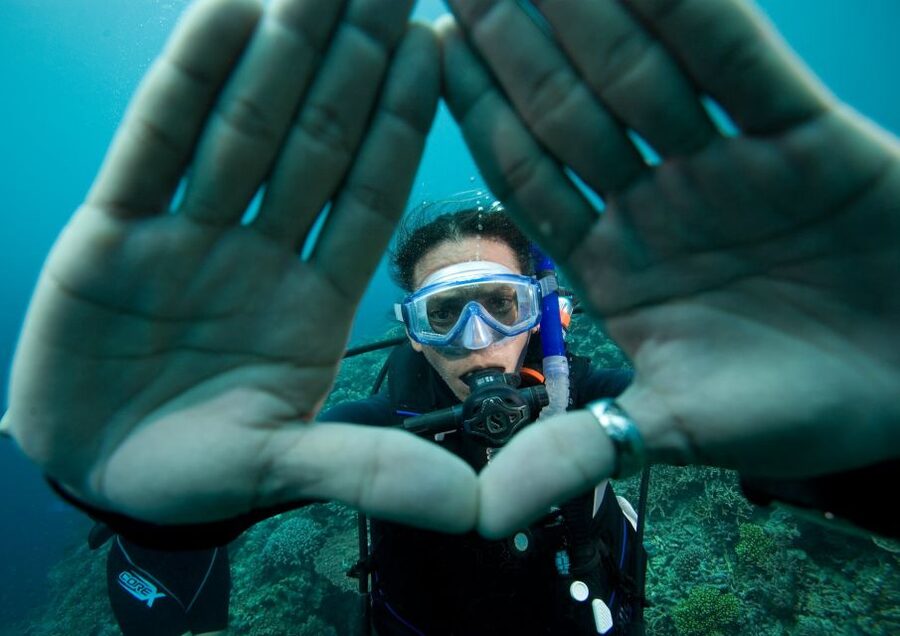
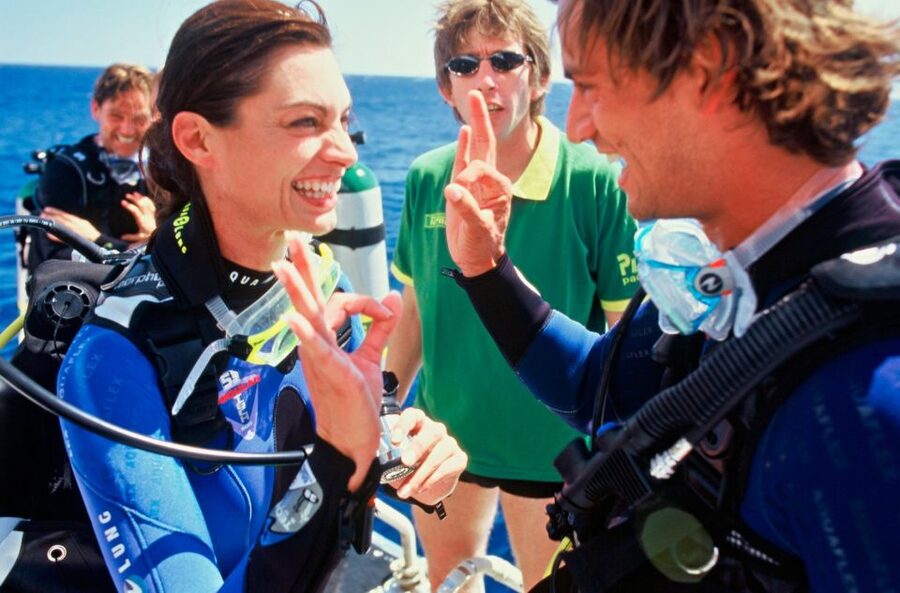
The morning starts with theory. You learn how the equipment works, how to communicate underwater, and how to behave safely in the water. That classroom time matters. Scuba gear can look like a pile of hoses and straps when you first see it, and underwater communication depends on agreed hand signals rather than conversation.
The teaching is available in Spanish, English, and Italian. That gives you a practical choice when booking, especially for a skill-based activity where a vague explanation can become a real safety problem. Pau, one of the instructors, has been singled out for speaking clear English and repeating explanations without rushing people. That kind of patience is exactly what you want during a first scuba course.
After the theory session, you head to the water point for three separate practical sessions. The supplied information does not specify the exact water location or describe each exercise by name, so you should not book this expecting a particular reef, cove, or underwater landmark.
What you can expect is a controlled setting where you practice the points covered earlier. The three sessions give you several chances to become comfortable with the equipment and underwater communication. For a beginner, that repeated practice is more useful than a single quick swim followed by a certificate.
More PADI Courses in Spain
- Barcelona: PADI Discover Scuba Diving
★ 4.7 · 1,016 reviews - Tossa de Mar: PADI Discovery Scuba Diving in Costa Brava
★ 4.7 · 392 reviews - Try Dive – PADI Discover Scuba Diving in Tenerife
★ 5.0 · 214 reviews
The three water sessions and the visibility question
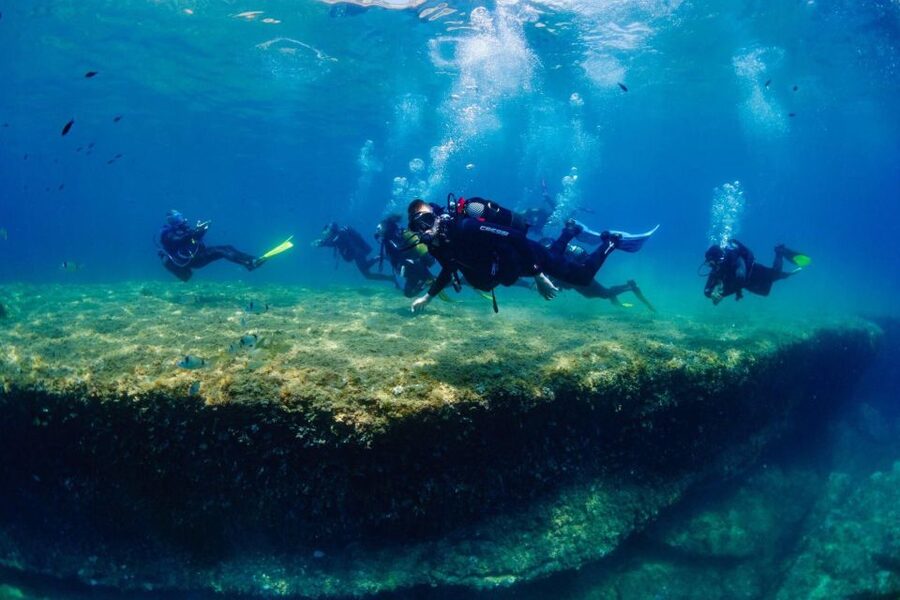
The practical portion is the heart of the day. You take the classroom information into the water with a certified instructor nearby, working through the skills in a supervised setting.
The benefit of three sessions is simple: you get more than one attempt. If putting on the equipment feels awkward at first, or if a hand signal does not stick immediately, you have time to repeat the process. A small group also helps here. With no more than six people, the instructor can keep a closer eye on each participant than would be possible in a large class.
You should set realistic expectations about the view. One participant found the water visibility poor and saw little around the site. That is a fair warning, though it was not blamed on the school. Weather and local water conditions can affect what you see, and a training site is chosen for safety and instruction rather than postcard scenery.
I would book this for the qualification and the learning, not for a colorful marine-life encounter. If clear water and abundant sea life are your top priorities, ask the provider about current conditions and the exact training location before paying. The course can still be worthwhile when the water is murky, because the main goal is building safe habits and completing the required practical work.
The day ends at about 7:00pm. You should not plan a relaxed dinner reservation immediately afterward unless you are comfortable with a long, tiring day. Bring swimwear, a towel, and beachwear. Lunch, food, and drinks are not included, so plan ahead for a full day away from your hotel.
Why the small group matters for first-time students
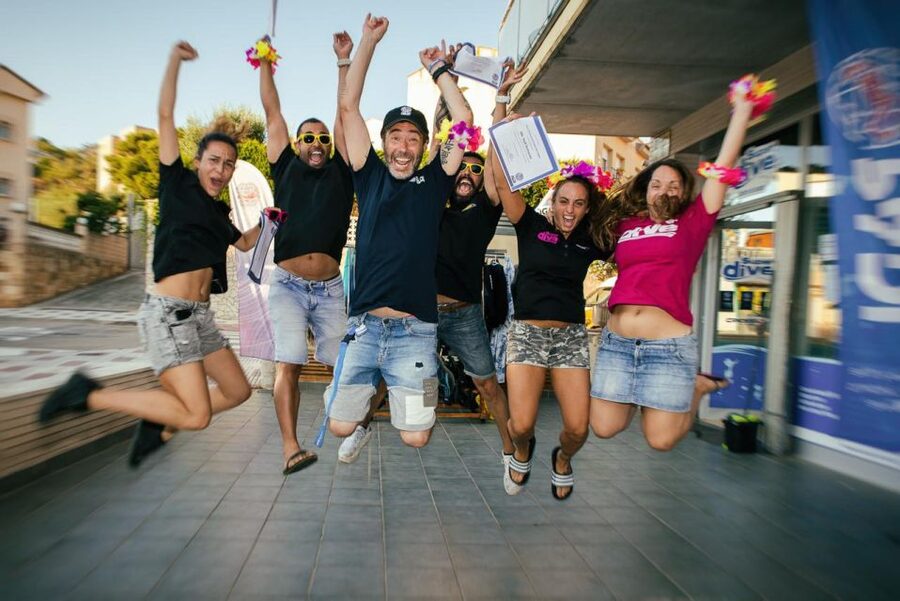
A six-person limit is one of the strongest features of this course. Scuba training involves gear checks, signals, controlled movements, and plenty of questions. A smaller class gives you a better chance to ask for a second explanation instead of quietly falling behind.
The teaching style described by Pau is especially reassuring for nervous beginners. He explains clearly, checks that each person understands, and does not pressure anyone to move on too quickly. That approach is important because confidence in scuba should come from understanding, not bravado.
Alex has also been praised for making participants feel safe and for adjusting the plan around weather and individual needs. That suggests some flexibility in how the day is managed, although the fixed start and finish times still require you to keep the full schedule open.
This is not a private lesson, so you will share the instructor’s attention. Still, six people is a manageable number. If you have never used scuba equipment before, I would choose this small-group format over a larger, cheaper class if one is available.
What the PADI Scuba Diver certification means
The course includes the PADI Scuba Diver certification. The experience description presents this as a qualification that lets you scuba dive in locations around the world, subject to the normal rules and requirements of dive operators and local conditions.
The important point is that you are not simply paying for a supervised introduction. You are completing training intended to give you a formal certification after the theory lesson and three water sessions.
You should still treat the certificate as the start of your scuba education, not the end of learning. The course gives you core skills and a recognized qualification, but comfort underwater grows with practice. Ask the provider if you want precise information about the certification’s depth limits or any next steps, since those details are not included in the supplied course information.
For someone planning future scuba activities on a trip, this can be a practical use of one Barcelona day. You leave with training that may be useful beyond Spain instead of a single short aquatic activity that ends when you leave the water.
Same water, a different dive:
- Southern Tenerife: 50-Minute Submarine Dive
★ 4.8 · 2,216 reviews - Tenerife: Your First Scuba Diving Experience in Turtle Area
★ 4.7 · 1,679 reviews - Lanzarote: Real Submarine Dive
★ 4.5 · 1,039 reviews - Mallorca: Discover Scuba Diving for Beginners
★ 4.7 · 805 reviews
Is $312 a fair price?
At $312 per person, this is not a low-cost Barcelona activity. It becomes easier to judge once you look at what is included: the full-day instruction, three water sessions, diving equipment, and PADI certification.
You are also paying for a small group, which has real value in a beginner course. The difference between a calm explanation and a rushed one matters when you are learning safety procedures. A patient instructor can make the day feel manageable, especially if English is not your first language.
The price does not include food, drinks, or photographs and videos. That means you should add your own meal and snack costs, and you should not expect an underwater photo package as part of the day.
I see the strongest value here if you specifically want the certification. If you only want to see Barcelona’s underwater world for an hour, the full price and full-day schedule may feel excessive. If you want a qualification and have already planned future scuba activities, the included equipment and instruction make the cost more reasonable.
The water conditions are the other value question. Poor visibility can limit the scenic side of the experience, but it does not necessarily reduce the training value. Think of the money as paying mainly for instruction and certification, with underwater sightseeing as a possible extra.
Health rules you need to take seriously
You complete a medical questionnaire on arrival. If your answers show that you need medical permission, you will not be allowed to take part. The stated rules also require you to be in good health and not taking medication prescribed by a doctor.
The activity is not suitable for children under 12, pregnant women, people over 70, or people with back, heart, respiratory, mobility, or diabetes-related problems. It is also not suitable for wheelchair users, people with recent surgeries, or people with other pre-existing medical conditions.
These restrictions are not minor booking notes. You should read them before reserving and ask the provider about your situation if you are unsure. If a health issue prevents participation on the day, the money will not be returned and another appointment will not be arranged.
Alcohol and drugs are not allowed. That rule is particularly important for a full day of equipment use and underwater safety work.
Flying after the course
You must wait 24 hours after the course before flying. This affects your Barcelona schedule more than many people expect.
If your course ends around 7:00pm, do not book a flight for the following morning. Leave a full 24-hour gap after the course. The same rule matters if Barcelona is only one stop in a longer trip and you plan to fly onward.
I would schedule the course toward the middle of your stay rather than on the final day. That gives you room to respect the flying restriction and avoids turning a weather or health issue into a last-minute travel problem.
Who will enjoy this course most?
This course suits you if you:
- Want a recognized scuba qualification rather than a one-off swim
- Are comfortable giving up a full day
- Prefer a small group and close instructor attention
- Can manage the medical requirements
- Plan to scuba in other destinations
- Do not mind if the training site has limited visibility
It is less suitable if you want a scenic, relaxed coastal outing. The day is structured around learning and safety. You spend time in theory, equipment work, and repeated practice, not simply looking at marine life.
It may also be a poor fit for a tightly packed Barcelona itinerary. The 9:00am to 7:00pm schedule leaves little room for other major plans, and you need to arrive early.
Booking and cancellation details
You can cancel up to 24 hours in advance for a full refund. The reserve-now, pay-later option lets you hold a place without paying immediately, which is useful while you are still fixing your Barcelona plans.
The meeting point is the iDive BCN office at Avinguda Diagonal, 72. The group is limited to six participants, and instruction is offered in Spanish, English, and Italian.
Bring swimwear, a towel, and beachwear. Food and drinks are not included, so take care of lunch and refreshments yourself. Arrive 15 minutes early, since late arrival means no participation, refund, or rescheduling.
Should you book the iDive Barcelona course?
Book it if the certification is your main goal. You get a full day of theory and practical training, three supervised water sessions, equipment, and a small class for $312. The calm instruction associated with Pau and Alex is another reason this looks suited to first-time students who want patient guidance.
Do not book it expecting Barcelona’s most impressive underwater scenery. Visibility may be poor, and the water point may offer little marine life. That is a drawback for sightseeing, but it does not cancel the course’s main purpose.
I would choose this experience for a beginner who wants a useful qualification and can spare a full day. I would skip it for a visitor seeking a quick coastal thrill, a photo-heavy outing, or a last-day activity before a flight.
FAQ
How long does the PADI Scuba Diver course last?
The course lasts one day, beginning at 9:00am and finishing around 7:00pm.
Where is the meeting point?
You meet at the iDive BCN office at Avinguda Diagonal, 72, in Barcelona.
How many water sessions are included?
The course includes three practical water sessions with a PADI-certified instructor after the theory lesson.
Is scuba equipment included?
Yes. Diving equipment and the PADI certification are included in the price.
What languages are available?
Instruction is available in Spanish, English, and Italian.
Can I fly after completing the course?
You must wait 24 hours after the course before flying.
What should I bring, and is lunch provided?
Bring swimwear, a towel, and beachwear. Lunch, food, and drinks are not included.
Newly logged dives around Spain
- Fuerteventura: Introductory Dive in La Lajita with Pickup★ 4.9 · 68 reviews
- Scuba Diving – Dive for certified divers★ 4.3 · 4 reviews
- Scuba Diving Baptism in Caleta de Fuste★ 5.0 · 34 reviews
- Santa Pola: 3-Hour Scuba Diving near Tabarca★ 4.9 · 25 reviews
- Tenerife : Diving License international in one day★ 5.0 · 7 reviews
- Santa Cruz de Tenerife: PADI Introductory Dive★ 4.8 · 23 reviews
- Salou: Scuba Diving for beginners with hotel pickup★ 4.0 · 7 reviews
- S. Tenerife: 2 Dives for Beginners (Beach + Boat Experience)★ 4.1 · 6 reviews
PADI Courses & Certification, side by side.
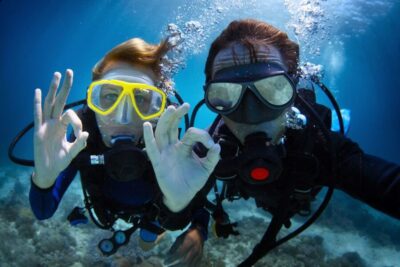
Tossa de Mar: PADI Discovery Scuba Diving in Costa Brava
Read our review →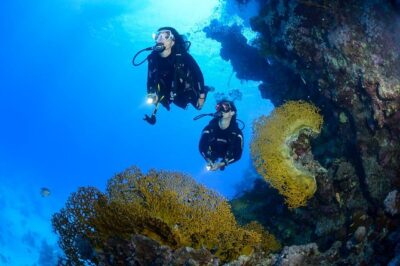
Full-Day Beginner Scuba Course with Private Tuition, Racha Yai
Read our review →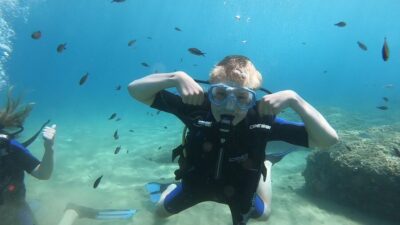
Heraklion: Beginner Scuba Diving Lesson with PADI Instructor
Read our review →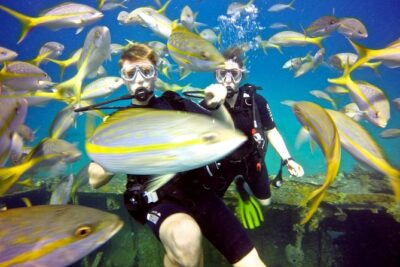
Discover Scuba Diving with No Certification in St Thomas
Read our review →
Try Dive – PADI Discover Scuba Diving in Tenerife
Read our review →