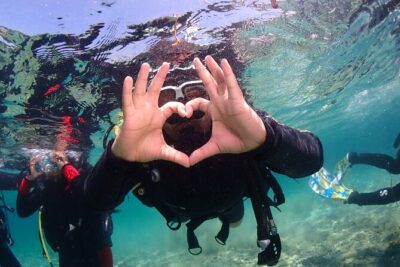
Review · ATHENS
Athens: Discover Scuba Diving Experience for Beginners
Breathing underwater for the first time is the real event here. This four-hour Athens experience takes you from basic theory to shallow-water practice, then into open water with a PADI instructor beside you. You do not need prior scuba experience, but you do need to swim and feel comfortable in water.
I like the gentle progression and the full equipment package, which keeps a first attempt from feeling like a gear puzzle. I also like the careful attention from instructors such as George, Petros, and Christos, who are praised for steady explanations and calm help in the water. The main consideration is that this is a first taste, not a full certification course, and the $123 price covers only one tank.
Key points at a glance
- Four-hour beginner session: Theory, equipment briefing, shallow-water practice, and one guided open-water experience fit into a half day.
- First underwater breaths: You learn basic skills before attempting the main session, which helps reduce nerves.
- Full equipment included: Rental covers the complete scuba set, with a tank and DAN insurance also provided.
- Certified instruction: A professional PADI instructor leads the session in English or Greek.
- Calm start for nervous beginners: The shallow-water practice gives you time to adjust before going farther.
- Important health limits: The experience is not suitable for non-swimmers, pregnant women, or people with certain back or heart conditions.
What your four hours in Athens look like
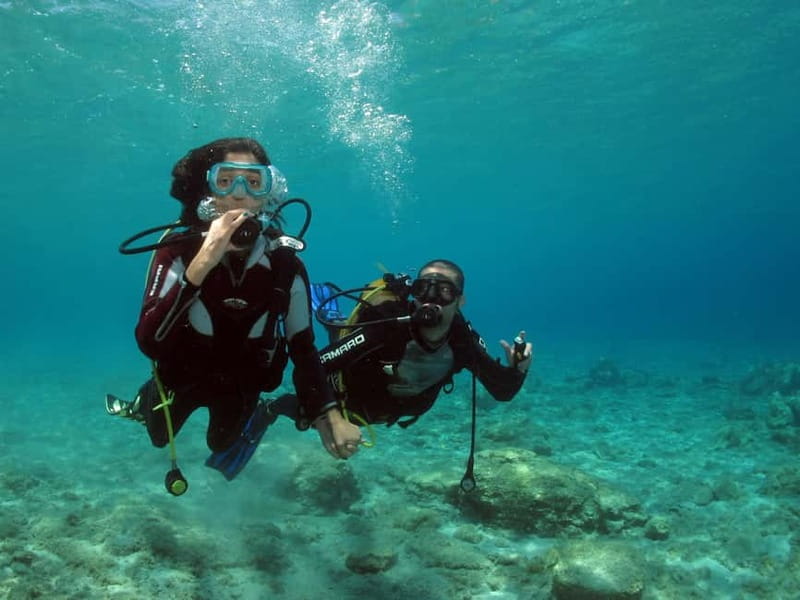
This experience is built around a simple idea: give you enough training to safely try scuba without asking you to commit to a full course. You begin at the dive center, where your instructor explains what will happen and checks that you understand the basic steps.
Before the appointment, you receive an e-learning link. It covers introductory theory and includes a medical statement. Completing this ahead of time matters because it gives you a chance to review the health questions rather than rushing through them at the center.
The stated process is designed so that you do not need a doctor’s approval if your medical statement shows no reason for one. Be honest when completing it. If you have health concerns, especially involving your heart, back, or ears, ask for clarification before booking.
At the center, expect a briefing on the equipment, safety rules, and basic skills. You will learn how the gear works and what to do underwater. The instruction is aimed at a first-timer, so you are not expected to arrive knowing scuba procedures.
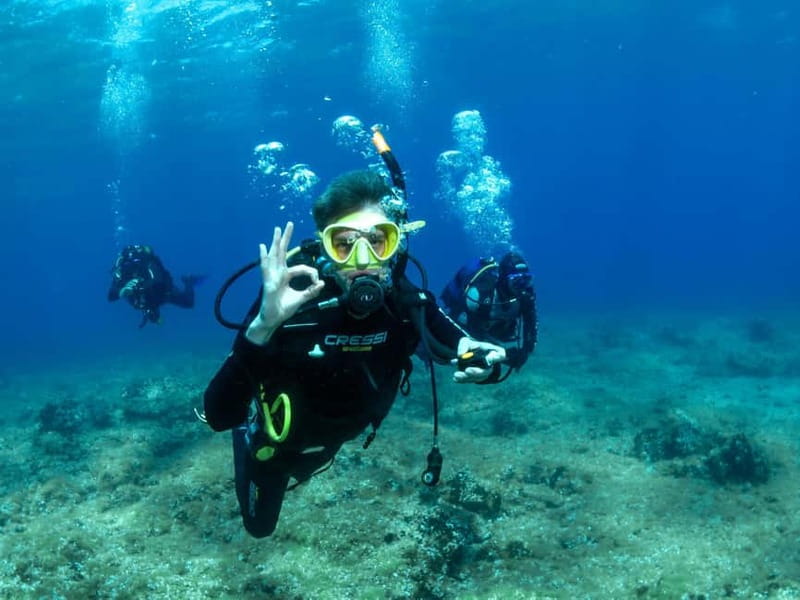
The next step is shallow water. This is one of the most useful parts of the session because it lets you get used to breathing through the regulator while you are still in a controlled setting. You can practice the essential techniques before attempting the open-water portion.
Finally, you make one tank descent with your instructor. The exact underwater setting is not described in detail, so you should not book this expecting a particular reef, wreck, or named marine species. The attraction is the experience itself: moving below the surface, learning how the equipment feels, and seeing the marine world around Athens under professional supervision.
More Discover Scuba Diving in Greece
- Try a DIVE, discover scuba diving in Mykonos
★ 5.0 · 216 reviews - Athens East Coast: Discover Scuba Diving in Nea Makri
★ 4.9 · 124 reviews - Discover Scuba Diving in the Caldera of the Volcano in Santorini
★ 5.0 · 105 reviews
Why the shallow-water practice matters
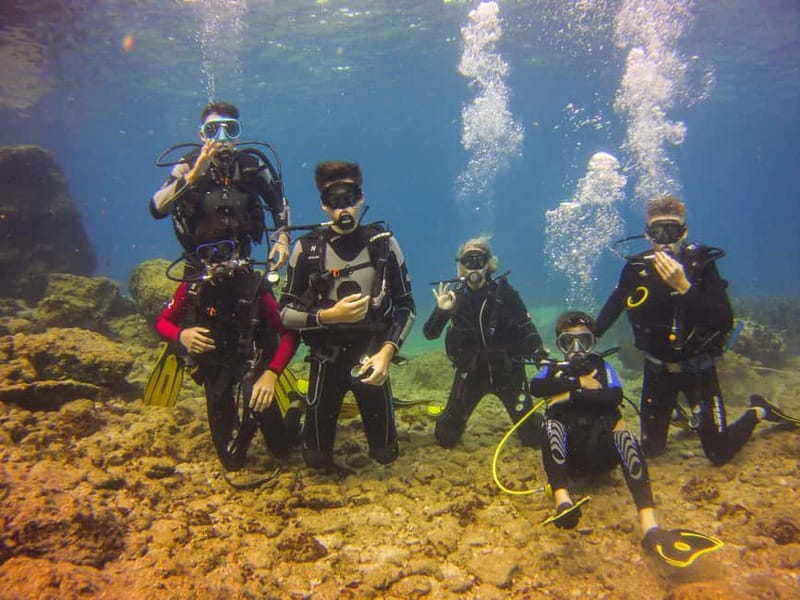
Many first-time scuba participants are not worried about the fish. They are worried about the first breath through the regulator, the unusual feeling of wearing the equipment, or the thought of managing several new skills at once.
The shallow-water session breaks that problem into smaller pieces. You can concentrate on breathing, movement, and basic safety skills without immediately dealing with the full pressure of an open-water setting. I consider that a strong feature for anyone who feels nervous.
The instructors are expected to keep watch and help when something feels wrong. Petros, Christos, and George are among the instructors associated with the experience, and the teaching style described by the available feedback is patient and reassuring. One instructor was especially praised for helping a nervous participant proceed step by step.
That personal support makes a difference. A beginner session should not feel like a race to get everyone underwater. You need time to signal, pause, ask for help, and regain your composure. The activity’s structure allows for that better than a simple equipment handoff would.
Still, the shallow-water work is training, not a substitute for confidence in the sea. If you cannot swim or feel unable to manage in water, this is not the right introduction. Non-swimmers are specifically excluded.
The equipment and one-tank limit
The $123 price includes a full scuba equipment rental, one tank, a professional PADI instructor, e-learning materials, and DAN insurance. That is useful for a visitor who does not own any gear and does not want to purchase or pack specialist equipment for one holiday activity.
The one-tank limit is worth understanding. You are getting a proper introduction, but not a long series of underwater sessions. The time includes theory, preparation, briefing, practice, and the main open-water experience, so the actual time underwater will be only part of the four hours.
I see the price as reasonable if you want to test scuba before considering a larger course. You are paying for instruction and supervision, not simply for access to equipment. The value is strongest when you care about learning correct habits and having a professional nearby.
It is less attractive if you already hold a certification and want several tanks or a longer underwater outing. This product is aimed at beginners, and the single-tank format keeps it accessible but limits the amount you can see.
DAN insurance is included, which adds a practical layer of protection to the session. You should still read the health requirements carefully, since insurance does not remove the need to disclose medical conditions or follow the instructor’s directions.
The marine experience around Athens
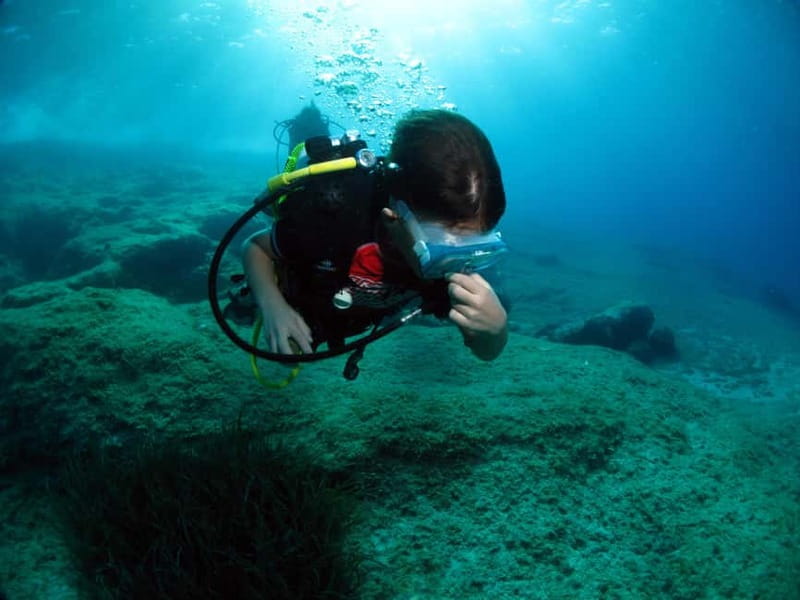
The activity promises a guided open-water look at Athens’ marine environment. You should think of this as a first underwater encounter rather than a specialist wildlife trip.
The setting can make this memorable even without a detailed species list. You are learning to control your breathing, adjust your movement, and notice what is around you at the same time. For a newcomer, simply becoming comfortable below the surface can be the main reward.
A useful detail from the experience is that surface swimming with a snorkel may be possible in some circumstances, but it should not be treated as a guaranteed part of the program. One participant with a perforated eardrum was able to snorkel at the surface, but that does not mean the same option will be offered to everyone or that it replaces the medical requirements for scuba.
That point is important. Ear problems can affect pressure equalization, and you should not assume that being able to snorkel means you can safely descend. Use the medical statement honestly and ask the center before arrival if you have a known ear issue.
You might see marine life during the open-water portion. An octopus was spotted during one session, including one that released ink, which is exactly the sort of unscripted moment that can make a short underwater outing memorable. But wildlife sightings are never the reason to expect a guarantee. Conditions and luck have a say.
More Scuba Diving for Beginners in Greece
- Santorini: Scuba Diving Experience in Caldera for Beginners
★ 4.9 · 597 reviews - Heraklion: Scuba Diving Experience for Beginners _Beach
★ 4.7 · 549 reviews - Heraklion: Beginner Scuba Diving Lesson with PADI Instructor
★ 4.9 · 355 reviews - Rhodes: Diving Adventure for Beginners and Experts
★ 4.6 · 237 reviews
The instructors and language support
Instruction is available in English and Greek. That is useful, but you should have enough English to understand safety instructions if you are not receiving Greek-language teaching.
The e-learning and medical information arrive before the session, so check your email carefully after booking. A communication problem with those forms caused a rough start for one family, even though the staff later handled the situation well. I would complete the material as soon as it arrives and contact the center if anything is missing.
The teaching team’s strongest role is making a new skill feel manageable. George is described as kind and effective with children, while Petros and Christos are also connected with well-regarded sessions. The specific instructor may depend on the day, so treat those names as examples rather than a promise.
This experience can suit families with older children because the minimum age is eight. Age alone does not guarantee readiness. A child must be comfortable in water, able to follow instructions, and willing to wear the equipment.
Who should book, and who should skip it
I would choose this for a first-time participant who can swim, wants a guided introduction, and prefers a half-day activity rather than a multi-day certification course. It also suits couples or families who want to try scuba before spending more on training.
It is especially helpful for someone who feels curious but cautious. The theory link, instructor briefing, shallow-water practice, and one-tank format create a clear path without forcing you into a major commitment.
I would not choose it if your main goal is extensive underwater photography, a long marine expedition, or several tank sessions. The program is short and introductory. It may leave you eager for more, but that is different from providing an advanced outing.
You should also skip it if you are pregnant, cannot swim, or have back or heart problems. These are listed restrictions, not minor inconveniences. If your medical history is complicated, get advice before reserving rather than hoping the issue will be sorted out on the day.
Bring swimwear, a towel, a hat, sunscreen, and water. Smoking, alcohol, and drugs are not allowed. Arrive ready for a physical activity, not as if you are simply watching a show.
Timing, flexibility, and the practical details
The experience lasts four hours, with starting times subject to availability. That makes it easier to fit into an Athens schedule, but you should leave enough room around it for transport and possible changes in pace.
The meeting point is the dive center. Transportation from your hotel is not listed, so plan to reach the center independently unless the operator tells you otherwise.
There is free cancellation up to 24 hours before the activity for a full refund. You can also reserve now and pay later, which helps if your Athens plans are still shifting. These policies make the experience easier to fit into a longer holiday, though they do not change the health and flight restrictions.
After one tank, you must observe a minimum surface interval of at least 12 hours before flying. That is a key planning point. Do not schedule the experience shortly before your flight home, even though the activity itself lasts only half a day.
The same rule applies if you are continuing to another destination by air. Check your full itinerary before booking. A flexible payment policy is useful, but it cannot make an unsuitable flight schedule safe.
Should you book this Athens scuba experience?
Book it if you want a careful first step into scuba, can swim, and are happy with one guided tank rather than a full course. The combination of e-learning, hands-on instruction, shallow-water practice, complete equipment, DAN insurance, and patient PADI supervision gives you a sensible introduction for $123.
I would be cautious if you need a specific dive site, guaranteed wildlife, several underwater sessions, or a particular instructor. Those details are not promised. I would also contact the center before paying if you have ear, heart, or back concerns.
For a nervous beginner, the strongest reason to choose this is the pace. You get time to learn the basics before entering open water, and the instructors are prepared to keep helping when the first breaths feel strange. That is a better starting point than being rushed into the sea with little explanation.
FAQ
How long does the Athens scuba experience last?
The activity lasts four hours. That time includes e-learning completed before the session, an in-person briefing, equipment preparation, shallow-water practice, and one open-water tank session.
Is previous scuba experience required?
No. This is designed for beginners and includes basic theory, equipment instruction, safety guidance, and practice before the open-water portion.
What is included in the price?
The $123 price includes full scuba equipment rental, one tank, a professional PADI instructor, e-learning materials, and DAN insurance.
What is the minimum age?
The minimum age is eight years old. Participants must also be swimmers and able to follow the instructor’s safety instructions.
Can I fly soon after the activity?
You need a minimum surface interval of at least 12 hours after a one-tank session before flying. Plan your activity accordingly.
What should I bring?
Bring a hat, swimwear, a towel, sunscreen, and water. Smoking, alcohol, and drugs are not allowed.
Newly logged dives around Greece
- Scuba Diving in the Volcanic Caldera/shorelines of Santorini★ 4.6 · 5 reviews
- From Athens: Scuba Diving at the Blue Hole★ 4.9 · 5 reviews
- Scuba diving for beginners in crystal clear sea of Halkidiki★ 4.8 · 13 reviews
- Scuba Diving Beginners/Experts Pefkos Lindos Rhodes Greece★ 4.8 · 22 reviews
- Santorini: Scuba Diving★ 4.8 · 35 reviews
- Mykonos: Scuba Diving Mini Program for Beginners★ 4.9 · 46 reviews
- PADI Scuba Diving Program for Beginners in Peloponesse★ 5.0 · 3 reviews
- Naxos: Discover Scuba Diving – Your first experience diving★ 5.0 · 27 reviews
Discover Scuba Diving, side by side.
Cyprus: Introductory Scuba Lesson and Dive with Transfer
Read our review →