Review · BALI
PADI Open Water Course
The heart of this three-day course is simple: you learn the basic skills in a pool, then use them in the sea at Padang Bai and Tulamben. Four open-water sessions give you enough practice to move beyond a first try and earn certification to a maximum depth of 18 meters.
I like the small maximum group of three and the practical package, which includes hotel pickup, an air-conditioned minivan, lunch, snacks, and drinks. I also like that instructors such as Gede Ariawan, Muli, Sia, and Julian have been singled out for patience and careful teaching. The drawback is the price, $530, and the need to plan around Bali’s road transfers and the rule against flying within 18 hours after underwater training.
Key points to know before booking
- Three phases in three days: Knowledge Development, pool practice, and four open-water sessions.
- Two Bali sites: Padang Bai and Tulamben provide the sea portion of the course.
- Maximum depth of 18 meters: This is the standard limit for the PADI Open Water certification.
- Small group size: The activity accepts no more than three participants.
- Meals and transport included: Hotel pickup, drop-off, lunch, snacks, coffee, tea, bottled water, and an air-conditioned minivan are covered.
- Health rules matter: You must complete a health questionnaire, and some medical conditions may prevent participation.
What the PADI Open Water Course actually teaches
This is not a quick tourist swim with a mask. It is a full entry-level scuba course designed to give you the skills and judgment needed for future independent recreational sessions within the certification limits.
You begin with Knowledge Development. This covers the ideas behind safe underwater activity, including equipment use, pressure, communication, planning, and what to do when something does not go as expected. The supplied details do not set out the exact lesson format, so ask Neptune Scuba whether your course uses classroom teaching, online study, or a mix.
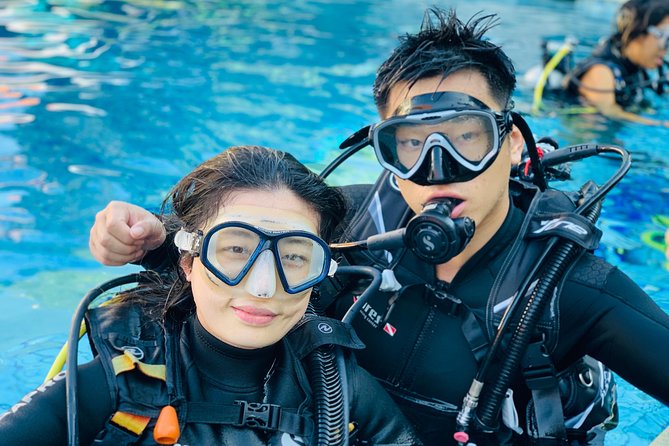
The second phase takes place in a pool. This is where you learn the physical tasks in controlled water before moving into the sea. Pool practice gives you time to work on mask use, breathing, buoyancy, equipment handling, and basic problem-solving without waves, current, or a long boat or road journey adding pressure.
The final phase consists of four open-water sessions. You use the skills in the sea at Padang Bai and Tulamben, with the instructor checking that you can perform them safely in a real setting. Four sessions are useful because you have more than one opportunity to settle down, correct mistakes, and become comfortable underwater.
The course leads to certification at a maximum depth of 18 meters. That does not mean you should expect to reach that depth on every session. Your instructor decides what is suitable according to your progress, conditions, and comfort.
More PADI Courses in Bali
- Bali: 3-Days PADI Open Water Diving Course
★ 4.8 · 98 reviews - Padi Discover Scuba Diving In Amed Bali
★ 5.0 · 66 reviews - Sanur Open Water Course learn diving in 3 Days – Get certified & Dive everywhere
★ 5.0 · 9 reviews
Starting at Neptune Scuba in Sanur
The listed meeting point is Neptune Scuba Diving Bali on Jl. Suka Merta in Sanur Kauh, Denpasar Selatan. The center is open daily from 7:00 AM to 6:00 PM for the stated operating period.
Hotel pickup and drop-off are offered, which is important in Bali. Padang Bai and Tulamben are not next door to Sanur, and an organized air-conditioned minivan removes the need to arrange separate transport on training days. You should still confirm your pickup time and location before the first morning, especially if you are staying outside the main pickup area.
The activity ends back at the meeting point. If you arrange hotel transport, clarify whether the return takes you directly back to your accommodation or first returns to the center. The supplied information says hotel pickup and drop-off are included, but it does not list a precise service radius.
The group limit is three people. That is one of the strongest features here. In a tiny group, you spend less time waiting for other participants and have a better chance to ask questions or repeat a skill. It also matters if you are nervous, new to swimming, or learning alongside a partner with a different pace.
Day one: building confidence in the pool
The first day combines the course’s knowledge work with pool training, though the exact order can vary. I would treat this as a learning day rather than trying to fit in too many extra Bali plans.
If you are new to scuba, the pool is where the course begins to make sense. Reading about breathing through a regulator is one thing. Handling it in water, checking your equipment, and learning how to communicate without speaking are different matters. The controlled setting lets you focus on one task at a time.
The supplied feedback gives useful clues about the teaching style you may encounter. Gede was praised for patience with a 15-year-old student, while another participant with little swimming experience found Muli encouraging and clear. One person also credited Muli with helping improve buoyancy control.
Those details matter because patience is more valuable than a flashy lesson when you are learning. You need an instructor who will stop, explain, watch you try again, and avoid pushing you past your comfort level. Instructor assignments are not guaranteed, so ask who will teach your group when you book.
A previous participant completed the theory through the PADI website before arriving in Bali. That can be a useful way to save time during the trip, but you should confirm the current arrangement with Neptune Scuba before assuming online study is available or included.
Padang Bai and Tulamben: the sea portion
The course uses Padang Bai and Tulamben for the four open-water sessions. These locations give you the chance to take pool skills into real sea conditions, which is the main reason to choose a full certification course instead of a short introductory session.
Padang Bai is one of the course locations listed, but no exact site, reef, shore entry, or boat arrangement is provided. You should ask about the planned entry point and what happens if sea conditions change. Conditions can affect visibility, current, and comfort, and your instructor should make the final call on safety.
Tulamben is the other listed location. Again, the available details do not promise a particular wreck, reef, or marine encounter, so you should not book this course expecting a specific underwater attraction. The value is the training itself and the chance to practice at more than one Bali site.
Four sea sessions help you progress in stages. The first can feel like a lot of information at once. By the later sessions, you have a better sense of your breathing, body position, communication, and equipment. If buoyancy does not feel natural right away, that is normal. It takes repetition, and the course gives you that repetition.
The road transfers are the tradeoff. Bali’s coastal routes can take time, and a full training day may feel long once transport, preparation, practice, and meals are added. The included driver and air-conditioned minivan make the process easier, but you should keep your evenings flexible.
More PADI Courses in Indonesia
- Bali: 2-Day PADI Advanced Open Water Course
★ 5.0 · 4 reviews
What the $530 price includes
At $530 per person, this is not the cheapest activity on a Bali itinerary. It is also more than a one-session introduction because you are paying for a three-day certification course with knowledge work, pool instruction, four sea sessions, professional supervision, transport, and food.
The listed inclusions are unusually practical:
- Hotel pickup and drop-off
- Transport in an air-conditioned minivan
- Driver and guide services
- Professional guide
- Lunch
- Bottled water
- Coffee and tea
- Snacks
- Taxes, fees, and handling charges
The food and transport are not minor details. Three course days can be tiring, and having lunch and refreshments arranged means you do not need to search for food between training stages. The air-conditioned vehicle is also welcome after time in the tropical heat.
Souvenir photos cost extra. The supplied information does not list equipment rental, certification charges, or personal insurance as separate inclusions, so ask for a current breakdown before paying. That is the sensible way to compare this course with other PADI schools.
The strongest value comes if you want a recognized qualification and plan to continue scuba activity after Bali. If you only want to see underwater life once, a shorter introductory session may cost less and require less time. You should choose this course because you want the certification, not simply because it includes lunch and transport.
Medical rules and flight planning
You must complete a health questionnaire before participating. The operator states that your respiratory and circulatory systems and all body air spaces must be in good health.
Conditions such as asthma, heart problems, coronary disease, epilepsy, a current cold, congestion, or another serious medical issue may prevent participation. If you have any concern, consult a doctor before booking rather than waiting until the first morning.
You must also avoid flying within 18 hours after the course’s underwater sessions. This affects your Bali itinerary in a very practical way. Do not schedule the final course session on the same day as your flight, and leave enough time after the last session before heading to the airport.
The minimum age is 10. Most people can participate, but that general statement does not override the health questionnaire or instructor judgment. If a child is joining, discuss swimming ability, medical history, and the pace of the course with Neptune Scuba in advance.
Do not participate under the influence of alcohol or drugs. That may sound obvious, but it is especially important when the activity involves equipment, breath control, pressure, and clear communication.
The instructors make the difference
The strongest praise attached to this course concerns the teaching team. Gede Ariawan is described as personal, patient, and passionate. Gede is also associated with careful instruction for a 15-year-old student, which suggests a willingness to work with younger participants rather than rushing them.
Muli is praised for encouragement, clear explanations, and help with buoyancy control. Sia is noted for patience and professionalism, while Julian is associated with an enjoyable Open Water course. These names give you useful context, but the center may assign a different instructor on your dates.
You should tell the school how much experience you have before the course starts. If you are a complete beginner, say so. If you are uncomfortable in water, say so. A good instructor can adjust explanations and pacing, but only if you provide honest information.
The maximum of three participants supports this personal approach. You can expect more direct observation than you would usually receive in a large class. It does not guarantee a private instructor, however, so confirm the group arrangement if one-to-one teaching is important to you.
Who should book this course
I would choose this course if you want a proper PADI certification and can spare three days in Bali. It suits first-time participants, couples, friends, and families with children aged 10 or older who meet the health requirements.
It also works well if you prefer having transport, meals, and refreshments arranged. The small group limit is a real advantage for anyone who wants patient instruction or feels unsure about learning a new skill.
You should think twice if your Bali schedule is tight. The course requires three days, and the 18-hour no-fly rule adds planning time at the end. You should also be comfortable with road transfers to Padang Bai and Tulamben, though the air-conditioned minivan helps.
This is not the right choice if you want a guaranteed photo package or a specific underwater attraction. Souvenir photos are extra, and no particular wreck, reef, or animal encounter is promised. Book it for the certification and training, not for a single headline sight.
Booking, cancellation, and final advice
The activity is generally booked about 11 days ahead, so I would avoid leaving it until the final morning of your Bali stay. Give yourself room for weather, illness, and the required time before flying.
Free cancellation is available if you cancel at least 24 hours before the local start time. Changes or cancellations made within 24 hours are not accepted for a refund.
Should you book it? Yes, if you want a serious entry-level qualification, value a small group, and can give the course three clear days. The patient instructors, four sea sessions, included transport, and meals make the $530 easier to justify.
I would pass if you only want a casual underwater outing, need to fly soon after, or have a medical condition that has not been cleared by a doctor. For the right person, this is a practical way to begin scuba safely in Bali, with enough training time to leave feeling prepared rather than hurried.
FAQ
How long does the PADI Open Water Course last?
The course lasts approximately three days.
Where does the course begin?
It begins at Neptune Scuba Diving Bali on Jl. Suka Merta, Sanur Kauh, Denpasar Selatan, Denpasar, Bali.
Where do the open-water sessions take place?
The four open-water sessions take place at Padang Bai and Tulamben.
What is the maximum certification depth?
The PADI Open Water certification allows safe diving to a maximum depth of 18 meters.
Is hotel transportation included?
Yes. Hotel pickup and drop-off are included, along with transport in an air-conditioned minivan.
What food and drinks are included?
The package includes lunch, bottled water, coffee or tea, and snacks.
What is the minimum age?
The minimum age is 10 years.
Can I fly immediately after the course?
No. Diving within 18 hours of flying is not recommended, so you should plan your departure with that restriction in mind.
Newly logged dives around Bali
- Bali: Padangbai Blue Lagoon Scuba Diving Private Tour★ 5.0 · 3 reviews
- Bali: Try Scuba Diving day trip to Nusa Penida pool+2 dives★ 5.0 · 2 reviews
- Bali: 2-Day PADI Advanced Open Water Course★ 5.0 · 4 reviews
- Amed: Guided Scuba Dive for Beginners/Non Certified divers★ 5.0 · 2 reviews
- Tulamben Diving Tour Shipwreck USS Bali★ 5.0 · 13 reviews
- Tulamben Diving USS Liberty Shipwreck Scuba Dive★ 5.0 · 186 reviews
- Bali: Tulamben Bay and the USAT Liberty Wreck Dive★ 4.9 · 58 reviews
- Bali: Tulamben Bay Beginner’s Dive Experience★ 5.0 · 66 reviews
PADI Courses & Certification, side by side.
Tossa de Mar: PADI Discovery Scuba Diving in Costa Brava
Read our review →
Full-Day Beginner Scuba Course with Private Tuition, Racha Yai
Read our review →
Heraklion: Beginner Scuba Diving Lesson with PADI Instructor
Read our review →
Discover Scuba Diving with No Certification in St Thomas
Read our review →
Try Dive – PADI Discover Scuba Diving in Tenerife
Read our review →