
Review · FRANCE
Beyond Bouillabaisse: Diving into Marseille’s Multicultural Stew
Marseille’s food story is much bigger than bouillabaisse. This five-and-a-half-hour walk follows the city’s Algerian, Provençal, North African, Mediterranean, and other culinary threads, stopping at cafés, markets, bakeries, spice shops, and local bars. You eat a lot, but the real point is seeing how migration shaped the city one dish at a time.
I like the small group of seven, which gives the guide room to answer questions and adjust the pace. I also like the way the walk mixes food with streets, churches, markets, and port history. Guides such as Coco, Séverine, Chloé, and Alexis have earned especially warm praise for making the day feel personal.
The main thing to understand before booking is that this is not a classic French tasting tour. You may get fish, wine, and cheese, but you will also encounter bread, vegetarian foods, North African flavors, tea, spices, and working-class snacks. If you want several formal restaurant meals or a seafood-heavy menu, this may not be your best match.
Key points at a glance
- A multicultural food route: Explore Algerian, Provençal, North African, Mediterranean, and other food traditions across central Marseille.
- Two substantial eating periods: Come hungry. The day includes enough food that several people found breakfast unnecessary.
- A genuinely small group: The maximum is seven, making conversation with the guide much easier.
- A useful first-day orientation: The route introduces cafés, markets, shops, bars, and neighborhoods you can revisit later.
- Five and a half hours on foot: Comfortable shoes matter, though the walk is broken up by frequent food and drink stops.
- A one-way route: You start near Saint-Charles station and finish at the Old Port, which is useful for sightseeing but important for transport planning.
Marseille on a plate, not just in a cookbook
The title tells you what to expect. This experience treats food as a way to understand Marseille’s people and neighborhoods, rather than as a parade of famous Provençal dishes.
That distinction matters. Marseille is a port city shaped by movement across the Mediterranean. The food here reflects that mix. A morning might include an Algerian specialty, Provençal biscuits, market produce, fragrant spices, mint tea, and an apéro in a former sailors’ bar. You are not simply sampling dishes. You are following the paths that brought ingredients, recipes, and families to the city.
I especially like that the guide explains why the menu looks the way it does. One particularly enthusiastic family described the tour as a lesson in immigration and the city’s changing identity, with food providing the easiest way into the subject. That is the tour’s strongest idea, and it keeps the day from feeling like a series of unrelated snacks.
At the same time, you should set your expectations correctly. One less enthusiastic assessment found the food too heavy on bread and vegetarian items, with too little meat, seafood, or seated restaurant dining. That is a fair caution. This is a local food walk with casual stops, not a polished restaurant crawl.
More scuba diving around the world
- Great Barrier Reef Snorkeling and Diving Cruise from Cairns
★ 4.5 · 3,714 reviews - First-Time Scuba Diving in Honolulu + Free Videos
★ 5.0 · 3,123 reviews - Oahu Shark Dive
★ 5.0 · 2,903 reviews
Starting at Saint-Charles with an Algerian introduction
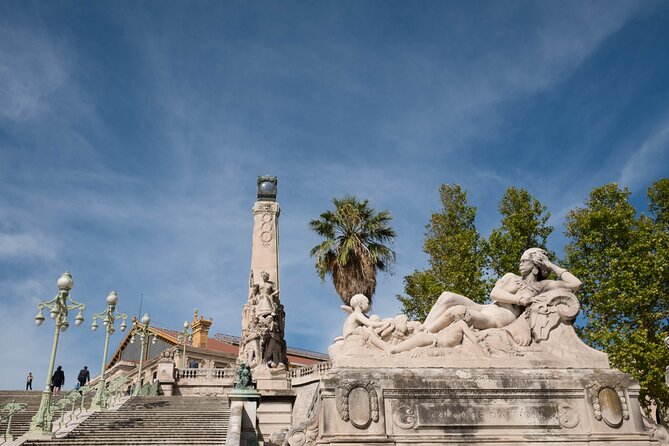
The meeting point is Place des Marseillaises, beside Gare de Marseille Saint-Charles. This is a practical starting place, since the main train station is easy to identify and close to central Marseille.
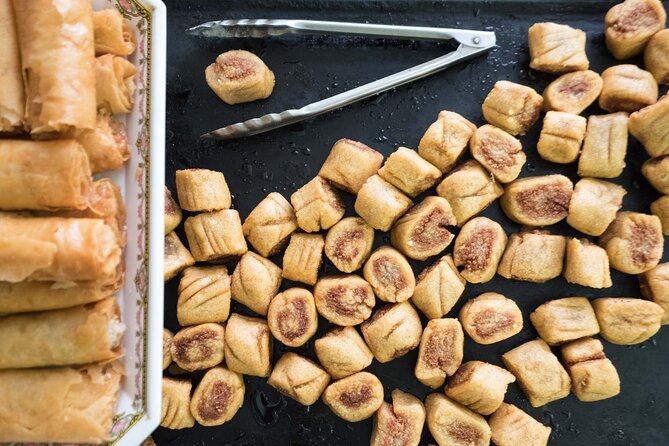
The opening hour looks at the city’s migratory past through an Algerian delicacy. That first stop sets the tone: Marseille’s identity is not presented as purely French or purely Provençal. The guide begins with the people and food connections that make the city what it is today.
The station area also gives you a quick sense of Marseille as a place of arrival. Trains, buses, workers, and residents pass through here every day. From this point, the tour moves into the city on foot, using food to connect streets and neighborhoods.
If you are joining from a cruise ship, plan this carefully. The starting point is not the cruise pier, and one family lost time and money after a taxi driver dropped them far from the meeting place. Give yourself extra time and confirm the exact address before leaving the ship. At the end, the guide can help arrange a taxi, but transport back to the port is not included.
A Gothic church and a proper café stop
The next stop is Église Saint-Vincent de Paul, where you spend about half an hour. The church provides a pause from the food and a look at one of Marseille’s grandest Gothic buildings.
Then the eating resumes with Provençal biscuits at a traditional café. This is a small detail, but it helps define the rhythm of the whole experience. You are not expected to walk for hours without rest. Food and drinks appear at regular intervals, with time to sit, talk, and ask the guide questions.
Several people praised that pace. The walk is long, but it is broken into manageable sections. You might walk through a busy street, stop for coffee or tea, hear a piece of local history, then sit down with something to eat. That pattern makes five and a half hours feel less demanding than the raw number suggests.
The café stop also gives you a taste of familiar Provençal food before the tour moves more fully into Marseille’s international food culture. If you want a classic French breakfast, you may receive coffee and croissant early in the day, but do not count on the entire tour following that pattern.
La Canebière, spices, and the working center of town
La Canebière is Marseille’s best-known boulevard, and the tour spends about an hour in this central part of town. You walk its length in sections, pausing at a colorful spice shop and a market.
This is where the tour’s focus on everyday food becomes especially useful. A spice shop tells you more about home cooking than a display in a museum. You see the colors, smells, and ingredients that connect Marseille kitchens with North Africa and the wider Mediterranean.
The market stop also helps you understand how people shop in the city. Expect ingredients and snacks rather than a carefully staged tasting room. The atmosphere is informal, and the food may be shared in small portions. One unusual account even described eating from a car hood. That may sound odd, but it reflects the tour’s casual, street-level character.
You should not expect every stop to be comfortable or elegant. Some tastings may be eaten standing up or in cramped surroundings. That is part of the appeal for people who want ordinary local places, but it will disappoint you if you prefer white tablecloths and measured courses.
Same water, a different dive:
- Southern Tenerife: 50-Minute Submarine Dive
★ 4.8 · 2,216 reviews - Silfra: Diving Between Tectonic Plates – Meet on Location
★ 5.0 · 2,139 reviews - Ocean Freedom Great Barrier Reef Luxury Snorkel and Dive Cruise
★ 5.0 · 1,895 reviews - Beginner Scuba Diving with Turtles and Videos, San Juan
★ 5.0 · 1,743 reviews
Noailles, Marseille’s food pantry
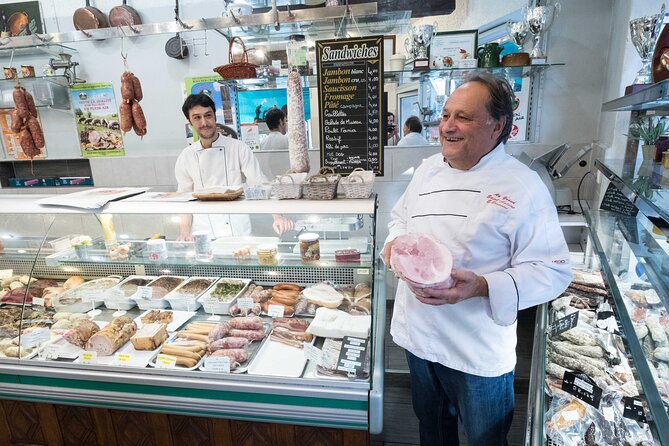
The hour at Marché de Noailles is likely the heart of the walk. This neighborhood is often called the belly of Marseille, and the tour uses its food stalls to show how many traditions meet in a small area.
You wander among fragrant produce, spices, sweets, and other market foods. The exact items can change, but the supplied tasting examples include unusual fruits and flowers, breads, vegetarian foods, and flavors from several cultures. The guide explains what you are eating and how it fits into Marseille’s social fabric.
This stop is especially good for people who might otherwise stay near the Old Port and eat only familiar French dishes. The market gives you permission to try things you may not recognize. It also gives you a list of places to return to, either for another snack or for ingredients to take home.
The market can feel crowded and energetic, and walking surfaces may not always be smooth. Wear comfortable shoes and keep your expectations flexible. This is a working neighborhood market, not a quiet food hall designed for sightseeing.
Mint tea appears to be one of the memorable drinks on this route. One family singled out a cup from a side shop as a highlight. That detail captures the tour well: a modest stop, made special by context, conversation, and the guide’s explanation.
Ending at the Old Port with an apéro
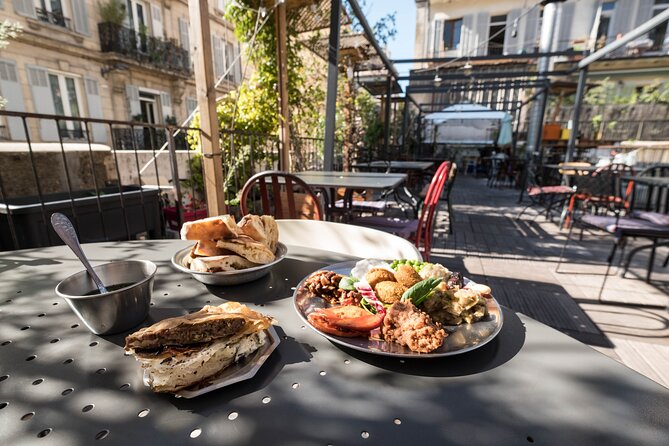
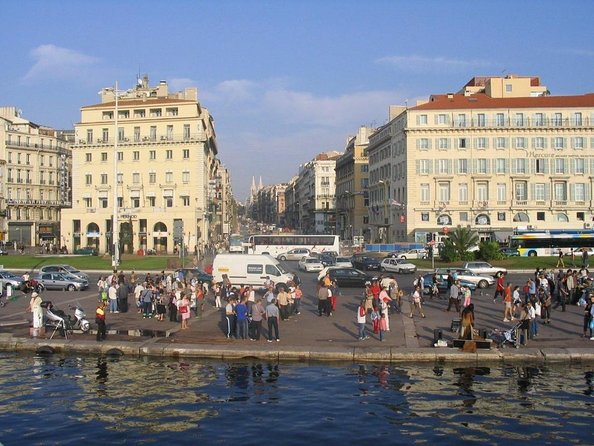
The route finishes at Marseille’s Vieux-Port, after about an hour focused on the harbor and an apéro in a former sailors’ bar. An apéro is not just a drink. It is a social pause before a meal, and it suits Marseille’s port culture perfectly.
The harbor gives the guide a chance to explain how the city grew around the sea. You end with boats in view, a drink in hand, and a better sense of how Marseille connects the Mediterranean with its streets and markets.
The final location is convenient for continuing your day. You can walk around the Old Port, visit nearby sights, or make your own dinner plans. The tradeoff is that you do not return to Place des Marseillaises. If you need to get back to a ship, station, or hotel, allow time for a taxi or other transport.
How much food will you actually eat?
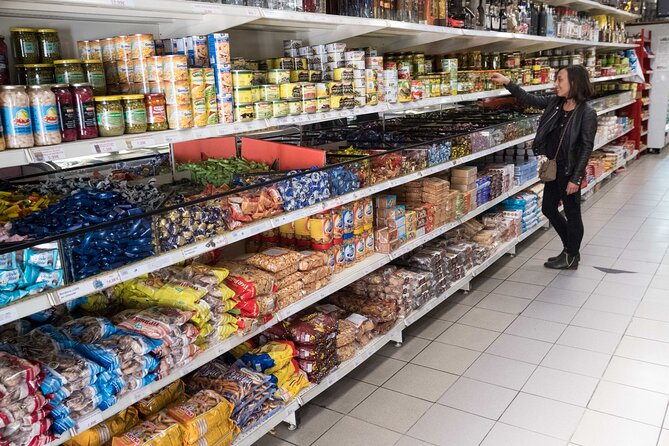
The short answer is: a great deal. The tour description promises two full meals, and the experiences described include pastries, coffee, biscuits, market foods, savory dishes, drinks, and an apéro. Several people strongly advised skipping breakfast or eating very lightly before the start.
The exact balance depends on the day and the guide. You might sample fish, wine, cheese, breads, sweets, spices, fruit, flowers, and vegetarian items. This range is one of the tour’s great strengths if you want to understand Marseille through many food traditions.
It can also be a drawback. If you want generous portions of meat and seafood, you may find the menu less satisfying. One critical assessment felt that the food did not match the $160 price, especially because much of it was shared casual food rather than seated dining.
For me, the value rests less on the raw cost of the food and more on access and explanation. You are paying for five and a half hours, a maximum group of seven, local relationships, a guide, neighborhood context, and restaurant suggestions for the rest of your stay. If you would happily explore markets and side streets on your own, the price may feel high. If you have one day in Marseille and want someone to connect the pieces for you, it becomes easier to justify.
The guides make the difference
The strongest part of this experience is the guide. Coco is repeatedly praised for her warmth, food knowledge, flexibility, and ability to make the walk feel like time spent with a friend. Séverine is praised for her personal connection to Marseille and her ability to explain the city’s people, culture, and food.
Chloé has also led the walk, bringing a relaxed style and a strong focus on immigration and the city’s social changes. Alexis has been singled out as a major reason the day worked so well. The experience is not tied to one named guide, so your exact style may vary, but the guide clearly shapes the day.
A good guide matters here because the food alone may not always be familiar. You need someone to explain why a market stall, café, spice, tea, or dish belongs in the story. The best moments seem to come when the guide connects the bite in front of you with a street, a family, a migration route, or a local habit.
The small group helps. With only seven people, you can ask about ingredients, request advice for later meals, and have a real conversation instead of listening from the back of a crowd.
Who should book this food walk?
I would choose this tour for a first day in Marseille, especially if you have limited time or are arriving by cruise ship. It gives you a useful map of central Marseille and leaves you with places to revisit. Several people treated it as the best way to begin a stay because the guide offered restaurant suggestions and pointed out spots they would not have found alone.
It suits you if you:
- Want food connected to migration, neighborhoods, and city life
- Enjoy markets, casual cafés, and small local shops
- Like trying unfamiliar foods
- Can walk for several hours with regular stops
- Prefer a small group over a large bus tour
- Want advice for eating well after the tour ends
I would think twice if you want classic French dishes at every stop, a strong emphasis on seafood, or several formal restaurant meals. The route is also a poor fit if you dislike shared tastings, street-style eating, or a long day on your feet.
Comfortable shoes are essential. The walk is not described as difficult, and most people can participate, but the duration and repeated movement through central streets make proper footwear a simple necessity. Service animals are allowed, and the route is near public transportation.
Should you book Beyond Bouillabaisse?
Book it if you want to understand why Marseille tastes the way it does. The small group, generous amount of food, strong guides, and mix of markets, cafés, church architecture, and harbor history create a useful introduction to the city.
Do not book it expecting a seafood feast or a formal French dining experience. The food can lean toward bread, vegetables, casual snacks, and shared portions, and one person found the value poor for that reason.
At $160, I see this as a city orientation with serious eating rather than simply a meal replacement. For a first visit, especially a short one, that can be good value. The tour shows you where to look, what to try, and how Marseille’s many communities have shaped its table. Come hungry, wear good shoes, and leave room for one more apéro at the Old Port.
FAQ
How long does the Marseille food tour last?
The experience lasts approximately 5 hours and 30 minutes.
Where does the tour start?
It starts at Place des Marseillaises, beside Gare de Marseille Saint-Charles in Marseille.
Where does the tour finish?
It finishes at the Old Port of Marseille, also called Vieux-Port. It does not return to the original meeting point.
How large is the tour group?
The maximum group size is seven people.
Is the tour offered in English?
Yes. The tour is offered in English.
Can I cancel for a full refund?
Yes, if you cancel at least 24 hours before the experience start time. Cancellations or changes made less than 24 hours before the start are not refunded or accepted. If poor weather or an insufficient minimum group causes the tour to be canceled, you will be offered another date or experience, or a full refund.
Newly logged dives around the world
- Phu Quoc: Scuba Diving Experience for All Levels★ 4.9 · 31 reviews
- Moalboal : Scuba Diving Sardine Run and Turtle Chasing★ 5.0 · 2 reviews
- From Alanya: Scuba Diving Tour with Hotel Transfers★ 3.7 · 3 reviews
- Scuba Diving in Colombo★ 5.0 · 2 reviews
- Scuba Diving in the Volcanic Caldera/shorelines of Santorini★ 4.6 · 5 reviews
- Fuerteventura: Introductory Dive in La Lajita with Pickup★ 4.9 · 68 reviews
- Kemer Scuba Diving with Expert Diving Option★ 4.2 · 45 reviews
- Phuket: Coral Reef Scuba Diving Experience at G Beach Club★ 4.9 · 32 reviews
France Scuba Diving, side by side.
Calvi: Introduction to Diving Dive with an Instructor
Read our review →
Fréjus: Diving Experience in Port-Fréjus with an Instructor
Read our review →
Porto-Vecchio: beginner diving in the Cerbicale Islands in the reserve
Read our review →
First Scuba Diving Experience in Calvi (From 8 yo)
Read our review →
Nice : VIP sea tour with snorkeling & discover scuba
Read our review →
Calvi/Lumio : Introductory scuba dive with an instructor
Read our review →
Lists this dive is on