Review · BORA BORA
Aqua Safari Introductory Helmet Dive (Underwater Walk)
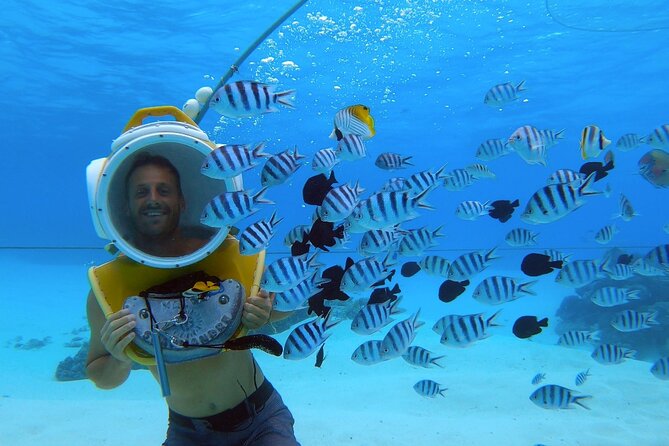
At about 10 feet below Bora Bora’s lagoon, you can walk on the sandy bottom with a clear helmet over your head and fish brushing past your view. This is the clever part: you get the close-up feel of scuba without wearing a mask or needing to swim.
I like the easy access and the calm, careful instruction. You do not need to swim, snorkel, or scuba dive, and guides such as Tama, JP, Séverine, and Sebastian have been praised for helping nervous people settle in. I also like the small underwater setting, where a coral garden, fish, and a friendly stingray become the main event.
The catch is the price, $158.76 per person, which is a serious charge for about 30 minutes on the lagoon floor. Weather can also cancel the trip, and one poorly handled pickup or cancellation can disrupt a tightly planned Bora Bora stay.
Key points at a glance
- A breathing helmet keeps your head dry: You walk underwater while breathing normally, which helps people who dislike masks or cannot snorkel.
- The walk reaches about 3 meters: Expect a coral garden, sandy bottom, tropical fish, moray eels, starfish, and possible stingray encounters.
- No swimming skill is required: The activity is designed for people who cannot swim, do not snorkel, or have never used scuba equipment.
- The underwater portion lasts about 30 minutes: The full outing takes roughly two to two and a half hours, including transport and instruction.
- Guides take underwater photos: You can view the images after the activity and decide if you want to purchase them.
- Weather matters: Poor sea conditions can lead to a new date or a full refund, so avoid scheduling it too close to an important flight.
Walking beneath Bora Bora’s lagoon
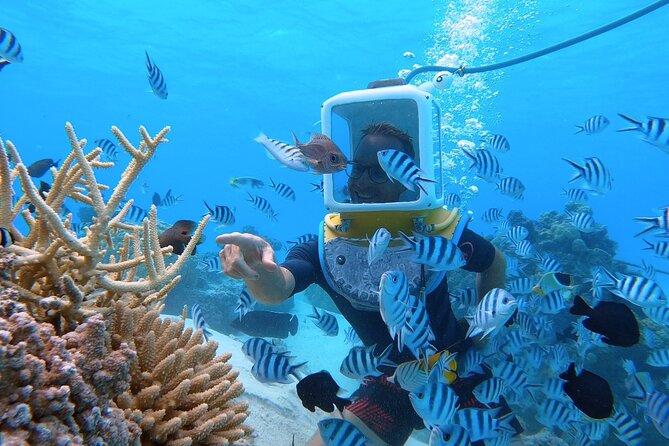
Bora Bora is famous for its lagoon, but not everyone wants to put on a snorkel mask or manage scuba equipment. The Aqua Safari helmet walk offers another route into the water. You descend with help from an instructor, stand on the lagoon floor, and breathe through the helmet as fish move around you.
The setting is shallow by scuba standards, at roughly 3 meters, or about 10 feet. That depth makes the activity less intimidating than a conventional underwater excursion, while still giving you a close view of coral and marine life.
You are not swimming freely across a large area. The activity takes place in a controlled section, often described as roped off. That limits how far you can wander, but it also gives the crew a clear area to supervise. For a first underwater experience, I see that as a sensible trade.
More Helmet Diving and Sea Walks in the world
- Sea Trek Helmet Dive at Coral World Ocean Park
★ 5.0 · 992 reviews - Curacao Helmet Diving-Walk the Ocean Floor, No Swimming Required
★ 5.0 · 761 reviews - Hartley Helmet Diving in Bermuda
★ 5.0 · 462 reviews
What happens from pickup to the boat ride
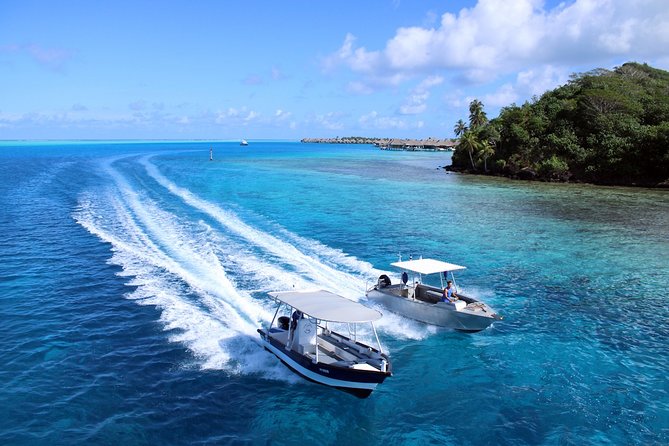
Pickup is offered, and the meeting point is listed at Ferry and Boat Point, F6VX+53X, Bora-Bora. The exact pickup time matters, so I would read the operator’s message closely rather than rely only on the general time shown when booking.
The outing lasts about two hours according to the tour details, while the activity description puts the total closer to two and a half hours. Allow the longer estimate when planning your day. The time includes transfers, equipment setup, the safety briefing, the underwater walk, and the return to the meeting point.
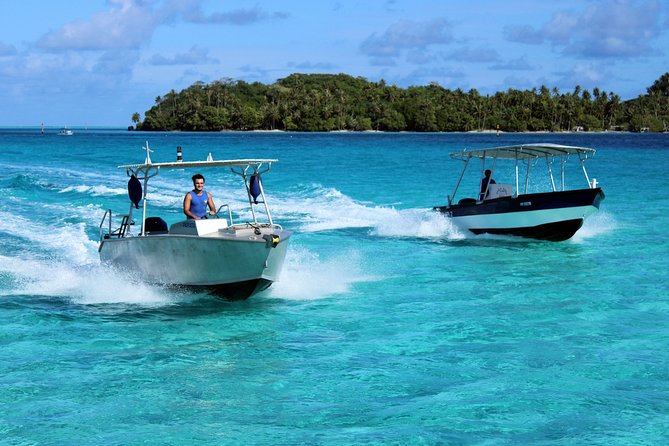
Several accounts describe a boat transfer to the underwater site, sometimes with a move from one boat to another. That arrangement is worth understanding before you go. You are not simply walking from a beach into the water. You will ride out by boat, receive the helmet equipment, and enter the lagoon with the crew’s help.
The boat ride is part of the pleasure. It gives you a look at Bora Bora from the water and breaks up the day with a short outing beyond your resort dock. Pickup timing has not always been perfect, though. One person reported a delay of about 40 minutes, while another cancellation was communicated poorly. I would leave extra time before a cruise departure or flight.
The briefing makes the helmet feel manageable
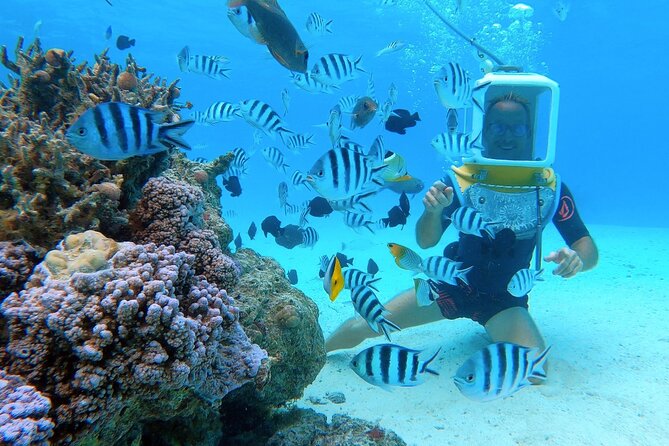
Before entering the water, a professional scuba instructor explains the process and checks that you understand the basic safety steps. You are given the necessary equipment, so there is no need to bring your own mask or special gear.
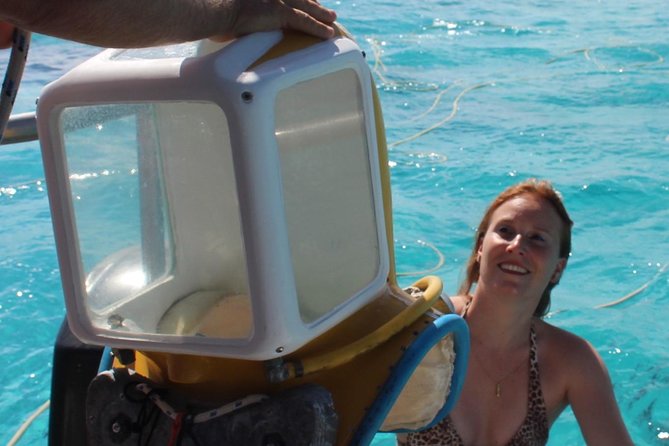
The helmet lets you breathe normally, with your head kept dry. This is especially helpful if you wear glasses, dislike water on your face, or feel uneasy about breathing through a snorkel. One of the most useful practical tips from the experience is to bring gum or follow the crew’s advice for clearing your ears as you descend.
You may feel pressure in your ears during the descent. That is normal for an underwater activity, but it can still surprise you. If you have had ear trouble before, take the briefing seriously and tell the instructor if you feel pain or cannot equalize.
The helmet has limited peripheral vision. One person found it easy to become disoriented at first because the field of view is narrow. I would move your head slowly and avoid trying to look all around at once. The guide is there to point out what is worth seeing and to help you get comfortable.
A little nervousness at the start is common, especially when you watch another participant go up or down ahead of you. The crew’s approach seems to be patient and hands-on. Guides help participants settle into the water, stay with the group, and return to the boat safely.
Thirty minutes among fish and coral
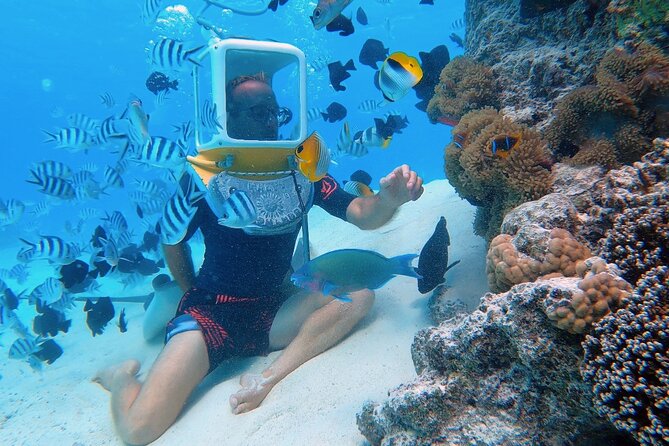
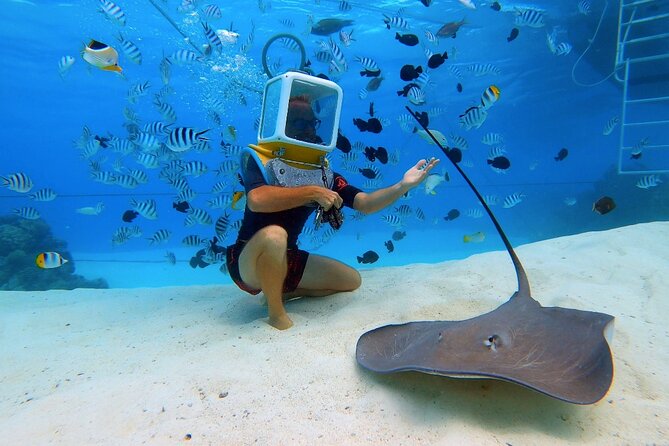
Once you reach the bottom, you walk on the sand through a coral garden. The main attraction is not a long route. It is the close distance between you and the lagoon’s small residents.
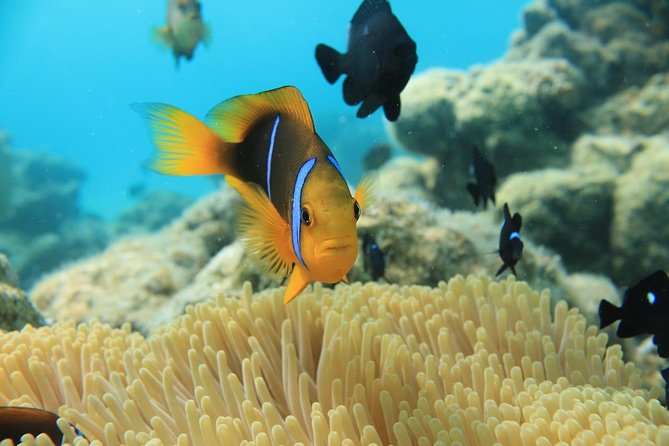
You might see parrot fish, butterfly fish, clown fish, moray eels, stingrays, starfish, and other tropical fish. The clear French Polynesian water helps, although visibility and sea conditions can change from day to day.
Fish may gather around food carried by the group. Some participants receive or carry bread in a small bag to attract them. This can create memorable close views, but you should know that the fish gathering is part of the setup rather than a guarantee that every animal will appear in exactly the same way.
The resident stingray is a special feature of this outing. The crew has worked with a friendly ray for many years, and it may swim close to the group. Some accounts describe it as lingering near the participants, while others saw it arrive and circle around them. A stingray encounter is never something I would promise as a fixed part of any wildlife outing, but it is clearly one of the moments this activity is built around.
The site is enclosed or roped off, which keeps the group together and limits the walking area. If you want the freedom to cover a large reef, this may feel restricted. If you want a safe, directed introduction to underwater life, the boundaries make sense.
The underwater portion is listed as 30 minutes, though some descriptions place it closer to 40 minutes. Either way, that is enough time for the novelty to settle in, for the guides to point out marine life, and for the photographer to take pictures. It is not a full-day water expedition.
More Discover Scuba Diving in the world
- Discover Scuba Diving
★ 5.0 · 1,676 reviews - Barcelona: PADI Discover Scuba Diving
★ 4.7 · 1,016 reviews - Discover Diving in Curacao
★ 5.0 · 886 reviews - Mallorca: Discover Scuba Diving for Beginners
★ 4.7 · 805 reviews
Guides, group size, and personal attention
The maximum group size is 12 people. That is small enough for the instructor to keep track of the group, though your sense of personal attention will depend on the number of participants that day.
The crew has been praised for a friendly, reassuring manner. Names that appear in the operating team include Tama, JP, Séverine, Sebastian, Rémi, and Frédéric. You may not have all of them on your particular departure, but the pattern is clear: one crew member may handle boat duties while instructors help people into the water, guide the walk, and take photographs.
On one outing with eight participants, two instructors were described as managing the group well. One helped people descend and return to the surface while another concentrated on photographs and underwater guidance. That division of work is useful because the helmet equipment is bulky and many people need help during the first few minutes.
The guides also add a human touch. Along with explaining the equipment and pointing out fish, they may share information about local festivals or other things to see in Bora Bora. Their humor seems to help solo participants and nervous newcomers relax.
Photos are useful, but budget for them
A guide takes photographs with a high-definition camera during the underwater walk. The images are shown to you at the end of the activity, and you can decide if you want to buy them.
The photos have real value here. It is difficult to hold a personal camera comfortably while wearing a large helmet and walking on the bottom. A waterproof camera or GoPro can still be useful if you have one, but do not expect to operate it as easily as you would while snorkeling.
Bring your own waterproof camera only if you are comfortable handling it underwater and the crew permits it. The operator’s camera is positioned to capture you with the fish, coral, and stingray, which is often better than trying to photograph everything yourself.
The photo purchase is optional. Some people consider the images worth the extra cost, especially because the activity is unusual and family members at home cannot easily picture what the helmet walk looks like. Add that possible expense to your budget if you want a complete souvenir.
Who will get the most from this activity
I would recommend the helmet walk most strongly to people who want to see lagoon life but do not want to snorkel or use standard scuba gear. It also suits families with children who meet the operator’s participation requirements, although the supplied information does not state a specific minimum age.
It is particularly helpful for someone who cannot swim. The company describes the activity as suitable for people who do not know how to swim, and several participants used it for a spouse or family member who could not take part in ordinary snorkeling.
It can also work well for people who wear glasses or dislike having their face covered by a mask. Your head stays dry inside the helmet, and you breathe normally. That does not make the activity completely effortless, though. You still need to manage ear pressure and remain comfortable in the helmet’s restricted view.
I would also consider it for a nervous first-timer who wants a guide close by. The shallow depth, controlled area, and instructor support create a gentler introduction than open-water snorkeling. You should still expect a real underwater sensation, not a ride where you simply sit and watch.
Strong swimmers and experienced snorkelers may find the activity less essential. You will not cover a large reef or choose your own route. For you, the value lies in the helmet itself, the close animal encounters, the boat ride, and the chance to share the experience with someone who cannot snorkel.
Is $158.76 a fair price?
At $158.76 per person, this is not a bargain excursion. You are paying for boat transport, equipment, an instructor, a controlled underwater site, supervision, and photographs that may cost extra.
The value improves if one person in your group cannot swim or cannot use normal snorkeling equipment. In that case, the helmet walk may provide access to the lagoon that would otherwise be lost. It also gives a mixed-ability family a shared activity instead of sending some people snorkeling while others stay on the boat.
The price is harder to justify if you already snorkel comfortably and have several other lagoon outings planned. You may see fish and coral in other ways for less money, although those options will not provide the same helmet-walking experience.
I would treat this as a special Bora Bora activity rather than a simple wildlife tour. The unique format is the reason to book it. The short underwater portion is the reason to compare it carefully with other water activities before spending the money.
Weather, timing, and the small practical details
The tour requires good weather. If poor conditions force a cancellation, you are offered another date or a full refund. That policy is useful, but it does not remove the inconvenience of losing a planned day.
I would not schedule the helmet walk on the final possible day of your Bora Bora stay if the experience is the main reason for your trip. A weather cancellation may leave no time to rebook. The operator also notes a recommended gap of 12 hours before a domestic flight and 24 hours before an international flight.
Free cancellation is available up to 24 hours before the start time. Changes or cancellations made inside that window are not accepted for a refund, and a last-minute illness may still leave you paying. Read the pickup instructions carefully, and allow a cushion if you need to return to a cruise ship.
The activity ends back at the meeting point. It is offered as a shared tour, with a maximum of 12 participants. Mobile tickets are accepted, which keeps the booking side simple.
Should you book the Aqua Safari helmet walk?
I would book it if you want close lagoon views but cannot swim, dislike snorkeling masks, wear glasses, or feel nervous about conventional underwater gear. It is also a strong choice for a family or couple with mixed water skills. The calm instruction, shallow depth, and friendly stingray give the outing a clear purpose beyond simply riding a boat.
I would pause if you are mainly looking for a long reef exploration or the lowest-cost way to see fish. The underwater area is limited, the walk lasts only about half an hour, and the price is high once optional photographs are added.
For the best chance of enjoying it, choose a day with flexible weather, read the pickup message, bring gum for ear pressure, and leave space in your schedule. If you accept the cost and the controlled format, this is one of Bora Bora’s more unusual ways to meet the lagoon without needing to swim.
FAQ
Do I need to know how to swim?
No. The activity is designed for people who cannot swim, and no swimming, snorkeling, or scuba experience is required.
How deep does the helmet walk go?
The walk takes place at about 3 meters, or roughly 10 feet, below the surface. Some descriptions and participant accounts refer to a maximum depth of about 15 feet.
How long are you underwater?
The underwater portion lasts about 30 minutes. Some descriptions indicate that it may run closer to 40 minutes, while the full outing takes roughly two to two and a half hours.
What animals might I see?
You might see parrot fish, butterfly fish, clown fish, moray eels, stingrays, starfish, coral, and other tropical fish. A friendly resident stingray may swim close to the group.
Is equipment provided?
Yes. Necessary equipment and a safety briefing are included. You wear a special helmet that allows you to breathe normally while keeping your head dry.
Are photos included?
Your instructor takes photographs during the underwater walk. You can view the images at the end and decide whether to purchase them. The supplied information does not state that the photo package is included in the tour price.
Where does the tour start and finish?
The listed meeting point is Ferry and Boat Point, F6VX+53X, Bora-Bora, French Polynesia. The activity ends back at the meeting point, and pickup is offered.
What happens if bad weather cancels the activity?
If poor weather causes a cancellation, you can choose a different date or receive a full refund. The tour requires good weather and sea conditions for safe operation.
More tours on foot around the world
- Deep Dive into Denver: Small-Group Walking Tour
★ 4.8 · 119 reviews - Delft: Dive into the Golden Age on a Private Walking Tour
★ 4.6 · 16 reviews
More safari trips around the world
- Heraklion: Boat Safari with guided snorkeling/diving tour.
★ 4.7 · 9 reviews - Gansbaai: Shark Dive & Big 5 Sea Safari Combo Boat Trip
★ 5.0 · 2 reviews - From Cape Town: 2-Day Garden Route Safari with Shark Diving
★ 5.0 · 2 reviews
Newly logged dives around the world
- Phu Quoc: Scuba Diving Experience for All Levels★ 4.9 · 31 reviews
- Moalboal : Scuba Diving Sardine Run and Turtle Chasing★ 5.0 · 2 reviews
- From Alanya: Scuba Diving Tour with Hotel Transfers★ 3.7 · 3 reviews
- Scuba Diving in Colombo★ 5.0 · 2 reviews
- Scuba Diving in the Volcanic Caldera/shorelines of Santorini★ 4.6 · 5 reviews
- Fuerteventura: Introductory Dive in La Lajita with Pickup★ 4.9 · 68 reviews
- Kemer Scuba Diving with Expert Diving Option★ 4.2 · 45 reviews
- Phuket: Coral Reef Scuba Diving Experience at G Beach Club★ 4.9 · 32 reviews
Helmet Diving and Sea Walks, side by side.
Sea Trek Helmet Dive at Coral World Ocean Park
Read our review →
Curacao Helmet Diving-Walk the Ocean Floor, No Swimming Required
Read our review →
SeaTrek Underwater Helmet Diving Experience in Downtown Cozumel
Read our review →
Boracay: Helmet Diving Experience with Photos and Videos
Read our review →
Cairns: Green Island and Seawalker Helmet Dive Combo
Read our review →
Boracay: Island Hopping with Crystal Kayak & Helmet Diving
Read our review →