
Review · ARUBA
Small-Group Aruba Scuba Diving for Non-Certified Divers
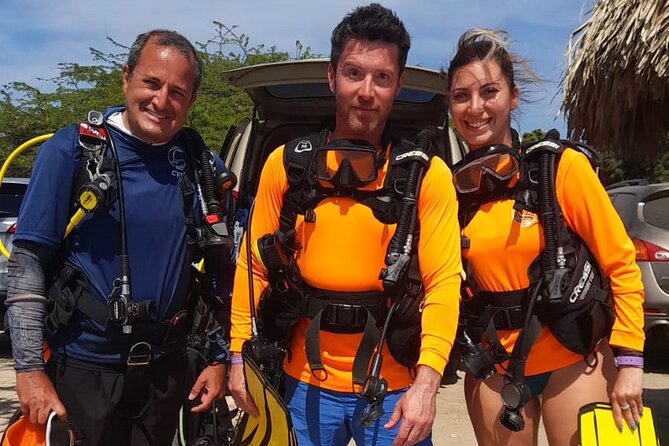
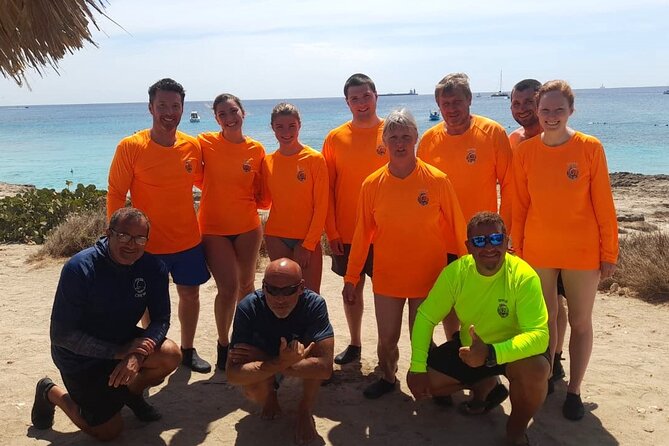
Aruba lets you try scuba without first completing a certification course, and this shore-based experience keeps the first step manageable. You learn the basics on land, practice in shallow water, then move farther out only when you feel ready. Groups are limited to four, with a maximum of two beginners per instructor.
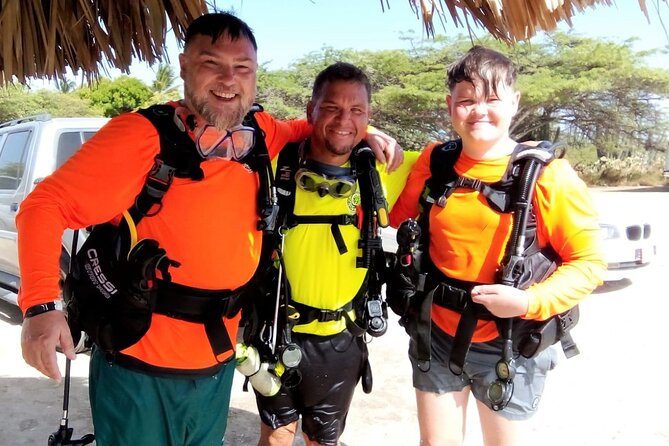
I like the close attention from instructors such as Alonso, Alvaro, Steve, Jay, and Michel, and I like that you can see turtles, eels, puffer fish, schools of tropical fish, and coral without boarding a boat. The main consideration is that this is an introductory session, so the water may feel too shallow or close to shore if you already have substantial scuba experience.
Key points to know before booking
- Maximum of two beginners per instructor: You receive close supervision, which matters when you are learning breathing, mask clearing, and ear equalization.
- From shore at Tres Trapi or Mangel Halto: There is no boat ride, and the calm entry helps first-timers manage nerves.
- About 30 minutes of instruction first: You learn the basic theory and practice skills before heading into deeper water.
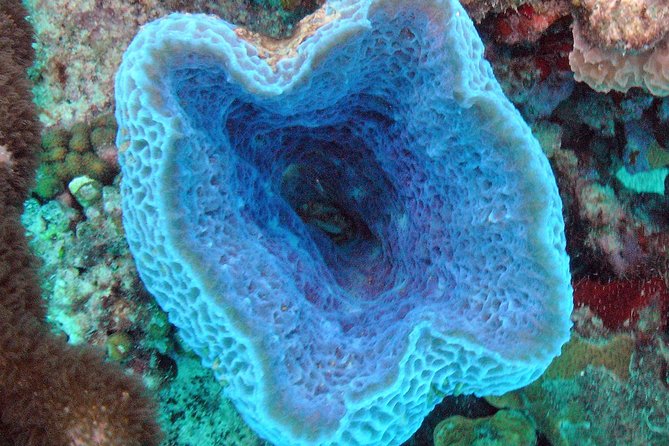
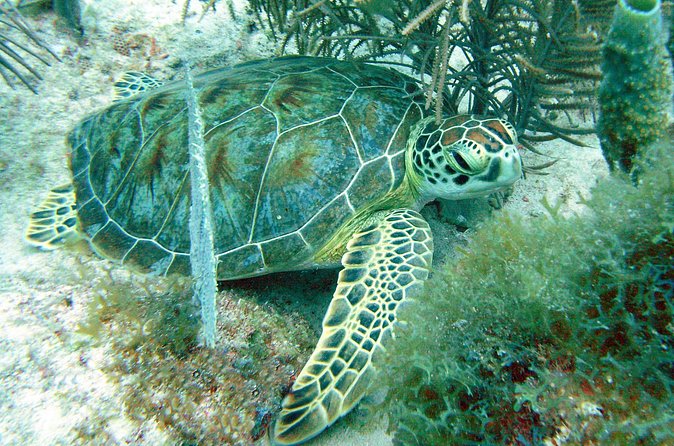
- Marine life can be surprisingly good: Turtles, eels, octopuses, puffer fish, schools of silver fish, and colorful coral have all been seen.
- The usual underwater time is about 45 minutes: Your air use, comfort, and conditions determine the actual length.
- Medical screening matters: Check the PADI or SDI questionnaire before paying, especially if you have a medical condition or take medication.
A gentle first step into Aruba’s underwater world
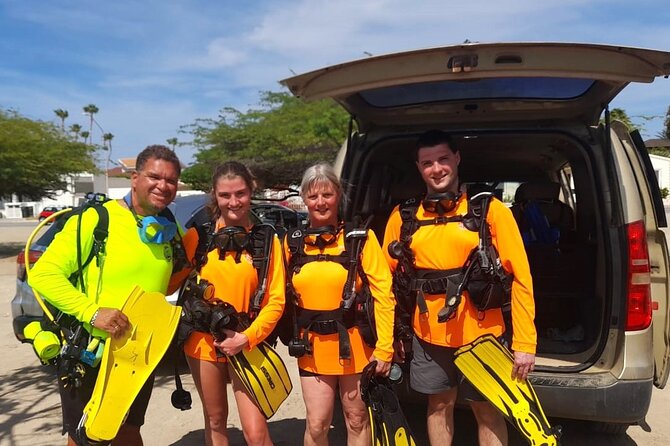
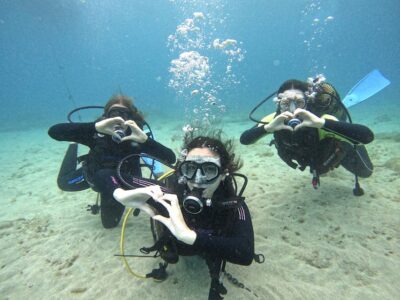
This is not a quick swim with a tank strapped on and little explanation. The afternoon starts at about 2 p.m. with roughly 30 minutes of theory and briefing. Your instructor explains the equipment, breathing method, basic hand signals, and the skills needed to stay calm below the surface.
You then receive a BCD, regulator, tank, weights, mask, and fins. You may bring your own mask and fins if you prefer. That small option can help if you already own equipment that fits well, but the supplied gear covers the essentials.
The first water work happens in the shallows. This is where you practice the skills from the briefing and learn how the regulator feels. You may work on clearing your mask, breathing steadily, and equalizing your ears. These tasks sound simple on land, but they can feel unfamiliar once your face is underwater.
The instructor watches your comfort level closely. If you are ready, the group moves to deeper water to see the reef and marine life. If you are uneasy, the pace can remain slower and shallower. One participant had trouble going farther down and stayed near the surface while the instructor continued to provide support. That flexibility is one of the best features for a first attempt.
The full activity lasts about two hours, including instruction, gearing up, shallow-water practice, and the underwater portion. The underwater time often reaches about 45 minutes, although your air consumption affects the exact length. Beginners tend to use air faster while they are learning to relax and breathe smoothly.
More Scuba Diving for Beginners in the world
- First-Time Scuba Diving in Honolulu + Free Videos
★ 5.0 · 3,123 reviews - Beginner Scuba Diving with Turtles and Videos, San Juan
★ 5.0 · 1,743 reviews - Intro Diving 2 Stops For Beginners with Pick-up and Lunch – Hurghada
★ 5.0 · 1,146 reviews
Why a shore entry works well for beginners
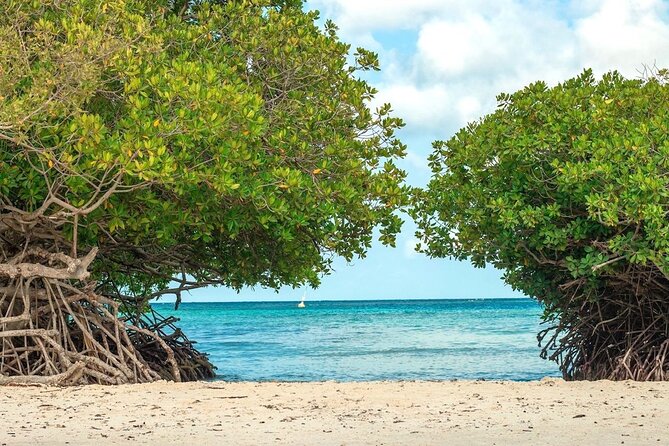
Many people picture scuba as a boat trip followed by a giant backward roll into open water. This experience avoids that whole production. You walk into the sea from shore, begin in shallow water, and build up gradually.
For a nervous beginner, this makes a real difference. You can pause, adjust your mask, listen to instructions, and get used to breathing through the regulator without immediately being surrounded by deep water. The shore entry also keeps the activity focused on learning rather than on a long ride to a site.
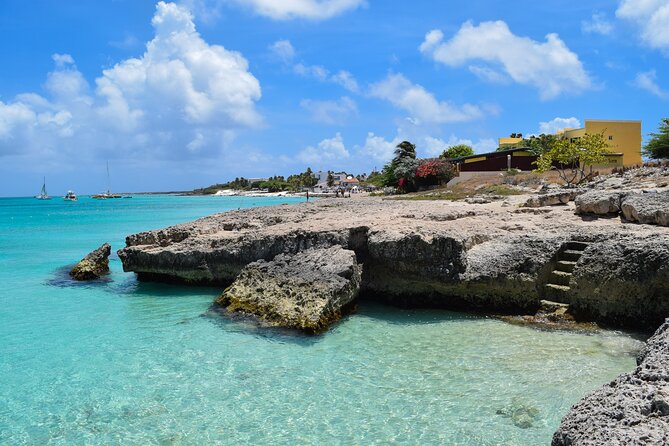
Tres Trapi is the usual location and is favored for calm conditions and manageable depth. It also has plenty to see. You might find turtles feeding near coral, schools of small tropical fish, eels, puffer fish, octopuses, and other reef life. Several participants saw hawksbill turtles at close range, while others followed a turtle or watched fish move through a coral wall.
Mangel Halto may also be used. The final location depends on the operator and conditions, so you should not book expecting one exact site. That said, both options are intended to provide a comfortable setting for new scuba participants.
The tradeoff is easy to understand. A shore entry is less dramatic than stepping off a boat into a larger reef area, and the route may not reach the depth or open-water scenery an experienced scuba enthusiast wants. One experienced participant specifically wished for a deeper site and a more expansive ocean setting. For your first underwater session, though, calm and control are usually more useful than maximum depth.
Patient instruction matters more than fancy scenery
Your first scuba experience can be decided by one small moment. If your mask fills with water, your ears do not clear, or you feel anxious about breathing, a patient instructor can keep the day on track. A rushed instructor can do the opposite.
The teaching team receives strong praise for staying calm and giving clear direction. Alonso is repeatedly singled out for patient coaching, while Alvaro, Steve, Jay, and Michel are also named as helpful instructors. You may not have one of those specific instructors, but the important point is the teaching approach: the ratio is kept at no more than two non-certified participants per instructor.
That ratio is unusually helpful for a first attempt. Your instructor can watch your breathing, hand signals, body position, and reaction to the water. If two people in the same pair progress at different speeds, the instructor can adapt instead of pushing everyone along as one large group.
The instruction also seems well suited to families and couples. Children must be at least 10 years old, and teenagers have taken part successfully. Couples can participate together, but you should not assume both people will reach the same depth or stay underwater for the same amount of time. One person may be comfortable proceeding while the other prefers to snorkel or remain shallow.
You should also expect direct coaching underwater. Beginners have received regular checks from instructors and help with mask problems, ear pressure, and nerves. That support does not remove the need to pay attention. You still need to follow directions, communicate clearly, and tell the instructor if something feels wrong.
What you may see at Tres Trapi
The appeal here is not only learning a new skill. Tres Trapi can offer a close look at Aruba’s coastal marine life, especially when the water is calm and clear.
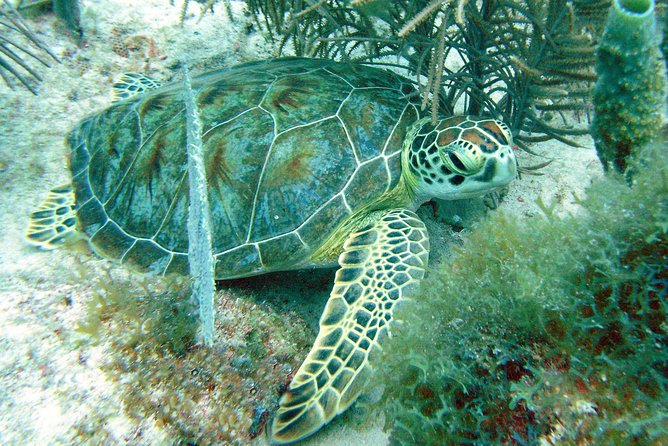
Turtles are the most memorable possibility. Participants have seen turtles feeding on seaweed, swimming nearby, and moving along the reef. You might also see eels tucked into openings, puffer fish, octopuses, flying fish, and large schools of silver-colored fish.
The coral itself can be a highlight. One account describes a coral wall, while another notes the variety of reef fish and the clear water. Conditions are not guaranteed, and weather can make the water murkier. One participant encountered reduced visibility but still enjoyed the staff and the overall session.
It helps to set the right expectation. This is not marketed as a technical expedition or an advanced reef trip. The instructor’s first job is to keep you comfortable and safe. Marine life is a valuable bonus, but your group may spend more time practicing skills than chasing animals.
That balance suits a true beginner. You have a chance to see real sea life while learning the habits needed for future scuba sessions. If the experience inspires you to continue, the operator offers PADI and SDI certification programs. The next step includes online learning plus three additional mornings in Aruba.
More Dives for Certified Divers in the world
- Two-Tank Morning Dive Trip for Certified Divers
★ 5.0 · 602 reviews - 2 Tank Lanai Cathedral Scuba Dive Via Boat for Certified Divers
★ 5.0 · 548 reviews - Wreck and Bridge Span Dive for Certified Divers
★ 5.0 · 521 reviews - Two-Tank Dive for Certified Diving in St Thomas
★ 5.0 · 456 reviews
The $114 price and what it includes
At $114 per person, the price is reasonable for a small-group introduction that includes instruction, equipment, and an underwater session. You are not paying only for access to the water. You are also paying for an instructor who works with no more than two beginners, tanks, weights, a BCD, regulator, mask, and fins.
That group size is the strongest part of the value. A cheaper activity with a large group could leave you waiting for help or feeling rushed through the skills. Here, the close supervision is especially useful if you have never used a regulator or are unsure about your ability to stay calm underwater.
A $7 BBO fee per person is not included, so add that to your budget. Pickup is included from Palm and Eagle resorts, Harbor House, Renaissance resorts, and the cruise terminal. At the cruise terminal, the meeting point is opposite the exit near the Citgo gas station.
The listed meeting point is Tres Trapi Beach on L. G. Smith Boulevard 105 in Noord, and the activity ends back there. Pickup details should be confirmed when you book, particularly if you are staying somewhere outside the listed resort areas.
Because the activity starts at 2 p.m., it can fit neatly into a morning of sightseeing or beach time. It also means you should avoid alcohol before the session and leave enough time for transportation, changing, instruction, and equipment preparation.
Medical rules you should check before paying
The medical questionnaire is not a minor formality. Search for the PADI Discover Scuba Diving or SDI Discovery Dive medical questionnaire before booking and read it carefully.
A yes answer does not automatically mean you cannot participate. It may mean you need written permission from your doctor. Bring that permission with you if it applies.
The stated health guidance calls for good respiratory and circulatory health, normal and healthy air spaces, and enough physical condition to manage a demanding activity. People with heart problems, people under the influence of alcohol or drugs, and anyone taking medication without medical clearance should not assume they can take part.
This is also not an activity for someone who feels extremely out of condition or severely overweight. Scuba can require effort, especially while walking in equipment, entering the water, and managing unfamiliar conditions.
The operator says most people can participate, but that should not replace your own medical judgment. Check the questionnaire early. One person booked without doing so, then could not enter the water because of a medical answer and was unsure about the refund. The practical lesson is simple: inspect the health requirements before making a nonrefundable last-minute plan.
You also cannot fly for at least 18 hours after scuba. That rule matters if you are taking a late afternoon session before an early flight. Leave a full buffer in your itinerary rather than trying to fit this activity into your final travel day.
Who will get the most from this experience
I would choose this for a first-time scuba participant who wants real instruction and a controlled introduction. It is also a good fit if you are nervous about the ocean, since you start in shallow water and progress only when ready.
Families with children aged 10 and older may find the small group useful, provided everyone meets the medical and physical requirements. Couples can enjoy it together, but you should be comfortable with different levels of confidence and underwater ability.
It also suits someone who has tried scuba years ago and wants a gentle return. One participant had been underwater about 16 years earlier and found the patient coaching useful when old nerves returned.
I would be more cautious about booking if you are already an experienced scuba participant seeking depth, a boat trip, or a large reef site. You may find the shore entry and beginner pace limiting. The experience is designed to teach and reassure first, then show you the reef.
Timing, cancellation, and practical planning
You receive confirmation when you book, and the activity is offered with mobile tickets. Free cancellation is available if you cancel at least 24 hours before the 2 p.m. start time. Changes or cancellations inside that window are not refunded, and late changes are not accepted.
Weather can affect the schedule. If poor conditions cancel the activity, you are offered another date or a full refund. The exact location may also shift between Tres Trapi and Mangel Halto depending on conditions.
Bring a swimsuit and anything you normally need for a beach activity, though the supplied information does not specify a full packing list. If you own a well-fitting mask and fins, you may use them instead of the supplied equipment.
The most important preparation is mental. Listen closely during the briefing, breathe slowly, and do not treat nervousness as failure. A calm start often matters more than athletic ability.
Should you book this Aruba scuba session?
Book it if you want to try scuba without committing to a certification course, especially if a small group and patient instruction matter to you. The $114 price is fair for equipment, teaching, shore access, and close supervision, with the extra $7 BBO fee added separately.
The best reasons to choose it are the one-instructor-to-two-beginner ratio, the gradual shallow-water start, and the chance to see turtles and reef life at Tres Trapi. The main limits are the shore setting, beginner pace, variable visibility, and lack of guaranteed depth.
Check the medical questionnaire first, leave 18 hours before flying, and expect about 45 minutes underwater rather than assuming the entire two-hour schedule is spent below the surface. If you want a safe, friendly first look at Aruba beneath the water, this is a sensible choice. If you already scuba regularly, save your time and money for a more advanced site.
FAQ
Do I need scuba certification to take part?
No. This is designed for non-certified participants and includes basic theory, equipment instruction, shallow-water skills, and a supervised underwater session.
How old must participants be?
The minimum age is 10 years old.
Where does the activity take place?
The activity starts from shore at Tres Trapi or Mangel Halto. The listed meeting point is Tres Trapi Beach, L. G. Smith Boulevard 105, Noord, Aruba.
What equipment is included?
The supplied equipment includes a BCD, regulator, weights, tank, mask, and fins. You may use your own mask and fins if you prefer.
How many people are in each group?
The total group maximum is four participants. For non-certified participants, the instructor-to-participant ratio is no more than one instructor for two people.
Is hotel pickup available?
Pickup is included from Palm and Eagle resorts, Harbor House, and Renaissance resorts. Cruise terminal pickup is also available at the Citgo gas station opposite the terminal exit.
Can I fly immediately after the activity?
No. You must wait at least 18 hours after scuba before flying.
Newly logged dives around the world
- Phu Quoc: Scuba Diving Experience for All Levels★ 4.9 · 31 reviews
- Moalboal : Scuba Diving Sardine Run and Turtle Chasing★ 5.0 · 2 reviews
- From Alanya: Scuba Diving Tour with Hotel Transfers★ 3.7 · 3 reviews
- Scuba Diving in Colombo★ 5.0 · 2 reviews
- Scuba Diving in the Volcanic Caldera/shorelines of Santorini★ 4.6 · 5 reviews
- Fuerteventura: Introductory Dive in La Lajita with Pickup★ 4.9 · 68 reviews
- Kemer Scuba Diving with Expert Diving Option★ 4.2 · 45 reviews
- Phuket: Coral Reef Scuba Diving Experience at G Beach Club★ 4.9 · 32 reviews
Scuba Diving for Beginners, side by side.
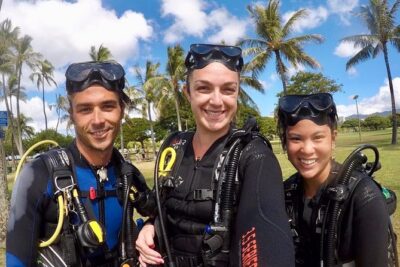
First-Time Scuba Diving in Honolulu + Free Videos
Read our review →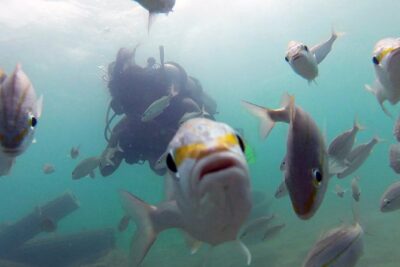
Beginner Scuba Diving with Turtles and Videos, San Juan
Read our review →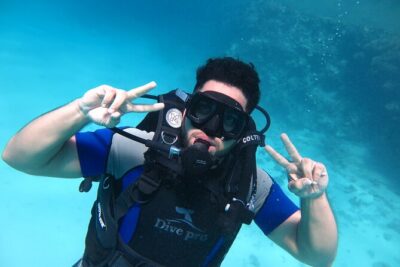
Intro Diving 2 Stops For Beginners with Pick-up and Lunch – Hurghada
Read our review →
Intro Diving Beginner and Discover Red Sea Underwater
Read our review →
Beginner Scuba Diving Experience with Video Package in Honolulu
Read our review →
Tenerife: Beginner’s Dive at a Spot with Turtle Sightings
Read our review →Lists this dive is on