Review · ARUBA
Private First-Time Dive on Aruba’s Reef and Wreck Site
The most appealing part of this Aruba outing is the private first scuba experience. You receive a 20-minute briefing, practice with the equipment in shallow water, then head to a reef and shipwreck site that reaches no more than 40 feet. Alan, Ray, and Pauline are among the instructors, and the pace can change to suit you.
I like two things right away: the small group limit of four and the calm, patient teaching style praised again and again. You are not pushed through a fixed timetable, which matters if breathing through a regulator feels strange at first. Pickup may also be available, making the day easier.
The main consideration is that this is an introductory session, not a full certification course. You may see coral, fish, and a wreck, but conditions, comfort, and ear pressure can affect how far you go. One participant had to remain in shallower water because of trouble equalizing.
Key points to know before booking
- Private group of up to four: Your instructor can focus on your group instead of managing a large class.
- A real underwater session: After practice, you can reach a maximum depth of 40 feet and visit a reef and shipwreck site.
- Built for nervous beginners: The program slows down when needed, with Alan often praised for his patience and steady manner.
- Useful for returning certified divers: The instruction can refresh skills if you have been out of the water for years.
- About three hours for $120: The price includes a personal approach and equipment instruction, not a certification.
- Plan around your flight: You need at least 18 hours between the session and flying.
What this Aruba scuba experience is really like
This is designed for people who are curious about scuba but have never earned a certificate. You do not need prior scuba training, though you do need basic swimming skills and must complete the medical questionnaire supplied through the booking message board.
The experience is private, which changes the feel of the day. You are not sharing the lesson with a busload of strangers, and the instructor can pay attention to small signs of discomfort. If you need extra time with the mask, fins, regulator, or breathing exercises, the group does not have to follow a rigid schedule.
That flexibility is especially useful for couples and families. It also suits a mixed group, such as one certified person traveling with someone who has never tried scuba. A certified participant can receive a refresh while the newcomer gets a careful introduction.
The usual group has no more than four participants. A smaller party may have an instructor working closely with two people, as some sessions do. For a first attempt, that personal attention is worth more than a flashy boat or a crowded schedule.
More Wreck Diving in the world
- Wreck and Bridge Span Dive for Certified Divers
★ 5.0 · 521 reviews - Private Diving at Zenobia Wreck in Larnaka
★ 5.0 · 369 reviews - Bali Diving for Beginners: Tulamben Liberty Wreck
★ 5.0 · 367 reviews
Starting at Mangel Halto Pos Chiquito Beach Park
The meeting point is Mangel Halto Pos Chiquito Beach Park on Spaans Lagoenweg in Savaneta. The experience ends back at the same point. Pickup is offered, and several participants appreciated hotel transportation, but you should confirm the pickup details when booking rather than assume every hotel is included.
The beach meeting point keeps the opening simple. You do not need to begin with a long boat trip or a complicated marina routine. After meeting your instructor, you get ready for the land lesson and learn what will happen underwater.
The setting also helps keep the first stage low pressure. You can ask questions before entering the water, rather than trying to sort out the equipment while already floating. If you are nervous, use this time to say so plainly. The program is built to adjust to comfort level, and the instructors have shown they are willing to slow down.
The 20-minute briefing that sets the tone
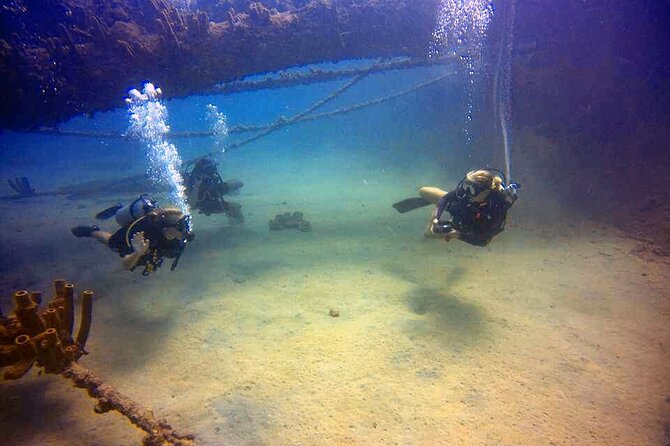
The first formal step is a full 20-minute safety lesson on land. You learn the plan for the session, how the equipment works, what to do with basic underwater skills, and what marine life you may encounter.
This briefing matters more than its short length suggests. Breathing underwater can feel unnatural, and the first few minutes with a mask and regulator often require concentration. A clear explanation gives you a mental checklist before you enter the water.
Alan receives especially strong praise for explaining things clearly and helping apprehensive beginners relax. Ray and Pauline are also named as instructors who take time with new participants. Their friendly approach can make a real difference, but you should still ask questions if anything is unclear. A good first session depends on you being comfortable enough to speak up.
You will also need to complete a medical questionnaire before the program and bring it with you. Answer it carefully. The form is part of the safety process, not a minor bit of paperwork.
Shallow water practice before the real descent
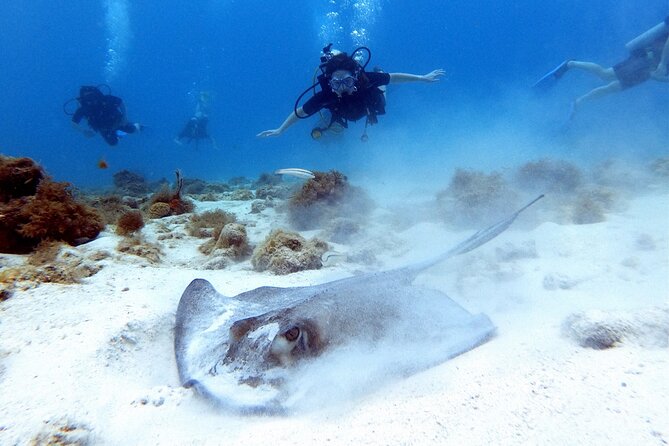
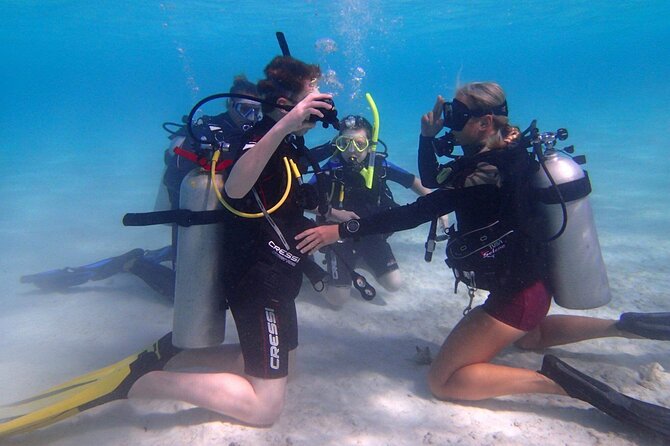
After the land lesson, you move into shallow water to practice. This is where you get used to the mask, fins, breathing equipment, and basic exercises before attempting the main underwater portion.
I consider this the most valuable part for a nervous beginner. You can test your breathing and adjust your equipment without immediately dealing with maximum depth. Your instructor can check that you understand the exercises and can respond to simple instructions.
The pace is not fixed. If you need more time, the session can remain in practice mode until you feel ready. If you are comfortable quickly, you can move on without spending unnecessary time repeating basics.
That sounds simple, but it is a major difference between a personal session and a tightly scheduled group class. The aim is not to get every participant to the same point at the same minute. The aim is to make sure you can manage the equipment and remain calm enough to enjoy the underwater portion.
Pay attention to your ears here. You will need to equalize pressure as you go lower, and one participant could not regulate ear pressure well enough to reach the planned depth. The experience continued in shallower water, with coral and fish still visible. That is a useful reminder that reaching 40 feet is a maximum, not a promise.
More Reef Diving in the world
- Great Barrier Reef Snorkeling and Diving Cruise from Cairns
★ 4.5 · 3,714 reviews - Ocean Freedom Great Barrier Reef Luxury Snorkel and Dive Cruise
★ 5.0 · 1,895 reviews - Cairns: Premium Snorkelling and Diving Reef Day Trip
★ 4.7 · 1,528 reviews - Cairns: Outer and Coral Cay Snorkel and Dive Cruise
★ 4.8 · 1,467 reviews
Coral, fish, and a shipwreck at up to 40 feet
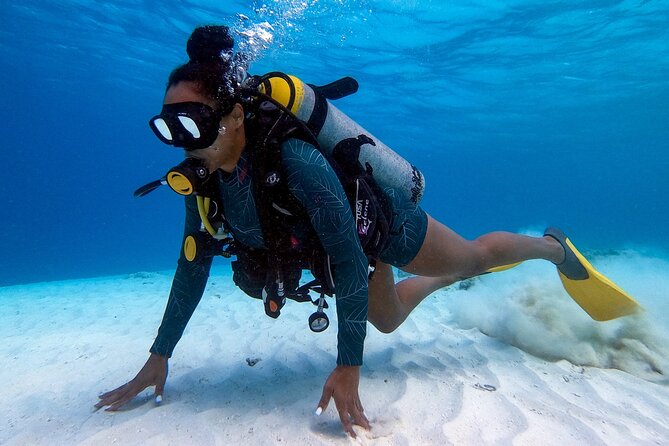
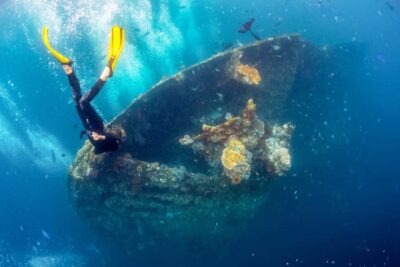
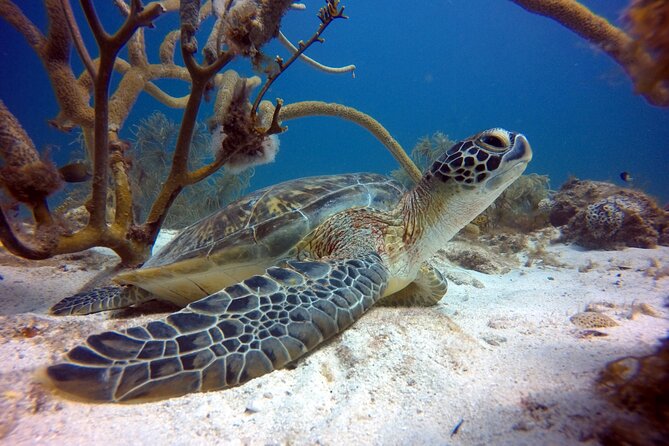
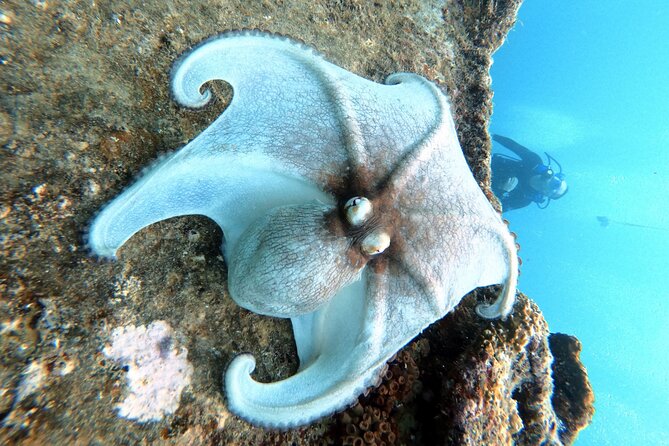
Once everyone in your group is comfortable, you begin the main scuba session. The maximum depth is 40 feet, a sensible limit for a first-time program. The usual site includes coral reef, fish, other marine life, and a shipwreck.
A wreck gives the outing a clear focal point. You are not simply swimming over open water and trying to identify every fish. You have a structure to explore, with reef life adding interest around it. Several participants found the wreck especially memorable, and one wished the underwater portion had lasted longer.
Expect the actual time underwater to vary. Your comfort, air use, ear pressure, and conditions all affect the pace. The total activity lasts about three hours, but that includes the briefing, preparation, shallow-water work, and return to the meeting point. Do not read the three-hour duration as three hours underwater.
The reef experience also comes with a realistic note. One returning certified participant noticed some reef damage, while still finding plenty of fish and coral. You may encounter attractive marine life without seeing a perfectly untouched ecosystem. That is not a reason to skip the session, but it is a reason to approach the reef with care and respect.
Your instructor remains close throughout the underwater portion. Alan is often praised for staying attentive and checking that participants are using the equipment properly. If you feel uneasy, signal early rather than forcing yourself to continue.
Why the private format is worth $120
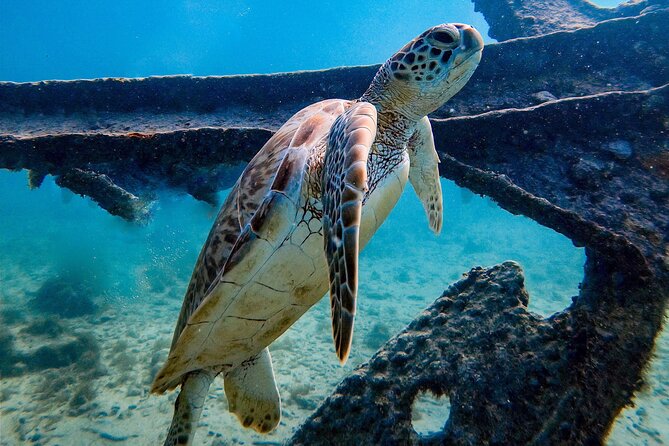
The listed price is $120 per person. That is not the lowest possible price for an introductory scuba session, but the comparison is not just about minutes in the water.
You are paying for a private group, a maximum of four participants, personal instruction, equipment guidance, shallow-water practice, and access to a reef and wreck site. The instructor can spend more time with the person who needs it, rather than moving at the speed of the least nervous or most confident member of a large class.
For two people who want to try scuba together, the value is clearer. Couples can share the first experience while still receiving individual attention. Families can also benefit, provided each participant has basic swimming skills and meets the medical requirements.
The price makes less sense if you want a full day on the water, several sites, or a certification. This is a first step, not a replacement for formal training. If the session goes well, you may decide to return for certification, but that is a separate goal.
Pickup can add practical value. Some participants received hotel pickup and drop-off, and that removes the need to arrange transport to Savaneta. Confirm it in advance, especially if you are staying away from the main resort areas.
The instructors and the human side of the session
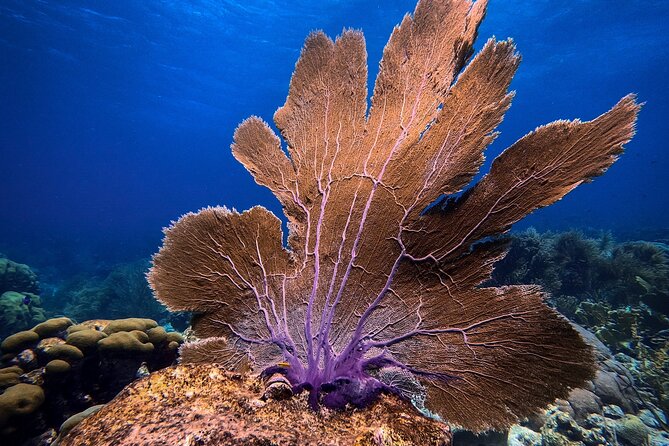
An instructor can make or break a first scuba attempt. The equipment is unfamiliar, the breathing pattern feels different, and a nervous person may need several tries before feeling settled.
Alan is repeatedly described as calm, patient, funny, and clear. That combination matters. A little humor can lower tension, while precise instructions help you know what to do next. He has also worked with people returning to scuba after long breaks, including one person who had not been underwater for five years.
Ray is often paired with Alan and is described as supportive with both new and experienced participants. Pauline is also praised for careful instruction and for helping a mother and daughter feel safe during their first session.
You should not expect every session to have the same instructor. Ask who will lead your group if a particular instructor matters to you. The important feature is the teaching approach: time to prepare, close attention in the water, and no pressure to continue before you are ready.
Photos and videos may also be available for purchase. One participant found them worthwhile as a record of a first underwater experience. Treat this as an optional extra, not part of the stated $120 price.
Who should book this experience
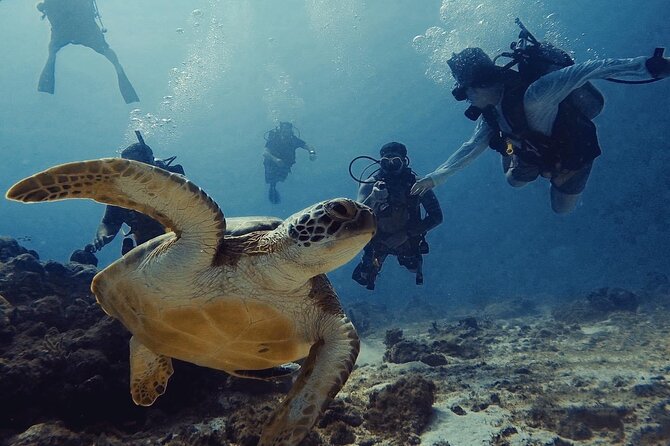
I would choose this session if you have always wanted to try scuba but do not want to commit to a certification course yet. It is also a good match if you snorkel and want to see what it feels like to breathe underwater and move below the surface.
It works well for:
- Couples trying scuba together for the first time
- Families with basic swimming skills
- Nervous beginners who need a slower pace
- Certified people who have not been underwater for several years
- A mixed group with both certified and non-certified participants
- Anyone who values private instruction over a large group
You should think twice if you dislike wearing a mask, cannot swim, or have medical concerns that could affect scuba. The required questionnaire helps identify issues, but it does not replace medical advice. Ask questions before booking if you are uncertain about your fitness for the activity.
You also need to plan your travel schedule carefully. Keep at least 18 hours between the session and a flight. That rule can affect your final day in Aruba, so do not schedule the underwater portion immediately before heading to the airport.
Practical details that can affect your day
The session requires good weather. If conditions cause cancellation, you will be offered another date or a full refund. Free cancellation is available when you cancel at least 24 hours before the start time. Changes or cancellations inside that window are not accepted, and the payment is not refunded.
Confirmation arrives within 48 hours of booking, subject to availability. Since pickup, instructor assignment, and scheduling matter, give yourself time to read the confirmation and complete the medical form.
The fins supplied are tropical-water fins intended to be worn barefoot. One participant developed blisters and wished boots had been provided. If your feet are sensitive, ask about fin fit before entering the water, and consider bringing whatever foot protection the operator allows. This small issue could matter if you have beach plans afterward.
The mobile ticket is convenient, but the important information is still the meeting point, start time, pickup arrangement, medical form, and flight gap. Keep those details easy to reach on the day.
Should you book this Aruba reef and wreck session?
Book it if you want a carefully managed first taste of scuba, especially if you are nervous or traveling with only one or two companions. The combination of a small private group, patient instruction, shallow-water practice, and a reef and wreck site gives you a genuine underwater introduction without requiring certification first.
I would be more cautious if your main goal is a long underwater tour or pristine reef scenery. The session lasts about three hours in total, the underwater time is limited, and reef conditions can vary. You may also need to remain shallower than 40 feet if your ears do not equalize.
For most beginners, though, the personal pace is the real value. You get time to learn, time to settle your breathing, and an instructor who can adjust the plan instead of rushing you along. At $120, that makes this a sensible choice for testing scuba in Aruba before deciding if you want to pursue certification.
FAQ
Is this experience suitable for someone who has never scuba dived?
Yes. The program is designed for first-time participants and people who are not certified. You receive a 20-minute land briefing, shallow-water practice, and instructor support before the main underwater session.
How deep will I go?
The maximum depth is 40 feet. You may remain shallower depending on your comfort, ear pressure, conditions, and the instructor’s assessment.
How many people can join the private group?
The group can include a maximum of four participants. Only your group takes part in the activity.
What will I see underwater?
The usual site includes coral reef, fish, other marine life, and a shipwreck. The exact experience can vary with conditions and how comfortable you are underwater.
Where does the activity begin and end?
It begins at Mangel Hato Pos Chiquito Beach Park, F28H+5W9, Spaans Lagoenweg, Savaneta, Aruba, and ends back at the same meeting point.
Is pickup available?
Pickup is offered. Confirm the pickup location and details when booking, since the provided information does not specify every hotel or area covered.
Do I need to be a strong swimmer?
You need basic swimming skills to participate. The experience is not described as requiring advanced swimming ability.
How long should I wait before flying?
Keep at least 18 hours between the scuba session and any flight.
More Private Dive Charters in the world
- Private Discovery Dive + Photos & Videos
★ 5.0 · 577 reviews - Full-Day Beginner Scuba Course with Private Tuition, Racha Yai
★ 5.0 · 368 reviews - Full day diving with private guide, lunch drinks transportation
★ 5.0 · 285 reviews - Aqaba: Private Red Sea Diving for Beginner or Experienced
★ 4.9 · 230 reviews
More Scuba Diving for Beginners in the world
- First-Time Scuba Diving in Honolulu + Free Videos
★ 5.0 · 3,123 reviews - Beginner Scuba Diving with Turtles and Videos, San Juan
★ 5.0 · 1,743 reviews - Intro Diving 2 Stops For Beginners with Pick-up and Lunch – Hurghada
★ 5.0 · 1,146 reviews - Intro Diving Beginner and Discover Red Sea Underwater
★ 4.9 · 1,092 reviews
Newly logged dives around the world
- Phu Quoc: Scuba Diving Experience for All Levels★ 4.9 · 31 reviews
- Moalboal : Scuba Diving Sardine Run and Turtle Chasing★ 5.0 · 2 reviews
- From Alanya: Scuba Diving Tour with Hotel Transfers★ 3.7 · 3 reviews
- Scuba Diving in Colombo★ 5.0 · 2 reviews
- Scuba Diving in the Volcanic Caldera/shorelines of Santorini★ 4.6 · 5 reviews
- Fuerteventura: Introductory Dive in La Lajita with Pickup★ 4.9 · 68 reviews
- Kemer Scuba Diving with Expert Diving Option★ 4.2 · 45 reviews
- Phuket: Coral Reef Scuba Diving Experience at G Beach Club★ 4.9 · 32 reviews
Wreck Diving, side by side.
Wreck and Bridge Span Dive for Certified Divers
Read our review →
Bali Diving for Beginners: Tulamben Liberty Wreck
Read our review →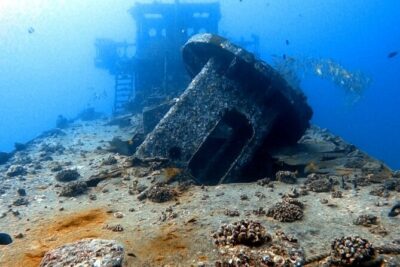
Certified Diver: 2-Tank Deep Wreck and Shallow Reef Dive Off Oahu
Read our review →
Waikiki 2 Tank World Class Wreck SCUBA Diving – Certified Only
Read our review →Tulamben Diving USS Liberty Shipwreck Scuba Dive
Read our review →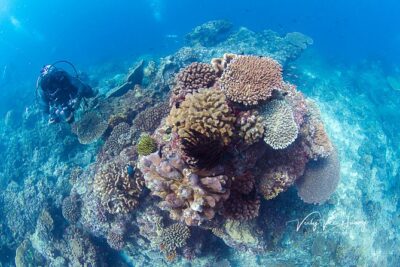
Bali Diving Day Trip-Manta Point/Tulamben Shipwreck-Fun Dive
Read our review →