
Review · JAPAN
Deep Dive: Osaka Food Markets from Local to Luxurious!
Osaka’s food culture is not confined to one famous market. This four-hour walk moves from upscale department-store food halls to Kuromon Ichiba, Korean-influenced Tsuruhashi, and shopping streets where local residents buy meat, fish, vegetables, and kitchen goods. I like the range, and I like that the guide explains customs and daily life rather than simply pointing at stalls.
The small group, capped at eight, is another plus. Guide Ferdinand, a Frenchman living in Japan, has explained local history, food customs, and his own life in Japan in an engaging way. The main consideration is cost beyond the $59 tour fee: transport is 330 yen per adult, and every snack, drink, sample, or souvenir comes from your own wallet.
Key points
- Four very different sides of Osaka food culture: You move from refined department-store displays to local markets and a Korean-influenced neighborhood.
- Kuromon Ichiba is only one part of the story: The tour places the famous market beside less tourist-focused food areas.
- Tsuruhashi adds a Korean-Japanese angle: This stop brings a different set of food traditions and shopping streets.
- Ferdinand adds personal context: He can discuss Japanese customs, local history, and his life as a French resident of Japan.
- Small groups make questions practical: With no more than eight people, you have a better chance to ask about unfamiliar foods.
- Budget for your own eating: The price covers the guide, not food, drinks, samples, souvenirs, or the stated local transport charge.
Osaka’s food story begins with contrast
This is a tour for seeing how Osaka eats, not just for ticking off one market. You start near Tenma Station and move through several food districts before finishing in the Namba area. The route connects polished retail, old shopping streets, Korean-influenced commerce, famous market stalls, and stores selling the tools of Japanese cooking.
I like this approach because Osaka food is easier to understand when you see the whole supply chain and shopping culture. A department-store food floor shows presentation and refinement. A neighborhood market shows what people buy for the kitchen. Kuromon gives you the city’s best-known market scene, while Doguyasuji shifts attention from ingredients to knives, pans, dishes, and restaurant supplies.
You should also set your expectations correctly. This is a guided walk with chances to buy food, not a prepaid tasting menu. The snacks are your responsibility, so you can choose what interests you and control your spending. That freedom is useful, but the final cost can rise quickly if you want to try several things.
More ways to get underwater around the world:
- Great Barrier Reef Snorkeling and Diving Cruise from Cairns
★ 4.5 · 3,714 reviews - First-Time Scuba Diving in Honolulu + Free Videos
★ 5.0 · 3,123 reviews - Oahu Shark Dive
★ 5.0 · 2,903 reviews
From Tenma Station to the city’s food rhythm
The meeting point is the McDonald’s directly in front of Tenma Station. That makes the start fairly clear, but give yourself enough time to identify the correct station and meeting spot. The tour lasts four hours, and the schedule allows roughly 25 minutes at each listed stop, with walking and local movement connecting them.
Tenma is a fitting starting point. The route soon reaches Pulala Tenma, also called the Tenma Ichiba Market Building, and Tenjinbashisuji Shopping Street. These places shift the focus away from grand sightseeing and toward ordinary shopping. You can expect displays of meats, fish, produce, and other staples, along with the practical energy of a working food district.
The value here is the guide’s explanation. Japanese markets can be confusing when you do not know what a cut of meat is, how seafood is displayed, or why certain products are arranged in a particular way. A guide who speaks your language can answer those questions as they arise.
Takashimaya shows Osaka’s polished food side
The TUMI Takashimaya Osaka Store is listed as the first major sightseeing stop, described as an upscale department-store marketplace. This gives you a different view of Japanese food shopping from the neighborhood markets later in the day.
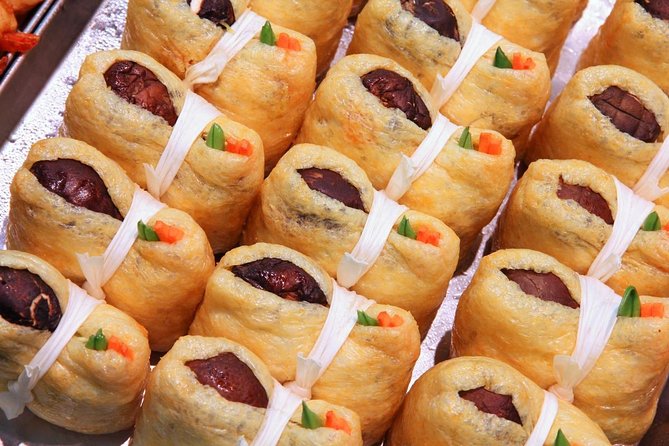
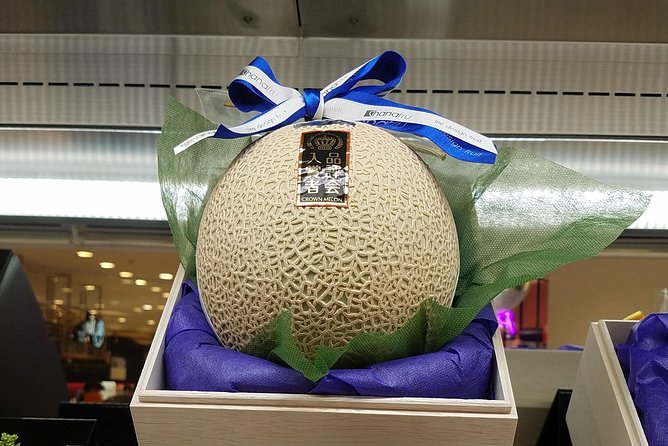
Department stores in Japan are known for carefully presented food sections, and here the point is less about bargain hunting than about seeing how high-end food is packaged and sold. You might find refined presentation, specialty products, and a more formal shopping atmosphere than at a street market. The tour uses this stop to show that Osaka’s appetite includes both everyday staples and luxury goods.
The drawback is simple: a department-store visit may feel less raw and spontaneous than a traditional market. If your only goal is cheap street food, this part may seem less exciting. Still, it creates a useful contrast with Kuromon and Tenma, and it helps explain why Osaka’s food scene cannot be reduced to one style.
Tenma and Tenjinbashisuji keep things local
Pulala Tenma and Tenjinbashisuji Shopping Street are among the most useful stops for understanding daily shopping. The emphasis is on ingredients and staples rather than famous photo opportunities. You can look for meat, fish, vegetables, and other products that serve the local neighborhood.
Tenjinbashisuji is also important because it is a shopping street, not simply a food hall. The walk gives you a sense of how food fits into a wider retail district. The experience is less about rushing from one bite to the next and more about reading the signs, noticing the displays, and asking what you are seeing.
I would use this part of the tour to ask direct questions. Ask how a product is used, what is seasonal, or which foods are common in home cooking. The guide’s role matters here because many of the most interesting details will not be obvious from a quick look.
Same water, a different dive:
- Southern Tenerife: 50-Minute Submarine Dive
★ 4.8 · 2,216 reviews - Silfra: Diving Between Tectonic Plates – Meet on Location
★ 5.0 · 2,139 reviews - Ocean Freedom Great Barrier Reef Luxury Snorkel and Dive Cruise
★ 5.0 · 1,895 reviews - Beginner Scuba Diving with Turtles and Videos, San Juan
★ 5.0 · 1,743 reviews
Tsuruhashi brings Korean-influenced food culture
Tsuruhashi is described as a Japanese-infused Korea Town that few tourists make time to visit. That gives the tour one of its clearest points of difference. You are not seeing only a standard Osaka market circuit. You are also entering a district shaped by Korean food and culture within the Japanese city.
The stop is useful for comparing food traditions side by side. You might find Korean-influenced ingredients, prepared foods, and shopping habits alongside Japanese ones. The supplied details do not promise a fixed tasting list, so think of Tsuruhashi as a guided neighborhood visit where you can buy something if it catches your eye.
This is also where Ferdinand’s personal background can add depth. He is French and lives in Japan, and he has discussed his life there along with local customs and history. That perspective can help you ask broader questions about adapting to Japan, food habits, and the way neighborhoods retain their own identity.
Kuromon Ichiba is famous for good reason
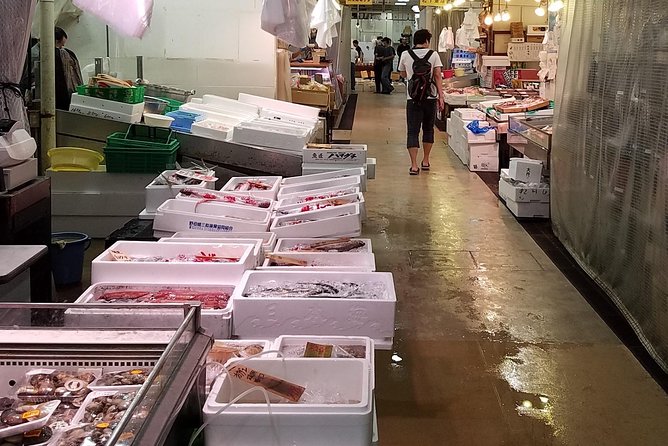
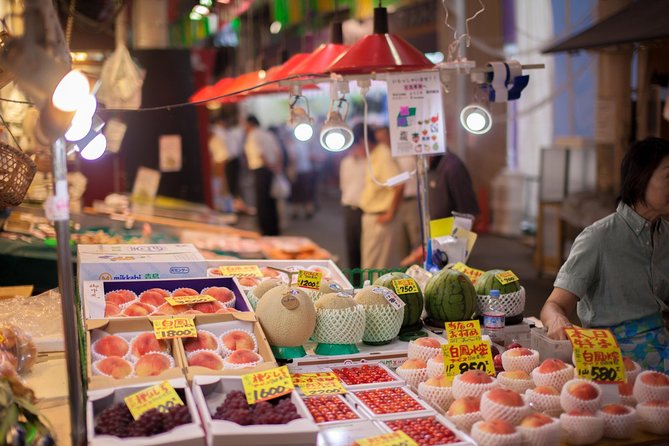
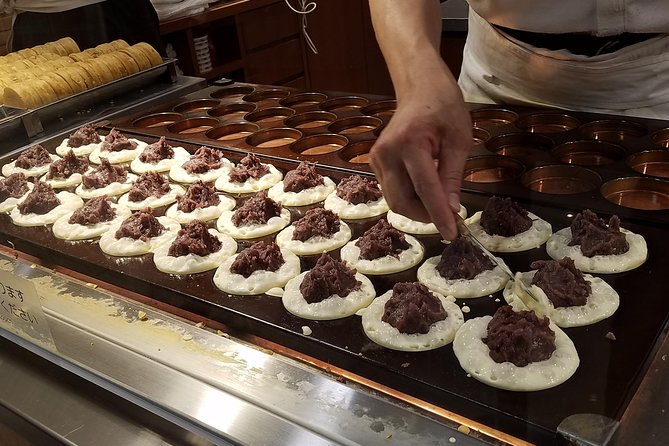
Kuromon Ichiba Market is the best-known food stop on the route. Here, raw ingredients and cooked delicacies sit side by side, creating the sensory peak of the walk. You can expect meat, seafood, produce, and ready-to-eat items competing for attention.
Because food is not included, you decide how much to sample. That is a benefit if you have dietary limits or want to spend only on something that truly appeals to you. It also means you should not arrive assuming the $59 price includes a meal.
Kuromon can be a lot to take in. Stalls, signs, smells, and food displays come at you quickly, and a guide helps turn that rush into something understandable. Ask before buying if you are unsure what an item is or how it is normally eaten. You may also want to keep your spending plan in mind, since several small purchases can add up.
The tour’s choice to place Kuromon among other markets is smart. You get the famous Osaka stop, but you are not left with the impression that it represents every kind of food shopping in the city.
Doguyasuji changes the subject from food to tools
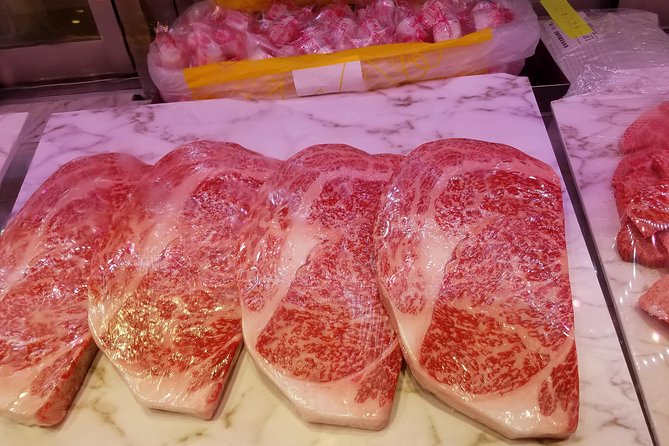
Sennichimae Doguyasuji Shotengai is a welcome change of pace. This shopping street is associated with kitchenware and restaurant supplies, so the focus moves from what Osaka eats to how food is prepared and served.
Even if you are not shopping for professional equipment, this stop can be fun. You might find knives, cooking tools, dishes, or other items connected with Japanese kitchens. The supplied information does not specify particular stores or products, so treat it as a guided look at the district rather than a guaranteed shopping list.
This is one of the places where the tour offers more than a food crawl. Ingredients tell you what people eat. Kitchen tools tell you how seriously food is treated and how much practical design goes into cooking and presentation. If you are thinking about souvenirs, this may be the point where you find something more useful than a novelty item, but purchases are not included.
Namba provides the final city setting
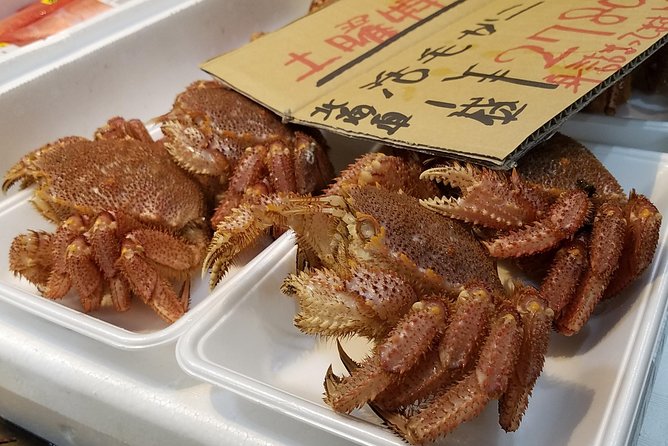
The route finishes in Namba after stops through markets and shopping streets. Namba is a natural end point for a food-focused walk because it keeps you in one of Osaka’s major urban areas, with more chances to continue eating or shopping on your own.
The tour schedule gives about 25 minutes at each listed location, so do not expect a long, leisurely meal at every stop. The day is better understood as a guided sampler of neighborhoods and food settings. You will see more places than you could reasonably study alone in four hours, but you will need to make your own purchases if you want a full meal.
The listed transport cost is 330 yen per adult. That is modest, but it should be included in your planning, along with the cost of snacks, refreshments, samples, and souvenirs. Wear comfortable shoes. Four hours of walking through markets and shopping streets is not the time for footwear chosen only for photographs.
What the $59 price really covers
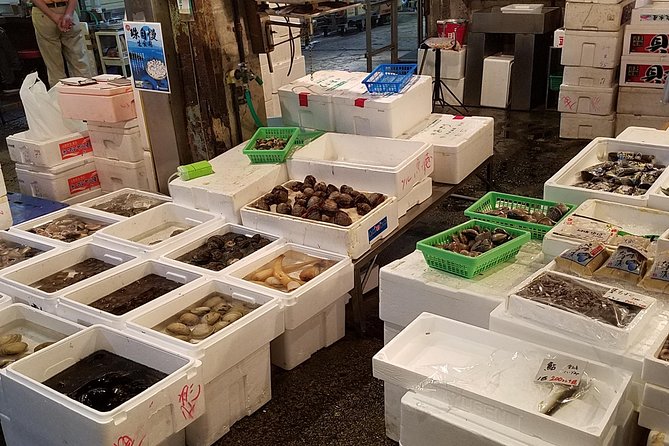
At $59 per person, the main product is access to a guide who can connect several food districts into one understandable route. You are paying for language support, local explanation, and a small-group experience limited to eight participants. That can be good value if you want context and do not want to puzzle out every market alone.
You are not paying for a meal package. Food and drinks are extra, as are samples and souvenirs. This pricing model suits you if you prefer choosing your own foods rather than accepting a fixed menu, but it requires honest budgeting.
The tour also offers free cancellation up to 24 hours before the start and a reserve-now, pay-later option. Those policies help if your Osaka plans are still shifting. English, Spanish, and French tours are available, so be sure to select the language that works best for your group.
Who will get the most from this walk
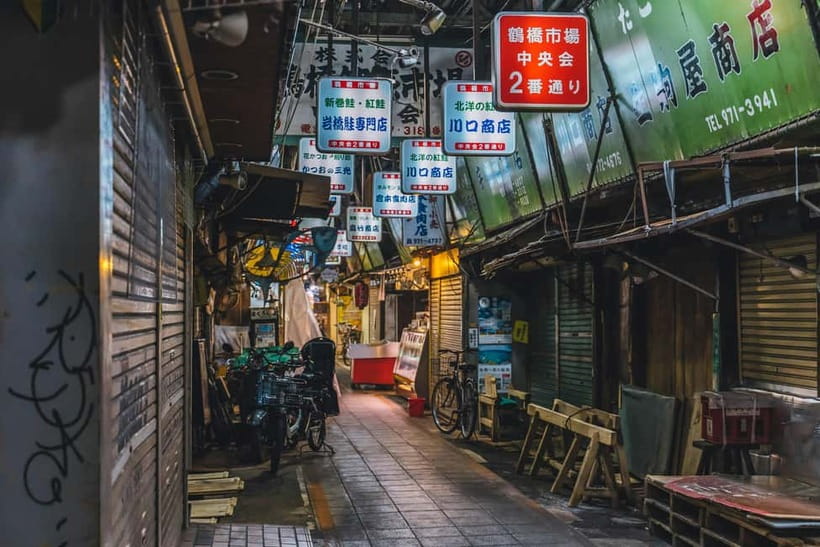
I would recommend this experience to you if food is one of your main reasons for visiting Osaka and you want more than the most famous market. It is especially useful for first-time visitors who want a guide to explain unfamiliar ingredients, customs, and neighborhood differences.
It also suits curious shoppers. Tenjinbashisuji, Kuromon, and Doguyasuji each offer a different kind of browsing, while Tsuruhashi adds a cultural angle that many standard Osaka tours skip.
You may want something else if you want a sit-down meal included, a fixed list of tastings, or a relaxed pace with long stops. The route covers a lot of ground, and your food budget is separate. Families and people with limited mobility should also consider the amount of walking and follow the advice to wear comfortable shoes, since no accessibility details are provided.
Should you book this Osaka market tour?
Book it if you want range, explanation, and local food districts in one compact morning or afternoon. The strongest feature is the contrast between upscale food retail, neighborhood markets, Korean-influenced Tsuruhashi, Kuromon Ichiba, and kitchenware shopping.
I would be particularly happy choosing it with Ferdinand as guide. His French background, life in Japan, and willingness to discuss history and customs add a human layer to what could otherwise be a simple market walk.
Skip it if you want all tastings covered in the advertised price or if you dislike walking between several stops. Bring comfortable shoes, reserve money for food, and arrive ready to ask questions. For an Osaka visit built around eating and seeing how food fits into city life, this is a well-focused choice.
FAQ
Where does the tour meet?
The meeting point is the McDonald’s directly in front of Tenma Station.
How long does the tour last?
The tour lasts four hours.
What is the price?
The listed price is $59 per person.
Is food included in the tour price?
No. Samples, food, refreshments, snacks, and souvenirs are not included. You purchase any food you want during the tour.
Is transportation included?
Transportation during the tour is not included. The stated transportation cost is 330 yen per adult.
What markets and neighborhoods are visited?
The route includes the TUMI Takashimaya Osaka Store, Pulala Tenma, Tenjinbashisuji Shopping Street, Tsuruhashi, Kuromon Ichiba Market, Sennichimae Doguyasuji Shotengai, and Namba.
What languages are available?
The tour is available in English, Spanish, and French.
How large is the group?
The tour is limited to eight participants.
What should I wear?
Wear comfortable shoes because the experience includes walking through several markets and shopping streets.
Newly logged dives around the world
- Phu Quoc: Scuba Diving Experience for All Levels★ 4.9 · 31 reviews
- Moalboal : Scuba Diving Sardine Run and Turtle Chasing★ 5.0 · 2 reviews
- From Alanya: Scuba Diving Tour with Hotel Transfers★ 3.7 · 3 reviews
- Scuba Diving in Colombo★ 5.0 · 2 reviews
- Scuba Diving in the Volcanic Caldera/shorelines of Santorini★ 4.6 · 5 reviews
- Fuerteventura: Introductory Dive in La Lajita with Pickup★ 4.9 · 68 reviews
- Kemer Scuba Diving with Expert Diving Option★ 4.2 · 45 reviews
- Phuket: Coral Reef Scuba Diving Experience at G Beach Club★ 4.9 · 32 reviews
Japan Scuba Diving, side by side.

Naha, Okinawa: Kerama Islands Full-Day Intro-Diving Trip
Read our review →
Okinawa:Naha:Kerama Island Experience 1Dive and Snorkeling
Read our review →
Blue Cave Area Experience Diving!Free feeding & photo images Chinese guide available!1 group with a dedicated instructor
Read our review →
From Naha Scuba Diving Trip in Kerama(for certified divers)
Read our review →
Okinawa: Naha: 1 day Kerama Islands diving‣ license required
Read our review →Lists this dive is on