
Review · REYKJAVIK
Dive the Divide: Silfra Fissure Scuba Tour | Meet at Thingvellir
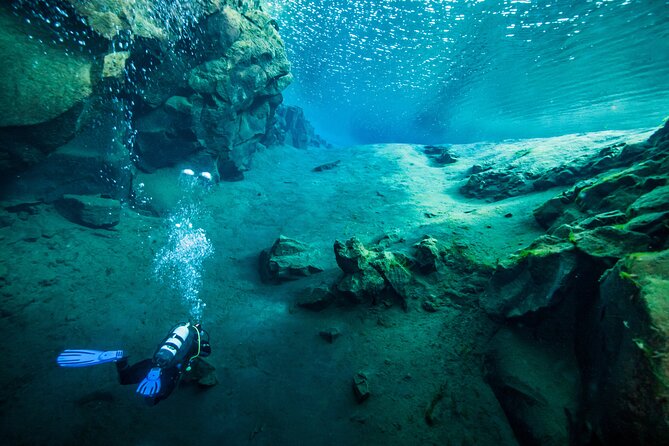
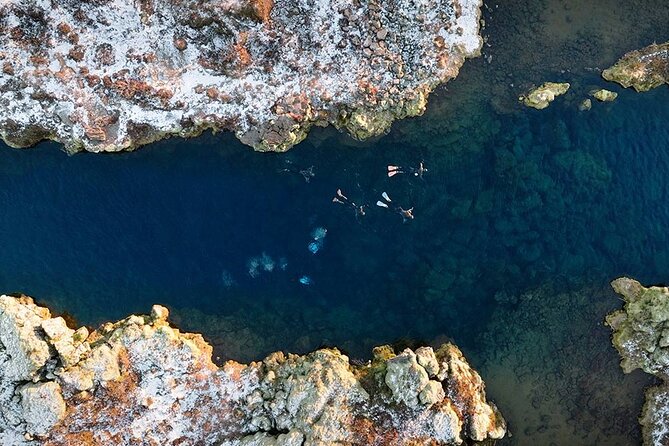
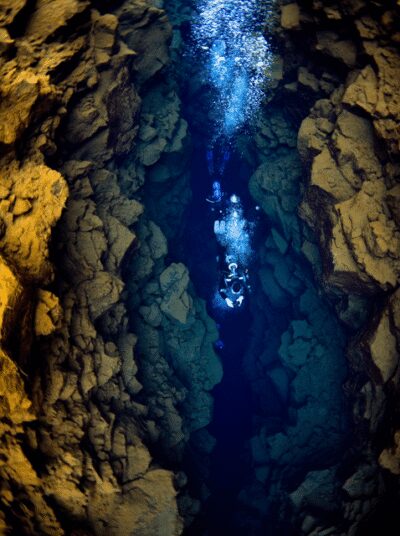
Silfra is one of the rare places where you can swim through a crack between two continental plates, with water so clear that visibility may reach more than 100 meters. The route passes through the Deep Crack, Silfra Hall, Cathedral, and Lagoon, each with its own shape and shade of blue.
I like the tiny groups, capped at three people, and the careful preparation before you enter the water. I also like the thoughtful finish: hot chocolate and cookies after you change, a welcome comfort after working in cold water and carrying heavy gear.
The catch is simple: this is not an easy outing. You must have recent drysuit experience, strong fitness, and the ability to carry substantial equipment for about 400 meters. The price is also considerable at $296.41 per person, before parking and transport from Reykjavik.
Key points about the Silfra scuba experience
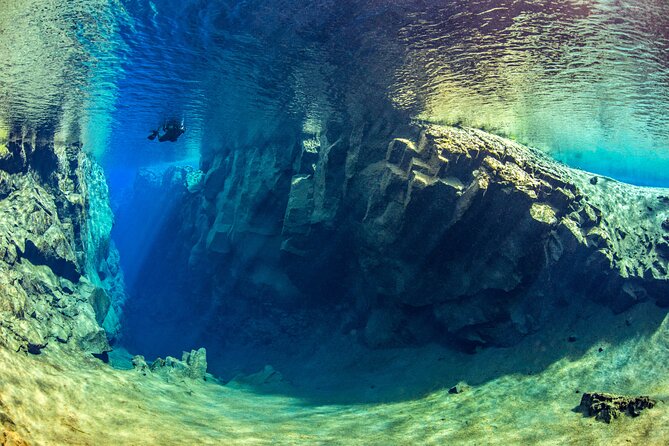
- The water can be extraordinarily clear: Visibility may extend beyond 100 meters, making the underwater rock formations easy to see.
- You swim between two continental plates: The Deep Crack is the narrowest and most striking part of the route.
- The group never exceeds three people: That gives you close support from the PADI-certified Divemaster.
- Drysuit experience is mandatory: You need a drysuit certification card or a logbook showing at least 10 previous drysuit sessions.
- The walk with equipment is demanding: You carry tanks and other gear about 400 meters to the entry point and later back to the parking area.
- Winter conditions can shorten the tour: Below-freezing temperatures may mean one session instead of two.
What makes Silfra different from an ordinary scuba outing
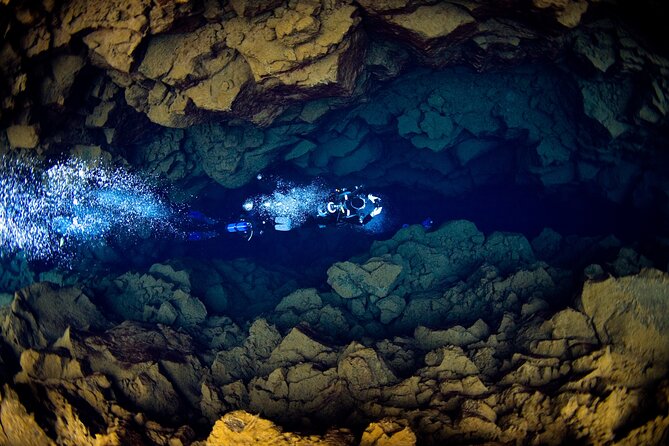
Silfra is not a warm-water reef trip. You will not find coral, tropical fish, or an easy stroll from changing room to sea. What you get instead is stark volcanic rock, extraordinary clarity, and the rare sensation of moving through a geological boundary.
The water comes from meltwater filtered through porous underground rock. That helps explain its remarkable transparency. You can safely taste it at the entry point, although the main attraction is seeing through it, not drinking it.
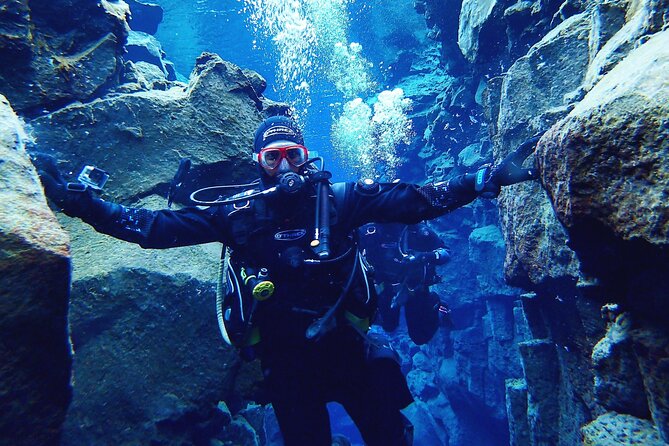
The route is carefully controlled. Your instructor leads you through a set path, using underwater signals and keeping the small group together. The water is cold, and the drysuit changes the way you move. It can feel bulky on land and requires proper weighting and calm movement once you are submerged.
I see the small group as one of the strongest parts of the experience. With three people or fewer, you should receive more direct help with your equipment, positioning, and comfort than you would in a large commercial group. That matters in a cold environment where small problems can become distracting quickly.
More scuba diving around the world
- Great Barrier Reef Snorkeling and Diving Cruise from Cairns
★ 4.5 · 3,714 reviews - First-Time Scuba Diving in Honolulu + Free Videos
★ 5.0 · 3,123 reviews - Oahu Shark Dive
★ 5.0 · 2,903 reviews
Meeting at Thingvellir National Park
You meet at the Silfra meeting point in Thingvellir National Park, not in central Reykjavik. The listed meeting location is Vallarvegur, 806, Iceland, at the Silfra parking area.
You must arrange your own transport. Pick-up from Reykjavik is not included, and the park charges a small parking fee of 500 ISK for a private car. Build a little spare time into your plans so you are not rushing into a safety briefing after the drive.
Thingvellir is more than a parking place. It is the setting for the entire experience, with exposed volcanic ground and the geological forces that created the fissure. The park gives the activity a strong sense of place before you even put on your mask.
Once you meet the instructor, you receive a full briefing on park rules, safety procedures, underwater signals, and the planned route. This is where you should ask about anything that concerns you, especially drysuit fit, visibility, cold, or the exact schedule for the day.
Getting ready in a drysuit
The operator supplies the specialized equipment: drysuit, thermal undersuit, mask, fins, tanks, weights, and regulator. You still need to arrive prepared with warm fleece or wool layers and warm socks. Bring a complete change of clothes, since no drysuit can be guaranteed to remain perfectly dry.
The preparation takes time because the equipment is serious. You will be carrying tanks and other gear, then walking to the entrance. This is not a place to treat the kit as a minor detail. Good clothing underneath the suit and a calm fitting process can make a major difference to your comfort.
You cannot wear glasses under the mask. If you need vision correction, you must use contact lenses or bring prescription goggles. This is worth sorting out before you arrive, since the mask seal needs to remain clear and watertight.
The required background is strict. You need previous drysuit experience, either a drysuit certification card or a logbook with at least 10 previous drysuit sessions signed by a dive professional. You also need to have used a drysuit within the past two years, so your skills are current.
That rule may feel demanding, but it makes sense here. Cold water, bulky clothing, a long equipment walk, and limited depth all create a setting where comfort and control matter more than simple certification.
Walking 400 meters to the water
After the briefing and equipment check, you walk roughly 400 meters to the entrance. The gear is heavy, and this is one of the tour’s least glamorous parts. If you are fit and used to carrying scuba equipment, it should be manageable. If you are not, the walk may be harder than the underwater portion.
At the entrance, you descend a ladder to a submerged metal platform. You stand in waist-deep water while the instructor checks your weights, equipment, and basic safety setup. This pause lets you adjust to the temperature and the feel of the drysuit before moving farther out.
The entry process is practical rather than theatrical. You get your bearings, check your signals, and make sure your mask and regulator are working as they should. The water is clean enough to drink, so you may taste it if you wish.
Same water, a different dive:
- Southern Tenerife: 50-Minute Submarine Dive
★ 4.8 · 2,216 reviews - Silfra: Diving Between Tectonic Plates – Meet on Location
★ 5.0 · 2,139 reviews - Ocean Freedom Great Barrier Reef Luxury Snorkel and Dive Cruise
★ 5.0 · 1,895 reviews - Beginner Scuba Diving with Turtles and Videos, San Juan
★ 5.0 · 1,743 reviews
Through the Deep Crack and Silfra Hall
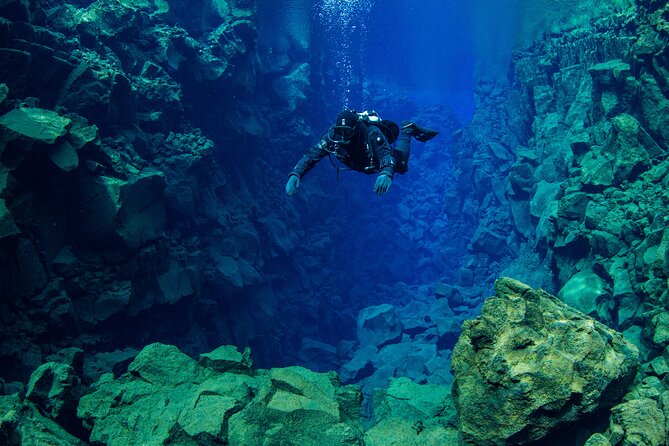
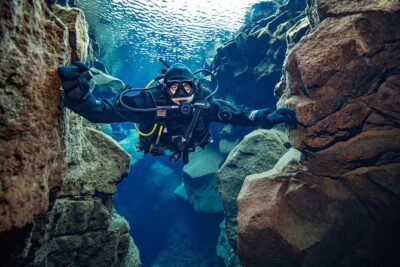
The first underwater section is the Deep Crack, where the continental plates are close together. The narrow gap gives the route its most memorable geological feature. You are not simply swimming through a blue pool. You are moving through a space formed by the movement of the Earth’s crust.
As the crack widens, you enter Silfra Hall. The water’s clarity lets you look along the rock walls and ahead through the route. The color is usually described as electric blue, but the exact effect depends on light, weather, and your position in the water.
The lack of marine life is part of Silfra’s character. This is a place for rock, water, and scale rather than a wildlife encounter. I would choose it for geology and visual clarity, not for fish or coral.
The instructor leads the group at a controlled pace. The route is not a race, and the small group should make it easier to stay close without feeling lost in a crowd. Keep your attention on hand signals and your breathing, especially if the drysuit feels unfamiliar.
Silfra Cathedral and the route’s depth
Silfra Cathedral is the most cavernous section, with plunging lava walls and a powerful sense of space. The route description identifies its deepest point as 72 feet, or 22 meters, while the tour information also lists a maximum depth of 59 feet, or 18 meters.
Because those figures do not match, it is sensible to confirm the planned depth with your instructor at the briefing. Either way, this is not a technical deep-water session. The challenge comes from cold, equipment, and conditions rather than extreme depth.
The Cathedral is likely to reward calm, slow viewing. Visibility can extend beyond 100 meters, so you may see far ahead and along the walls. Keep your movements controlled. Fast finning wastes energy and can make the drysuit feel more awkward.
An instructor’s manner matters here. A recent account gives special credit to Franceska for warming gloves, helping with drysuits, and keeping a calm, supportive tone in snowy conditions. You cannot guarantee that Franceska will lead your group, but those are the kinds of practical touches that make a real difference in a cold-water activity.
Reaching the Silfra Lagoon
The route continues into Silfra Lagoon, a bright blue section with seemingly endless visibility. This is where the underwater passage opens out and the journey reaches its final point.
The Lagoon is a good reminder that the experience is about changing shapes as much as color. You begin in a narrow crack, pass through a wider hall and cavern, then finish in an open pool. The changing scale gives the route a natural rhythm.
During summer, you may complete two sessions of about 30 minutes each. In winter, if the water temperature is below freezing, the plan may change to one session of roughly 45 minutes for safety reasons. The exact arrangement depends on conditions, so do not book this expecting the same schedule in every season.
The water remains cold even when the weather feels mild. A drysuit helps keep water out, but it does not turn the experience into a warm one. The right underlayers, socks, and attitude are essential.
Returning to shore and warming up
At the Lagoon, you return to the surface and remove your fins and other heavy equipment. You then walk back to the parking area, change into your own clothing, and finish with hot chocolate and cookies.
That final drink is more than a pleasant extra. After cold water, a long equipment walk, and the effort of changing out of a drysuit, you will appreciate something warm and simple. It also gives you a chance to settle before driving away.
The full activity lasts about four hours. That includes the briefing, equipment fitting, walk to the water, underwater time, return walk, changing, and refreshments. Do not judge the tour only by the length of time spent underwater. The preparation and recovery are part of the experience.
Is the $296.41 price fair?
At $296.41 per person, this is an expensive half-day activity. The price is easier to justify if you need the included specialist equipment and value the tiny group. You receive a PADI Divemaster-led route, drysuit equipment, tanks, weights, regulator, thermal undersuit, mask, and fins, plus hot chocolate and cookies.
The maximum group size of three is important to the value. You are paying for a controlled, personal experience rather than a large group moving through the fissure. That can be especially useful if you are rusty with cold-water equipment or want close support.
The price does not include transport from Reykjavik, food and drinks beyond the listed snack, or the 500 ISK national park parking fee. Add those costs when planning your day.
I would not choose this tour simply because it is a famous Iceland activity. The price makes sense for a qualified scuba enthusiast who specifically wants Silfra. It makes less sense if you are looking for a casual water activity or have no recent drysuit background.
Who should book this experience?
This suits an adult scuba diver who already knows how to use a drysuit and feels comfortable carrying heavy equipment. The minimum age is 18, and strong physical fitness is required.
You should also enjoy slow, controlled exploration. The reward is unusual geology and remarkable clarity, not speed, wildlife, or warm water. If the thought of cold hands, a bulky suit, and a 400-meter equipment walk sounds unpleasant, choose a less demanding Iceland activity.
The experience can be especially appealing if you want something that feels tied to Iceland itself. Silfra is not a generic pool or standard coastal excursion. Its setting at Thingvellir and its position between two continental plates give the route a clear sense of place.
If you are nervous about cold water, ask detailed questions before booking. A recent account describes snow beside the fissure and a group that still felt cold despite enjoying the experience. The guide’s care helped, but the conditions remained demanding.
Booking, cancellation, and practical planning
You receive confirmation at booking, and the tour is offered in English. Reserve your required start time in advance, since the activity is often booked around 41 days ahead.
Free cancellation is available if you cancel at least 24 hours before the scheduled start. Changes or cancellations inside that window are not accepted for a refund. If poor weather forces the operator to cancel, you can receive a different date or a full refund.
Wear warm fleece or wool underlayers, bring warm socks, and pack dry clothes. Do not rely on ordinary glasses under the mask. Have your drysuit certification card or signed logbook ready, and make sure your most recent drysuit session was within the past two years.
Should you book the Silfra scuba tour?
Book it if you are a qualified, recently active drysuit scuba diver who wants a small, carefully managed route through one of Iceland’s most unusual natural settings. The clarity, geological position, and three-person limit give the experience real value.
Skip it if you are seeking an easy introduction to underwater activities, dislike cold conditions, or cannot comfortably carry heavy equipment for 400 meters. For the right participant, this is a rare and visually powerful outing. For the wrong one, the preparation and cold may overshadow the scenery.
FAQ
Where does the Silfra scuba tour meet?
You meet at the Silfra meeting point in the parking area at Thingvellir National Park, Vallarvegur, 806, Iceland.
Is transportation from Reykjavik included?
No. Pick-up service from Reykjavik is not included, so you must arrange your own transport to Thingvellir.
How much does parking cost?
The national park charges a small parking fee. The listed fee for a private car is 500 ISK.
How long does the activity last?
The full experience lasts approximately four hours, including the briefing, equipment preparation, walk to the fissure, underwater time, return, changing, and refreshments.
How many people are in each group?
The activity has a maximum of three participants.
What equipment is provided?
The operator provides a drysuit, mask, fins, thermal undersuit, tanks, weights, and regulator.
Do I need previous drysuit experience?
Yes. You need previous drysuit experience and must show a drysuit certification card or a logbook documenting at least 10 previous drysuit sessions signed by a dive professional.
How recent must my drysuit experience be?
You must have used a drysuit within the last two years so your skills are up to date.
Can I wear glasses under the mask?
No. You cannot wear glasses under the mask. You may use contact lenses or bring prescription goggles.
What happens in winter if the water is below freezing?
The instructor may change the schedule to one session of about 45 minutes instead of two sessions of about 30 minutes each. This change is made for safety reasons.
Newly logged dives around the world
- Phu Quoc: Scuba Diving Experience for All Levels★ 4.9 · 31 reviews
- Moalboal : Scuba Diving Sardine Run and Turtle Chasing★ 5.0 · 2 reviews
- From Alanya: Scuba Diving Tour with Hotel Transfers★ 3.7 · 3 reviews
- Scuba Diving in Colombo★ 5.0 · 2 reviews
- Scuba Diving in the Volcanic Caldera/shorelines of Santorini★ 4.6 · 5 reviews
- Fuerteventura: Introductory Dive in La Lajita with Pickup★ 4.9 · 68 reviews
- Kemer Scuba Diving with Expert Diving Option★ 4.2 · 45 reviews
- Phuket: Coral Reef Scuba Diving Experience at G Beach Club★ 4.9 · 32 reviews
Reykjavik Scuba Diving, side by side.
Silfra: Diving Between Tectonic Plates – Meet on Location
Read our review →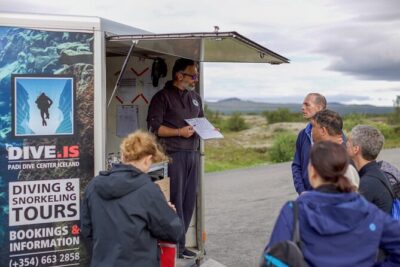
Silfra: Diving Between Tectonic Plates and Pick Up from Reykjavik
Read our review →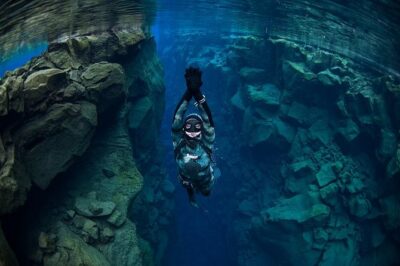
Thingvellir: Silfra Fissure Diving with Optional Pickup
Read our review →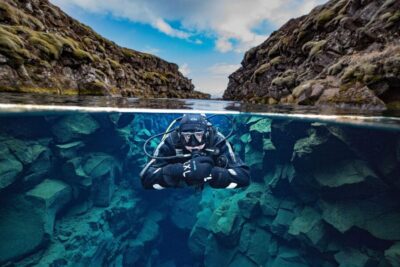
Lists this dive is on