
Review · MALTA
First scuba diving experience with instructor – Malta
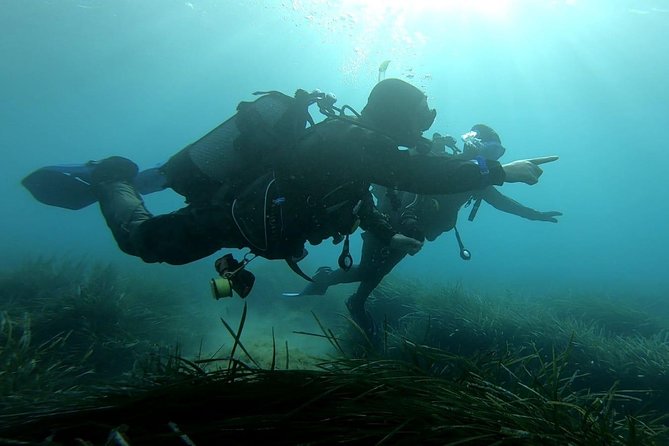
Malta’s best sightseeing may be below the surface. This three-hour beginner session from St. Paul’s Bay gives you a calm introduction to scuba equipment and underwater breathing, followed by shallow-water practice and an open-water outing. Instructors including Antonio, Davide, and Georgia are repeatedly singled out for clear explanations, patience, and steady support.
I like two things here: the private or very small-group format, which gives a nervous beginner more attention, and the chance to see Malta’s marine life at close range. People have encountered local fish and even an octopus. The main consideration is that comfort levels vary, and not every beginner gets to the open-water stage. Good health, basic swimming ability, and enough time to follow instructions are essential.
Key points to know before booking
- Three hours from start to finish: Expect briefing, equipment setup, confined-water training, and sea time rather than three full hours below the surface.
- A true first-timer session: You do not need previous scuba experience, but you must be able to swim and be in good health.
- Patient instruction is the main strength: Antonio, Davide, and Georgia are praised for clear teaching and reassurance.
- Small groups matter: The maximum is eight people, and some sessions are much smaller.
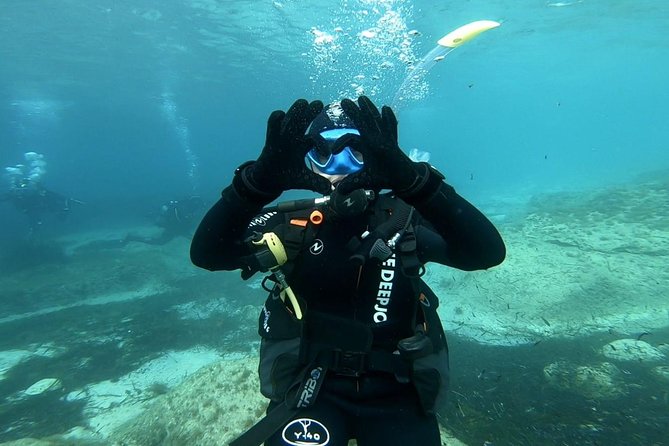
- You may reach about 7 meters: The exact time and depth depend on your comfort and ability to complete the training.
- Bring your own basics: Pack a swimsuit or shorts and a towel. Equipment, insurance, and a PADI instructor are supplied.
What this Malta underwater experience actually offers
This is not a sightseeing boat trip with a quick swim. It is an introductory scuba session built for someone who has never used a tank, regulator, mask, or fins before.
You meet at DiveBase Malta, 25 Islet Promenade in St. Paul’s Bay. The activity ends at the same place. From there, the instructor introduces you to the equipment and explains how the session will work. The tone is meant to be calm and practical, not technical for its own sake.
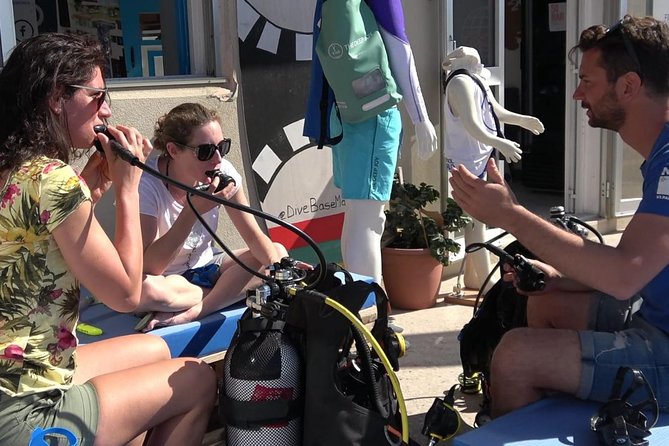
You learn how to breathe through the regulator, fit and use the equipment, clear pressure from your ears, move with fins, and communicate with hand signals. Those simple skills are the foundation of every future scuba course. If you cannot signal clearly or remain relaxed underwater, going farther is not useful.
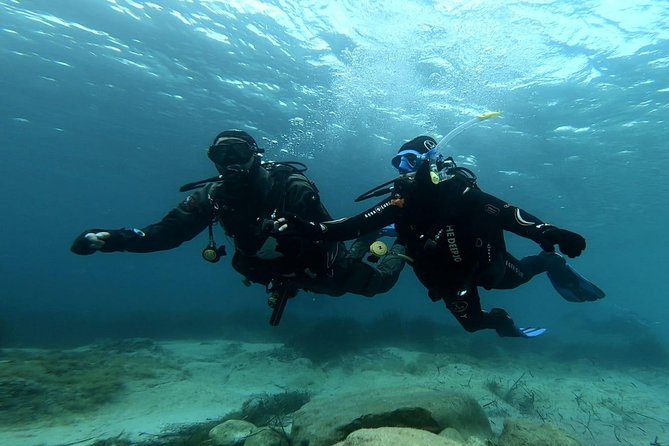
The session includes both shallow-water and open-water work. That progression is important. You first get a chance to adjust to the unusual feeling of breathing underwater and wearing equipment before heading farther from shore. The instructors are expected to move at the pace of the group, but your own comfort still sets the limit.
More scuba diving around the world
- Great Barrier Reef Snorkeling and Diving Cruise from Cairns
★ 4.5 · 3,714 reviews - First-Time Scuba Diving in Honolulu + Free Videos
★ 5.0 · 3,123 reviews - Oahu Shark Dive
★ 5.0 · 2,903 reviews
The first lesson: equipment, breathing, and nerves
The hardest part for many first-timers is not swimming. It is trusting the regulator and breathing normally while surrounded by water.
The instructors spend time showing you how the gear works. You learn to use the mask, fins, tank, and other scuba equipment, then practice basic movement and breathing. Ear equalization is another key lesson. As you descend, pressure changes can make your ears uncomfortable, so you need to equalize early and often rather than push through pain.
You also practice hand signals. Underwater, you cannot rely on ordinary conversation, so signals for okay, stop, trouble, and other basic messages matter. Clear communication helps you feel less alone and gives the instructor a quick way to check your condition.
This is where the small-group setup earns its keep. A group of four, including the instructor, allows more direct attention than a crowded class. The maximum group size is eight, so you should ask how many people are scheduled for your time if personal attention is your biggest concern.
The experience is not automatically easy for everyone. One participant struggled with breathing underwater and needed extra reassurance. Another group found the instruction difficult because of a language barrier. The teaching languages listed for this experience are English and Italian, so you should be comfortable following instructions in one of those languages.
Shallow water first, then the Maltese sea
After the briefing, you move into a confined-water stage. This is the safety net of the session. You can practice breathing, fin movement, signals, and basic control while the instructor watches closely.
Do not treat this part as a delay before the real activity. It is the part that makes the later sea session possible. If you rush through the basics, the open-water section becomes stressful. If you take time here, the regulator starts to feel natural and your attention can shift toward the marine life around you.
The instructors may repeat exercises several times. That is helpful if you are nervous, though the experience can feel frustrating if you expect to be underwater immediately. One group spent more than an hour working through the confined-water stage because several people were not yet comfortable. That detail gives you a realistic idea of how flexible the timing can be.
Once you have met the instructor’s requirements, you proceed to open water. The exact route and depth are not specified, so you should not book this expecting a particular reef, wreck, cave, or named site. What is clear is that the session is designed to show you Malta’s marine flora and fauna in the sea itself.
One participant reached about 7 meters. Another spent roughly an hour underwater and saw a variety of sea life. Fish are a realistic possibility, and an octopus has been seen during a session. Marine encounters are never guaranteed, but Malta’s clear coastal water gives this experience a worthwhile natural focus.
What you might see beneath St. Paul’s Bay
The appeal here is not a staged animal encounter. You enter the water and look for the ordinary marine life that makes Malta interesting below the surface.
You might see fish moving through the shallows or spot an octopus close to the bottom. The supplied information does not promise a particular species list, coral garden, wreck, or underwater landmark, and that is worth keeping in mind. This is an introduction to the sea, not a specialist marine-life expedition.
For a first-time participant, even small details can feel remarkable. The sound of your own breathing, the slow movement of the fins, and the change in perspective can make a familiar coastline seem new. The instructor’s job is to help you stay calm enough to notice those details.
Photography is not included. One unhappy participant expected camera service, but DiveBase Malta states that photos require advance booking and an extra instructor in the water. Bring a camera only if you have confirmed the arrangements beforehand and know that using it will not distract you from the lesson.
Same water, a different dive:
- Southern Tenerife: 50-Minute Submarine Dive
★ 4.8 · 2,216 reviews - Silfra: Diving Between Tectonic Plates – Meet on Location
★ 5.0 · 2,139 reviews - Ocean Freedom Great Barrier Reef Luxury Snorkel and Dive Cruise
★ 5.0 · 1,895 reviews - Beginner Scuba Diving with Turtles and Videos, San Juan
★ 5.0 · 1,743 reviews
The instructors make or break the session
The strongest part of this experience is the human element. Antonio is praised for being informative, patient, and reassuring. Davide is described as encouraging and clear with first-timers. Georgia helped a beginner understand each step and feel comfortable reaching 7 meters.
That does not mean every session feels identical. Your instructor, group makeup, language ability, weather, and comfort in the water will shape the day. One complaint described an instructor as impatient when a child could not settle into underwater breathing. The group also faced a language barrier and arrived late with incomplete medical forms. DiveBase Malta responded that the instructor spent more than an hour trying to help the group progress.
The useful lesson is simple: tell the staff about your concerns at the start. If you are anxious, say so plainly. If you need instructions repeated, ask. If you do not understand a hand signal, stop and clarify it. A scuba lesson depends on communication, and silence or embarrassment helps nobody.
You should also arrive on time with the medical paperwork completed. A group that arrived nearly half an hour late and had not prepared the forms delayed the start for everyone. The three-hour duration includes the briefing and equipment preparation, so lateness reduces your water time and can put pressure on the instructor.
Health rules are serious, not fine print
You need sufficient swimming skills and good general health. This experience is not suitable for people with respiratory problems, including active asthma, or with blood and heart conditions. It is also not suitable if you have had surgery within the past year unless the provider accepts appropriate medical clearance.
A doctor’s statement may be requested in some cases. The forms are provided after booking, and you should read them before committing. If you have a chronic condition, arrange clearance in advance rather than assuming you can handle the paperwork at the center.
This is one area where you should not rely on a casual interpretation of your own fitness. Scuba places unusual demands on breathing, pressure equalization, and circulation. If you are uncertain, ask your doctor and contact DiveBase Malta before the activity date.
After the session, wait at least 12 hours before flying. That matters if you are planning a quick Malta visit with a flight soon after the activity. Give yourself a buffer rather than scheduling the underwater session on the morning of departure.
What to bring, what you receive, and what you clean
DiveBase Malta supplies the scuba equipment, diving insurance, and PADI instructor. You need to bring your own swimsuit, bikini, or shorts, plus a towel.
The equipment is part of the learning experience, not just a rental service. You are expected to understand what you are wearing and how it works. At the end, you may be asked to rinse the wetsuit, fins, and mask. That can feel like an extra chore, but it is also basic equipment care and hygiene.
Do not assume that a photo package, hotel transfer, or towel is included. The meeting point is at the DiveBase Malta center, and the activity returns there. Public transportation is nearby, but no transfer service is listed.
The price shown in the supplied details is $0.00. Since that figure may represent a booking display issue, promotion, or incomplete price data, check the current total before paying and compare what is included. At a genuine no-cost price, equipment, insurance, instruction, and a three-hour introduction would be exceptional value. At a normal paid rate, the value depends mainly on the instructor-to-participant ratio and how much open-water time your group reaches.
Certification: useful first step, not a full license
At the end, you receive a PADI Discover Scuba Diving Certificate of Achievement if you complete the requirements. It is described as valid and recognized worldwide, and it can help you continue your scuba education.
Be clear about what this means. It is an achievement certificate from an introductory experience, not the same as completing a full open-water certification course. You cannot treat it as a replacement for a complete beginner certification. Its value is that it lets you test whether scuba suits you before committing to a longer course.
If you love the session, ask DiveBase Malta how to continue your training. The certificate is meant to be a starting point for further education.
Who should book this St. Paul’s Bay session?
I would recommend it to an adult or older child who can swim, is curious about the sea, and wants a supported first experience rather than a self-guided snorkel. It also suits couples and small groups looking for an active half-day activity. One group described it as a good date activity, and the private format can make it feel more personal than a large class.
It is a particularly good choice if you are nervous but motivated. The best comments focus on instructors who calmly repeated instructions and built confidence. You should still accept that the first attempt may involve awkward breathing, mask adjustments, and slow progress.
I would hesitate if you have serious medical concerns, dislike close-fitting equipment, cannot follow English or Italian instructions, or need guaranteed underwater photography. I would also avoid booking it immediately before a flight.
Free cancellation is available if you cancel at least 24 hours before the start time. Changes or cancellations inside that window are not refunded, and bad weather can lead to another date or a full refund.
Should you book it?
Book this if you want a careful introduction to Malta’s underwater world and you value instruction more than a guaranteed sightseeing route. The combination of equipment, insurance, a PADI instructor, shallow practice, and open-water time gives you a sensible first taste of scuba.
The biggest variable is your group and instructor on the day. Arrive on time, complete the medical forms, state your worries clearly, and confirm the current price and language arrangements before booking. If you do that, this can be a memorable way to see fish, perhaps an octopus, and a very different side of Malta.
FAQ
Do I need previous scuba experience?
No. The experience is designed for first-timers and people who are out of practice. You do need sufficient swimming skills and good health.
How long does the activity last?
The full experience lasts approximately three hours. This includes the briefing, equipment setup, shallow-water training, and open-water session.
Where does the activity start and finish?
It starts at DiveBase Malta, 25 Islet Promenade, St. Paul’s Bay SPB 2506, Malta. It ends back at the same meeting point.
What will I learn?
You will learn how to use scuba equipment, equalize pressure in your ears, feel more comfortable underwater, swim with fins, and communicate with hand signals.
Is the experience private?
It is described as a private excursion, with a maximum group size of eight people. Some sessions may be smaller.
What is included?
Scuba equipment, diving insurance, and a PADI instructor are included.
What should I bring?
Bring your own bathing suit, bikini, or shorts and a towel. A photo service and towel are not listed as included.
Can I fly after the activity?
You should wait at least 12 hours after the session before taking a flight.
Is a medical certificate required?
A doctor’s statement may be requested in particular cases. People with certain respiratory, blood, heart, or recent surgical conditions may not be allowed to participate without medical clearance.
What happens if the weather is poor?
If the activity is canceled because of poor weather, you will be offered another date or a full refund. Free cancellation is also available when you cancel at least 24 hours before the start time.
Newly logged dives around the world
- From Alanya: Scuba Diving Tour with Hotel Transfers★ 3.7 · 3 reviews
- Phu Quoc: Scuba Diving Experience for All Levels★ 4.9 · 31 reviews
- Moalboal : Scuba Diving Sardine Run and Turtle Chasing★ 5.0 · 2 reviews
- Scuba Diving in Colombo★ 5.0 · 2 reviews
- Scuba Diving in the Volcanic Caldera/shorelines of Santorini★ 4.6 · 5 reviews
- Fuerteventura: Introductory Dive in La Lajita with Pickup★ 4.9 · 68 reviews
- Kemer Scuba Diving with Expert Diving Option★ 4.2 · 45 reviews
- Phuket: Coral Reef Scuba Diving Experience at G Beach Club★ 4.9 · 32 reviews
Malta Scuba Diving, side by side.
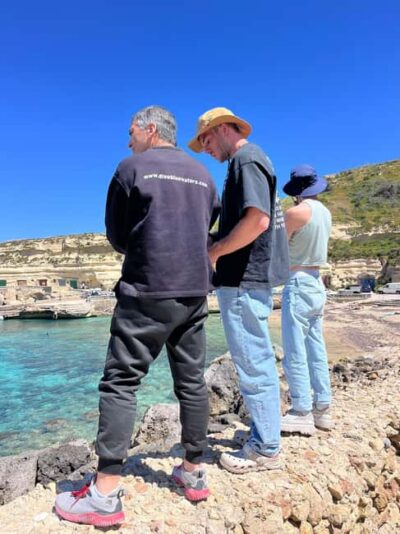
Gozo: Discover Scuba Diving Experience for Beginners
Read our review →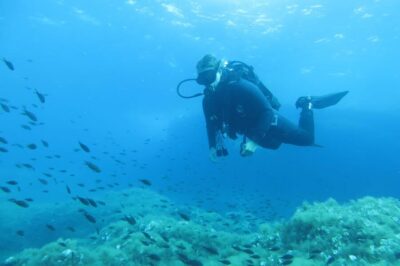
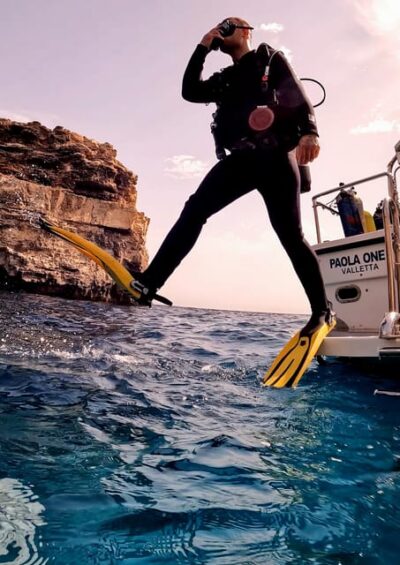
Malta: Discover Scuba Diving in crystal clear waters
Read our review →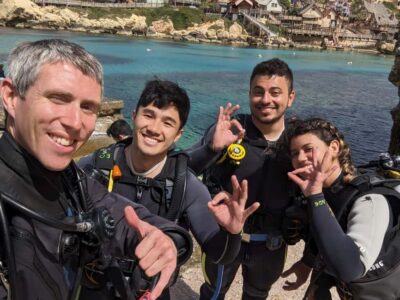
Malta St Pauls Bay: PADI Discover Scuba Diving Experience
Read our review →Lists this dive is on